
1 DEAD, 5 CRITICAL ABOARD QATAR'S A320 OFFICIAL JET IN TERROR ATTACK!
1 DEAD, 5 CRITICAL ABOARD QATAR'S A320 OFFICIAL JET IN TERROR ATTACK!
BERN, Switzerland — November 20, 2026 — A Qatar government Airbus A320 carrying members of a diplomatic delegation landed safely at Bern-Belp Airport on Tuesday after powerful crosswinds pushed the aircraft sideways during its final approach. Video of the November 17 landing drew international attention ahead of Qatar's state visit to Switzerland, prompting questions about the aircraft, its passengers and what happened during the difficult arrival.
The aircraft, registered A7-HWL and operating as Qatar Amiri Flight QAF9, arrived from Doha at approximately 2:40 p.m. local time.
Aviation enthusiast Matthias Hänni recorded the approach from near the airport, capturing the plane making repeated corrections as gusting winds affected its alignment with the runway.
Swiss media reported a successful landing without an accident. 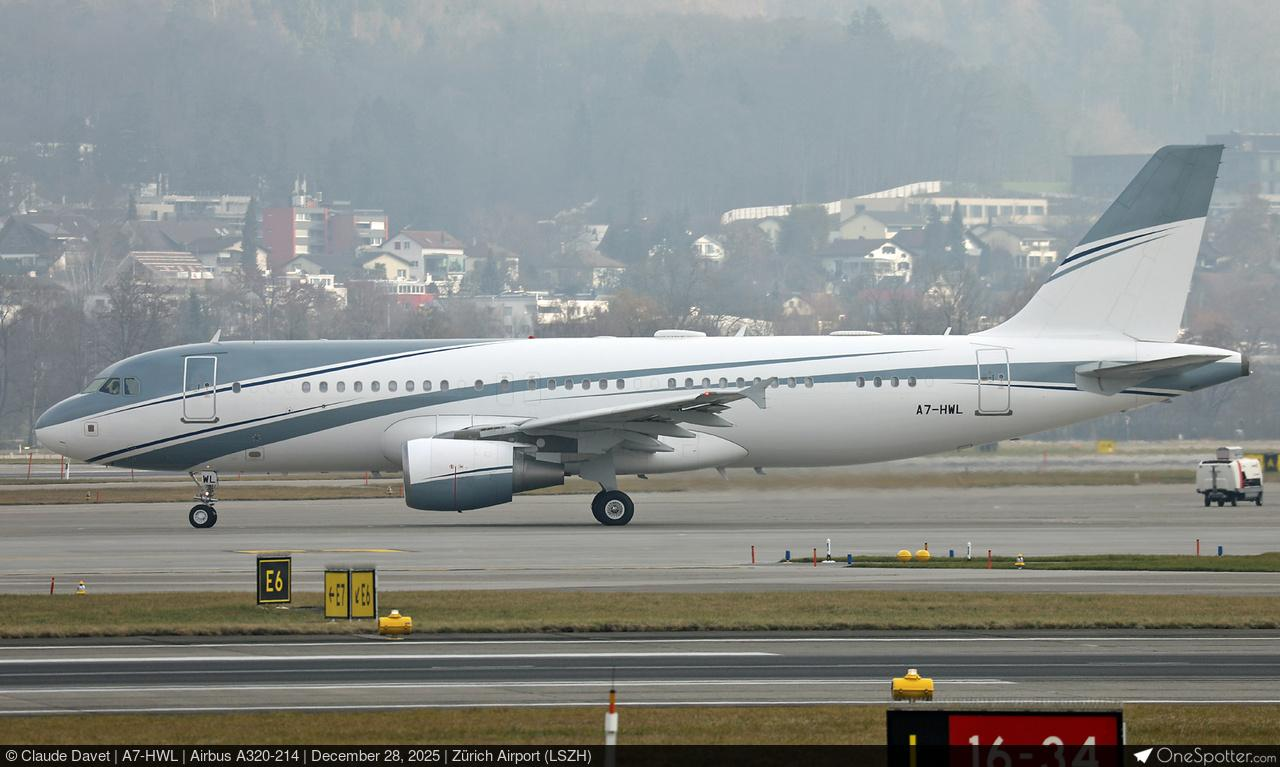
The aircraft's approach was unusually dramatic.
As the A320 descended toward Bern-Belp Airport, strong winds pushed against its flight path.
The jet appeared to move sideways relative to the runway, while its wings rocked and the crew adjusted its position.
The movements were visible in video filmed by Hänni.
The plane continued its descent and completed the landing.
The recording spread through Swiss news outlets and aviation-focused websites.
Its significance came from two circumstances: the difficult weather and the aircraft's role in transporting government officials.
The Qatari delegation was arriving ahead of a state visit by Emir Sheikh Tamim bin Hamad Al Thani.
The video documented a demanding aviation maneuver, not a reported attack aboard the aircraft.
The footage shows the aircraft during the final phase of its approach.
It captures the plane approaching the runway at an angle, apparently compensating for the wind.
As the aircraft gets closer to the ground, its alignment changes.
The pilots bring the aircraft toward the runway and complete the landing.
The camera remains outside the aircraft.
The footage therefore provides evidence of the landing conditions but cannot establish an incident inside the aircraft.
The publicly documented event begins and ends with the aircraft's visible approach and safe touchdown.
Hänni told Swiss newspaper 20 Minuten that winds were blowing at approximately 16 knots, with gusts reaching 35 knots.
That corresponds to gusts of roughly 65 kilometers per hour.
The strongest winds made the approach difficult.
Aviation reporting based on airport weather observations placed the wind from the west-southwest during the afternoon.
The aircraft was approaching a runway whose orientation created a substantial crosswind component.
Crosswinds require pilots to compensate for sideways movement while maintaining the correct descent path.
When the wind is gusting, those corrections can change rapidly.
The conditions explain why the plane appeared to rock and approach at an angle.
They do not establish that the aircraft suffered a mechanical malfunction or an onboard emergency.
Hänni was watching the aircraft from near the airport.
He told 20 Minuten that he repeatedly expected the pilots might abandon the approach and climb away.
In aviation, that maneuver is known as a go-around.
Pilots can perform a go-around when conditions make continuing a landing unsuitable.
The maneuver is a normal part of flight safety procedures.
The Qatar Amiri Flight crew did not ultimately need to abandon the approach.
Instead, the pilots continued and landed.
Hänni said he was impressed by the maneuver.
His comments concerned the strength of the wind and the crew's handling of the aircraft.
They did not describe a disturbance among passengers or any unauthorized person aboard.
The jet was an Airbus A320-214 registered A7-HWL.
It was operated by Qatar Amiri Flight, the government aviation service associated with Qatar's ruling family and official delegations.
The flight used the identifier QAF9.
Aviation reporting identified Doha as its departure point.
The aircraft was built in 2004 and entered Qatar Amiri Flight service in 2025, according to MiGFlug.
The A320 is widely used in commercial aviation, but this particular aircraft was operating in a government transportation role.
That distinction is important.
Its documented purpose was to transport members of the Qatari delegation to Switzerland.
Swiss media identified the passengers broadly as members of Qatar's government delegation.
Nau.ch reported that Qatar's finance minister, Ali bin Ahmed Al Kuwari, was among those traveling.
The minister met Swiss President Guy Parmelin on November 17, ahead of the emir's formal visit.
However, a complete passenger manifest has not been published in the sources reviewed.
That limits what can be established about every person aboard.
There is also no public reporting identifying a person who boarded under a false identity.
The available evidence establishes that government representatives traveled to Bern.
It does not establish that an unauthorized passenger or crew member joined them.
The aircraft's arrival was connected to a diplomatic program involving Qatar and Switzerland.
The A320 was part of the arrangements for the emir's visit, but reporting indicates that Sheikh Tamim bin Hamad Al Thani was not aboard that aircraft.
Swiss aviation coverage described another government aircraft associated with the emir traveling to Paris on November 17.
The emir arrived in Switzerland for the official visit on November 18.
That distinction helps explain why several government aircraft were moving through the region.
An advance delegation can arrive before a head of state.
Its members may participate in meetings and preparations.
The presence of a government-operated aircraft therefore does not automatically mean the country's leader is aboard.
The documented A320 flight carried part of the delegation, not a confirmed passenger list including the emir.
Qatar's emir visited Switzerland on November 18 and 19.
Swiss President Guy Parmelin received him in Bern with military honors.
The visit included talks involving Swiss government officials and representatives of Qatar.
Subjects included economic relations, financial cooperation, science, energy and regional diplomacy.
The trip marked an important stage in bilateral relations.
The A320's arrival on November 17 was part of the wider movement of officials ahead of those meetings.
This diplomatic context explains why the aircraft attracted public attention.
Government aircraft can carry senior officials whose travel schedules have political significance.
However, the diplomatic importance of a flight does not establish that a violent incident occurred aboard.
The reported arrival proceeded safely despite the challenging weather.
An aircraft approaching a runway in a crosswind may point its nose partly toward the wind.
That technique helps the plane maintain its intended ground track.
The aircraft can appear to be moving sideways when viewed from outside.
Pilots must then manage the aircraft's alignment as it approaches touchdown.
This is often called a crab approach.
The maneuver is a standard response to crosswind conditions.
It can look dramatic in videos, especially when the camera is positioned directly along or near the runway.
But the appearance of a sideways approach does not automatically indicate loss of control.
The crew must assess wind conditions, aircraft limitations and runway requirements.
In Bern, the aircraft completed its landing without a reported accident.
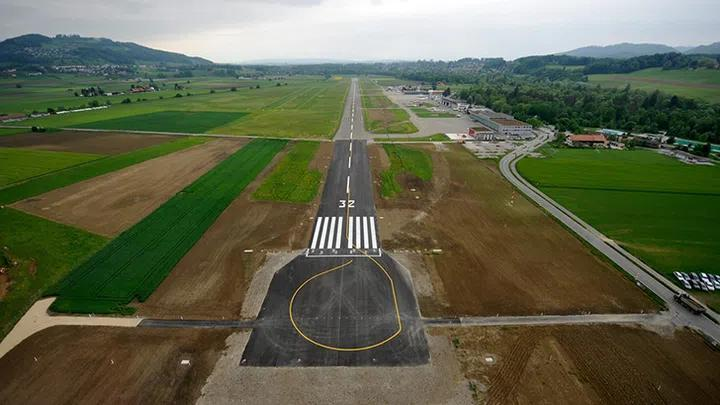
Bern-Belp is smaller than Switzerland's principal international airports.
Its main runway is approximately 1,730 meters long.
That makes runway performance and landing conditions particularly important for larger visiting aircraft.
The surrounding terrain can also influence local weather patterns.
Strong crosswinds create additional demands during approach and touchdown.
The A320 is among the larger aircraft that regularly attract attention when visiting Bern.
Hänni specifically remarked on the aircraft's size in relation to the airport.
The difficult approach therefore combined an unusual visitor with demanding weather.
Those circumstances explain the attention given to the landing.
The wind affected more than the Qatari A320.
Swiss media reported that a Swiss government Dassault Falcon 900 abandoned its approach shortly before the Qatari aircraft landed.
The Falcon subsequently diverted to Payerne.
That event provides independent context for the difficult weather.
A go-around or diversion is a recognized safety response when a crew decides not to continue an approach.
Different aircraft may face different operating limits.
Conditions can also change from one approach to the next.
The Falcon's diversion does not prove that the A320's landing was unsafe.
It demonstrates that the weather was challenging enough to affect multiple flights.
The Qatari aircraft ultimately landed successfully.
The reports reviewed do not identify an unauthorized person aboard the A320.
No passenger or crew member has been publicly named as an impostor.
No arrest, criminal charge or security investigation concerning a false identity has been documented in connection with this flight.
The publicly available video shows the aircraft from outside.
It cannot establish who entered the passenger cabin before departure.
The reports also do not describe a confrontation during the landing.
An allegation that someone impersonated a crew member would require evidence of that person's identity, role and unauthorized access.
Such evidence might come from an official investigation, authenticated records or reliable witness testimony.
None has been published in the sources reviewed.
The documented event remains a difficult but successful landing.
No onboard attack is described in the principal reports about the November 17 arrival.
Swiss outlets focused on the wind conditions and the pilots' landing maneuver.
They reported that the aircraft touched down safely.
There were no published accounts of a violent confrontation, an emergency medical evacuation or a police response to an attack aboard the aircraft.
The absence of such reports is especially relevant because the flight was associated with a high-level diplomatic visit.
An attack causing a death and multiple critical injuries would be a major criminal and diplomatic incident.
Establishing such an event would require credible evidence from medical authorities, police, the aircraft operator or other reliable sources.
The reports reviewed contain no such findings.
The headline's casualty figures are not supported by the documented event.
There is no confirmed death associated with an attack aboard the Qatari A320 in Bern.
There are also no confirmed reports of five passengers or crew members suffering critical injuries during the landing.
The figure of six people affected by violence does not appear in the Swiss coverage.
Instead, the reports describe a safe landing.
That distinction is fundamental to understanding the incident.
A turbulent approach can look alarming without resulting in injuries.
The visible movement of the aircraft does not establish what passengers experienced physically.
It also cannot establish an attack inside the cabin.
The confirmed outcome is that the plane landed safely, without a reported onboard casualty incident.
An aircraft carrying government officials may involve coordination between airport personnel, ground handlers and protective teams.
Access to operational areas is ordinarily controlled.
However, the public reports do not identify a disabled badge, a fraudulent credential or an individual improperly cleared to board the Qatari A320.
They also do not describe an airport employee authorizing an unauthorized person's access.
A claim about improper clearance would require specific evidence.
Investigators would need to establish the identity of the person, the credential used and the authority responsible for granting access.
The documented reporting contains no such information.
Government aviation can involve additional planning beyond routine passenger transportation.
Protective arrangements may include coordination between diplomatic representatives, aviation personnel and local authorities.
The details depend on the officials traveling, the airport and the circumstances of the visit.
Some procedures may not be publicly disclosed for security reasons.
However, a lack of public information about specific procedures does not demonstrate that those procedures failed.
It also does not establish that someone bypassed them.
In the Bern case, the available evidence identifies the aircraft, its government operator and the diplomatic purpose of the flight.
The question of who approved an alleged impostor's access has no identified person or documented clearance decision to examine.
Identifying someone as an impostor is a serious allegation.
It suggests that the person deliberately misrepresented their identity or authority.
If accompanied by an accusation of violence, the allegation becomes even more consequential.
Such claims cannot be established from an aircraft's registration, a video of its landing or the presence of a government delegation.
A reliable identification would require evidence connecting a specific person to specific conduct.
That could include official records, verified images, testimony or criminal proceedings.
Consequently, the reporting does not support naming a suspect.
The footage is valuable because it captures an actual aviation event.
It shows the aircraft approaching Bern-Belp in strong winds.
It documents visible corrections and the final touchdown.
When combined with weather observations and flight information, it helps establish the conditions under which the aircraft arrived.
The recording also allows observers to distinguish the aircraft from other government flights.
But the camera's viewpoint is limited.
It cannot reveal what happened inside the cabin.
It cannot identify a passenger's credentials.
It cannot establish that a security officer approved access.
It also cannot demonstrate that a crime occurred aboard.
The distinction between visible evidence and claims about unseen events is essential when interpreting aviation footage.
Aircraft moving sideways in strong winds can create a powerful visual impression.
A short video may show the most dramatic seconds of an approach without the wider operational context.
Viewers may not know the wind conditions, runway orientation or aircraft type.
They may also be unfamiliar with standard crosswind techniques.
In this case, the aircraft's government role added another layer of attention.
The flight was connected to an important state visit.
Those circumstances made the video newsworthy.
However, the verified footage does not support extending the story into an onboard attack.
The available reports establish a weather-related aviation event, not a criminal incident.
A difficult approach does not automatically constitute an aviation accident.
Pilots routinely encounter wind, turbulence and changing weather.
They are trained to evaluate whether an approach can be continued safely.
An accident generally involves consequences such as injuries, substantial damage or other criteria defined by aviation authorities.
The Bern reporting does not identify such consequences for the Qatari A320.
The plane completed its landing.
No damage or injury was reported.
The aircraft's visible movements are therefore best understood in the context of strong crosswinds.
The video documents a challenging landing maneuver.
It does not establish that the aircraft crashed, suffered an onboard attack or experienced a fatal emergency.
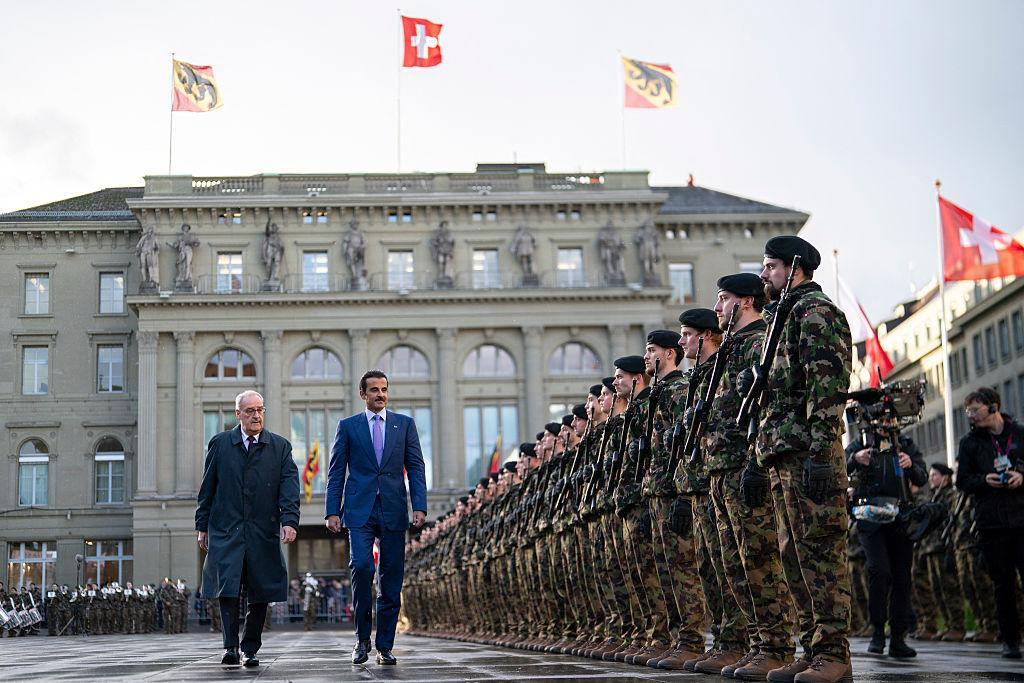
The Qatari delegation's arrival was followed by the scheduled diplomatic program.
Finance Minister Ali bin Ahmed Al Kuwari met Swiss President Guy Parmelin on November 17.
The emir's official visit began the following day.
Swiss and Qatari officials discussed bilateral relations and international issues.
The publicly reported sequence contains no interruption attributed to a violent incident aboard the A320.
The diplomatic activities continued in the context of the scheduled state visit.
That subsequent reporting provides additional context for the aircraft's arrival.
Several important facts have been established.
The aircraft was an Airbus A320-214 registered A7-HWL.
It was operated by Qatar Amiri Flight.
It arrived from Doha on November 17.
The flight carried members of the Qatari government delegation.
Strong crosswinds affected the final approach.
Wind gusts reached approximately 35 knots, or 65 kilometers per hour.
The aircraft landed safely.
The recording was made by aviation enthusiast Matthias Hänni.
Those details are supported by Swiss reporting and aviation records.
The complete passenger manifest has not been published in the reporting reviewed.
The exact control inputs used by the pilots are not available from the external video.
Nor has a detailed technical account of the flight been released.
Those limits do not prevent a clear understanding of the documented event.
The aircraft encountered difficult weather and landed successfully.
The public record does not establish a criminal investigation involving a disguised passenger or crew member.
A future official statement could add information about the flight.
But the currently documented facts do not support the alleged attack.
The Qatar Amiri Flight Airbus A320 arrived at Bern-Belp on November 17 during strong, gusting winds.
Its final approach was filmed and widely circulated.
The aircraft rocked and approached the runway at an angle as the pilots compensated for the crosswind.
The landing was completed safely.
Comments (0)
Loading comments...
May You Like

PACIFICA PIER IN CALIFORNIA COLLAPSE REVEALS MASSIVE CRACK BENEATH THE OCEANs!

PENTAGON'S PATRIOT MISSILE DELAY — A MAJOR SETBACK FOR UKRAINE'S AIR DEFENSE?

PUTIN RAISES LUKOIL DEAL WITH TRUMP’S ENVOYS AS UKRAINE PEACE TALKS CONTINUE













