
15 OF 20 AWÁ INDIGENOUS PEOPLE LINKED TO A 2006 MISSING-PERSONS CASE!
Twenty Isolated Awá Emerge From Brazil's Amazon as Old Investigation Raises Questions About Their Survival
MARANHÃO, Brazil — November 19, 2026 — About 20 members of an Indigenous community that has avoided sustained contact with outsiders emerged from Brazil's Amazon rainforest this week, approaching a neighboring village and requesting food. The rare encounter has revived concerns about illegal logging, the shrinking forest and the decades-long struggle to protect one of the country's most vulnerable Indigenous populations.
The encounter occurred on November 16 near the Guajajara village of Tawari and a government protection post inside the Arariboia Indigenous Territory in northeastern Brazil.
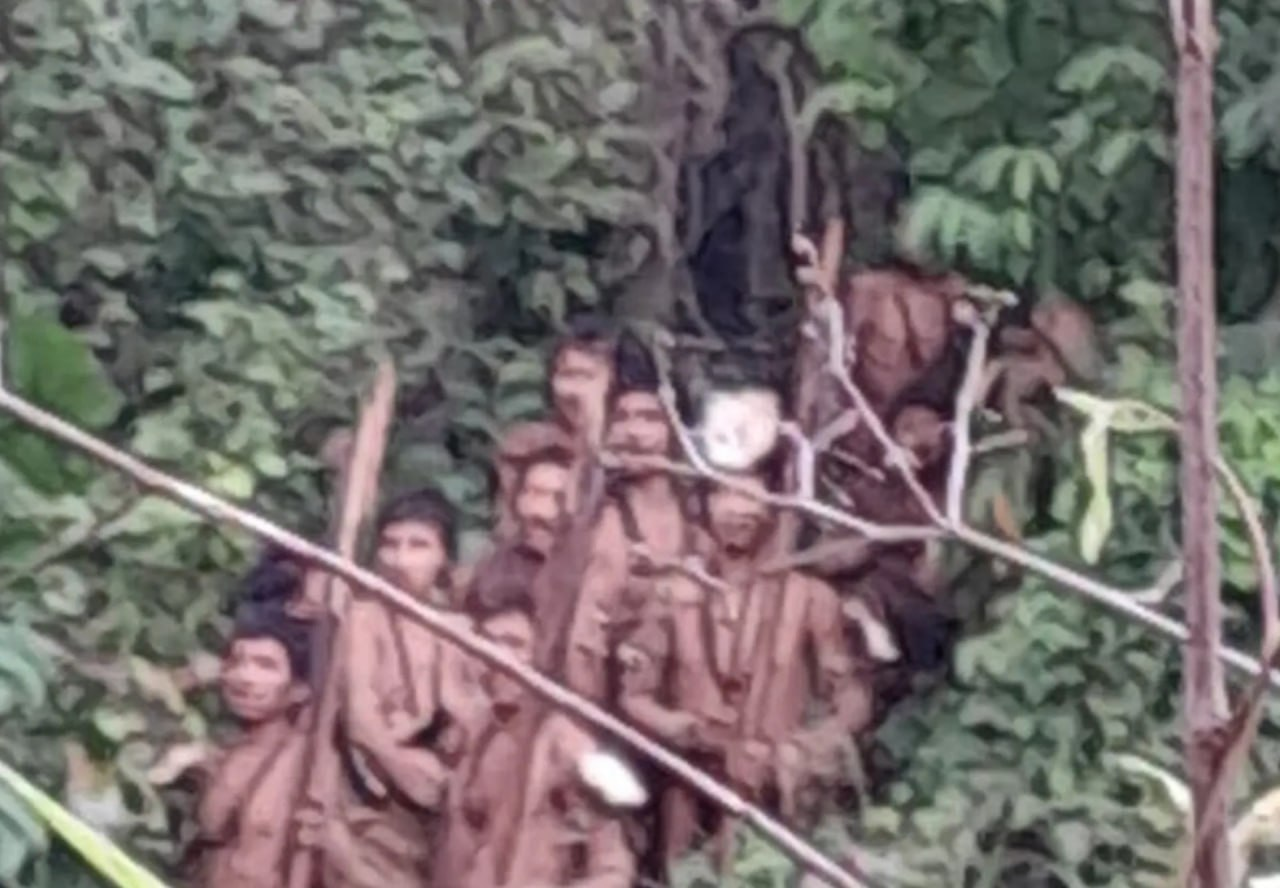
Footage recorded by Guajajara community members showed Awá adults and children standing near the forest's edge. Some carried bows and arrows.
The visitors reportedly requested yams, accepted food and returned to the forest.
Survival International released the footage on November 17 at the request of Indigenous forest defenders known as the Guardians of the Amazon.
Brazil's Indigenous affairs agency, Funai, activated precautionary procedures to protect the group's health and monitor the situation.
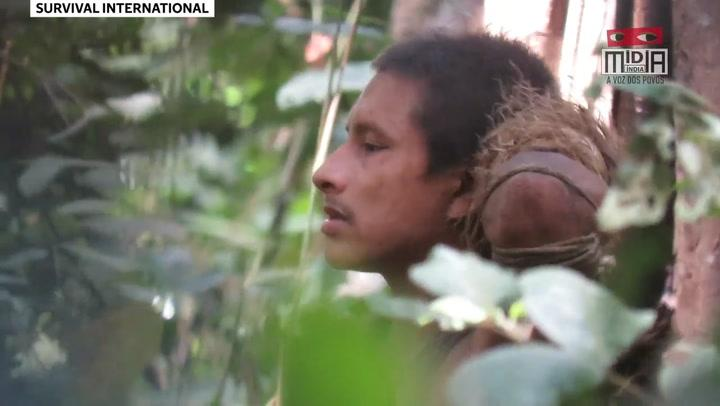
The visitors approached an area where government personnel and neighboring Indigenous residents maintain a presence.
The Awá have lived in voluntary isolation for decades, avoiding sustained relationships with wider Brazilian society.
That makes an encounter involving approximately 20 people especially significant.
According to Survival International, the visitors asked for yams and carried the food back into the forest.
The encounter was not described as a permanent move into the village.
Nor did it establish that the Awá had decided to abandon their isolated way of life.
Brazilian authorities emphasized that the group retains the right to remain apart from outsiders.
The immediate priority was to assess potential health risks while avoiding unnecessary contact.
The images offer a rare view of people who normally remain beyond public observation.
Adults and children appear near dense vegetation.
Some men carry bows and long arrows.
The group appears to communicate with neighboring residents and government personnel.
The footage provides evidence of the encounter but does not explain why the Awá approached the post.
It cannot establish whether they were experiencing a food shortage, fleeing intruders or responding to another emergency.
Reuters reported that it could not independently verify the footage's precise date and location, although the material was released by an established Indigenous rights organization and was consistent with accounts from Brazilian authorities.
That distinction matters because the images are evidence of an unusual event, not a complete explanation of its causes.
The Awá are traditionally skilled hunter-gatherers.
Their knowledge of the forest supports hunting, gathering and movement through territories that outsiders may find difficult to navigate.
A request for food can therefore raise concerns about changes in the conditions supporting their way of life.
Survival International suggested that pressure from illegal loggers, hunters and ranchers may have contributed to the encounter.
Those activities can disturb wildlife, reduce access to resources and make movement through the forest more dangerous.
However, the exact reason the group approached Tawari has not been established.
The request for yams is documented.
The circumstances that led to it remain a subject for careful monitoring rather than speculation.
The term uncontacted can be misleading.
It does not necessarily mean that an Indigenous community has never seen another person or has no awareness of the wider world.
Organizations working on Indigenous rights often use the term to describe communities that deliberately avoid sustained contact with outside society.
The Awá are not one uniform population living under identical circumstances.
Some Awá communities maintain regular contact with Brazilian society.
Others continue living in voluntary isolation.
These differences are important when interpreting population estimates or reports of encounters.
The November group belongs to the isolated population in the Arariboia territory.
Its appearance does not mean that every Awá community has changed its relationship with outsiders.
For Indigenous rights advocates, the event was not simply an unusual opportunity to photograph an isolated community.
It raised concerns about what might be happening inside the forest.
Sarah Shenker, head of Survival Brasil, described the encounter as a crisis signal and called for stronger protection against illegal intrusions.
Advocates argue that isolated communities sometimes approach outsiders when their traditional territory becomes less secure.
Logging roads, hunting activity and land encroachment can reduce the areas where communities can live without interference.
Such pressures may also increase the risk of confrontations.
The Awá's appearance therefore prompted questions about the condition of their forest and the effectiveness of existing protection measures.
Arariboia Indigenous Territory lies in Maranhão, a state on the eastern side of the Brazilian Amazon.
The territory is home to Guajajara communities and isolated Awá groups.
For the Awá, the forest provides food, shelter, travel routes and protection from unwanted contact.
Its importance cannot be measured solely by the number of trees remaining.
A functioning forest supports wildlife populations and seasonal food sources.
It also allows isolated communities to move between areas without crossing roads, farms or logging operations.
When outsiders enter the territory, the effects may extend beyond the immediate area of intrusion.
Hunting can reduce animals available to Indigenous families.
Roads can open previously inaccessible forest to additional traffic.
Repeated incursions can force communities into smaller areas.
Illegal logging has been a longstanding concern in parts of the Brazilian Amazon.
In Indigenous territories, unauthorized extraction can damage forests while creating opportunities for further encroachment.
Logging operations may require access routes, equipment and workers.
Those activities can disturb wildlife and bring outsiders closer to isolated settlements or hunting grounds.
Survival International has repeatedly warned that illegal loggers pose a danger to the Awá.
The organization said the November encounter should be understood against the background of increasing pressure on Arariboia.
The exact relationship between a particular logging operation and the group's decision to approach Tawari has not been established.
Nevertheless, the wider threat is documented.
Protecting the Awá requires preventing unauthorized activity in the territory, not simply responding after a rare encounter occurs.
Illegal hunters may enter Indigenous territory in search of wildlife.
Cattle ranching and agricultural expansion can also contribute to forest loss in surrounding areas.
Together, these activities can change the availability of food and the security of traditional routes.
For a community that depends heavily on hunting and gathering, the consequences may be serious.
The forest is not merely a place where people happen to live.
It is the foundation of their food system and cultural continuity.
The Awá's knowledge of plants, animals and seasonal conditions has developed over generations.
When that environment is disrupted, maintaining an isolated way of life becomes more difficult.
The November encounter renewed attention to these interconnected pressures.
The history of Arariboia contains an earlier episode involving an isolated Awá group of approximately 20 people.
In October 2011, Brazil's Indigenous affairs agency received a report alleging that an isolated Awá child had been killed.
Funai subsequently carried out monitoring and inspection activities in cooperation with the Federal Police.
According to historical documentation preserved in Funai's digital library, investigators did not find evidence confirming the alleged killing.
However, the operation located an isolated Indigenous group numbering approximately 20 individuals.
The investigation also documented pressure from logging activity.
This episode provides a genuine historical connection between police involvement, an isolated Awá population and concerns about forest intrusion.
The earlier investigation began with a serious allegation concerning a child.
Authorities sought to determine whether the reported killing had occurred.
Their fieldwork did not produce evidence substantiating the alleged homicide.
But the operation revealed important information about the presence and movements of isolated Awá.
The historical account described a group of approximately 20 people living inside the territory.
It also noted that logging roads were forcing isolated residents to move through increasingly restricted forest areas.
That observation remains relevant because it describes the same general category of pressure identified by advocates in 2026.
The earlier finding was not a solved murder case.
It was an investigation that failed to substantiate the reported killing while documenting an isolated population and threats to its habitat.
The resemblance between the historical group size and the November 2026 estimate is notable.
Both accounts involve approximately 20 isolated Awá in Arariboia.
But similar numbers do not establish identity.
A population can change over 15 years through births, deaths and movement between areas.
Different observers may also estimate group sizes differently.
The 2011 report did not establish a publicly available list of individuals that could be matched against the people filmed in 2026.
Nor does the November footage provide reliable identification of every person present.
Without an appropriate evidentiary basis, the two encounters cannot be treated as a reunion with people previously documented by police.
The meaningful connection is geographic and historical: both episodes concern isolated Awá facing threats in Arariboia.
The November reports from Reuters, Associated Press and Survival International describe approximately 20 Awá approaching Tawari.
They do not identify 15 members as subjects of a 20-year-old missing-person investigation.
The historical Funai documentation concerns an investigation initiated in 2011, approximately 15 years before the recent encounter.
It does not establish a case file containing the identities of 15 people who disappeared in 2006.
These distinctions are essential when comparing an old investigation with new footage.
A reliable identification would require authenticated records, an appropriate investigative process and safeguards protecting the Indigenous individuals involved.
A resemblance between images would not be sufficient.
There is also no documented reason to assume the Awá are missing people from another community.
Their voluntary isolation is a recognized way of life, not evidence of a disappearance.
Photographs of isolated Indigenous communities can provide important historical information.
They may help document the existence of a group, the condition of its territory or the presence of outside threats.
But photographs have limitations.
An image may not contain reliable information about the subject's name, age or family relationships.
Its date and location may also require independent verification.
Comparing a historical image with new footage is especially difficult when the people involved have not consented to identification or publicity.
No authenticated historical photograph has been linked to a criminal identification of 15 people in the November Awá encounter.
The available images instead document the presence of isolated Indigenous people and the need to protect their territory.
Their significance is humanitarian and historical rather than evidence of a solved disappearance.
The Guajajara are central to efforts to protect isolated Awá in Arariboia.
Members of the community have organized forest patrols to monitor illegal activity.
These Indigenous defenders are often known internationally as the Guardians of the Amazon or Guardians of the Forest.
They work in territory where logging, hunting and other unauthorized activities can create dangerous confrontations.
Their knowledge of local geography helps them identify changes in the forest.
However, their work can expose them to threats.
Advocates have documented violence against Indigenous forest defenders in Maranhão.
The Guardians' involvement in releasing the November footage reflects their role in drawing attention to the conditions facing isolated communities.
They have sought stronger government action against incursions rather than increased public access to the Awá.
The neighboring Guajajara community played a direct role in the November encounter.
Residents offered food to the Awá visitors.
Community members also recorded the event.
The relationship between neighboring Indigenous groups is important because they may have longstanding knowledge of one another's territories and presence.
That does not mean they share the same language or way of life.
Brazilian reporting indicated that communication between the Awá and Guajajara was limited.
The encounter therefore required caution.
Even well-intentioned assistance can introduce risks when an isolated population encounters people from outside its usual social environment.
The Guajajara response illustrates the difficult balance between providing immediate help and protecting the Awá's right to avoid sustained contact.
One of the most urgent concerns involves infectious disease.
Isolated populations may have limited exposure to pathogens circulating widely in larger communities.
That can make outbreaks particularly dangerous.
A seemingly ordinary respiratory infection could have serious consequences if introduced into a population with little previous exposure.
Brazilian authorities therefore treat unexpected encounters with isolated groups as potential public-health emergencies.
The November approach prompted Funai to activate contingency procedures.
The objective was not to bring the Awá into regular contact with outsiders.
It was to prepare for possible health needs while minimizing further exposure.
The response reflects lessons from earlier episodes of contact in the Amazon, where disease has sometimes caused devastating losses among Indigenous populations.
Funai said it had activated a contingency plan for situations involving contact with isolated Indigenous peoples.
The agency coordinated with Indigenous health authorities and specialist teams.
The measures included monitoring the situation and preparing for possible health emergencies.
Brazilian officials emphasized that the government's policy remained one of non-contact.
That policy recognizes the right of isolated Indigenous peoples to determine whether they establish relationships with outsiders.
A brief approach to request food does not automatically constitute a decision to change that relationship.
The protection plan therefore seeks to avoid unnecessary contact while maintaining the capacity to respond if a medical emergency arises.
This distinction is central to understanding the government's actions.
The authorities are preparing for possible consequences of the encounter, not organizing a permanent settlement or public introduction of the group.
The release of rare footage can attract considerable public attention.
It may also create pressure from people who want to visit the location or obtain additional photographs.
For isolated communities, that attention can create risks.
Unnecessary visitors may introduce disease.
They may disturb hunting areas or interfere with efforts to monitor the territory.
The publication of images therefore requires careful consideration.
Reuters reported that the footage was released at the request of the Guardians of the Amazon.
A Reuters video account also said images had been blurred to protect identities at the request of an Indigenous organization.
These measures reflect the difference between documenting a threat and encouraging direct access to the people involved.
The goal of protection is not to turn an isolated community into a public attraction.
The Awá's request for food does not mean they asked to be removed from their territory.
It also does not establish that they were seeking permanent settlement in a neighboring village.
The reported encounter was brief.
The visitors accepted yams and returned to the forest.
That sequence matters because isolated communities have the right to continue living according to their own choices.
Government assistance may be necessary when health or safety risks arise.
But such assistance should not automatically result in forced integration into wider society.
The appropriate response depends on the group's circumstances and the wishes it is able to communicate.
Brazilian authorities have emphasized respect for voluntary isolation.
The November event therefore calls for protection rather than an assumption that the Awá have abandoned their way of life.
Estimating the population of isolated Indigenous groups is difficult.
Researchers cannot conduct ordinary censuses without risking unwanted contact.
Population estimates may instead rely on observations, tracks, shelters, environmental monitoring and information from neighboring communities.
Survival International estimates that approximately 100 Awá remain in isolation.
That figure is an estimate rather than a current headcount.
The broader Awá population includes people who have regular relationships with surrounding society.
It would therefore be incorrect to treat the approximately 20 people seen near Tawari as the entire Awá population.
The encounter establishes that a group of roughly that size approached a neighboring community.
 The November footage attracted international attention because isolated Indigenous communities are increasingly vulnerable to territorial intrusion.
Survival International estimates that Brazil is home to 124 of the 196 known uncontacted Indigenous groups worldwide.
Those figures are estimates based on available documentation.
The precise number may change as researchers obtain new information.
Brazil's large share reflects the importance of the Amazon as a refuge for communities choosing to avoid sustained outside contact.
However, legal recognition of Indigenous territory does not automatically prevent illegal incursions.
Effective protection requires monitoring, enforcement and cooperation with neighboring Indigenous communities.
The Awá encounter therefore highlights a broader challenge: protecting people who may not want direct contact with the institutions responsible for defending their rights.
The 2011 investigation and the November 2026 encounter share an important theme.
Both drew attention to isolated Awá living in Arariboia under pressure from activities entering their territory.
The earlier inquiry documented an isolated group and movement caused by logging encroachment.
The recent encounter prompted concerns that the forest may again be failing to provide the security and resources the group needs.
That connection is more meaningful than an unsupported claim about a hidden missing-person case.
It shows that concerns about the Awá's safety are not new.
Authorities and Indigenous advocates have been aware of threats to their territory for many years.
The central question is whether protection efforts have been sufficient to address those threats.
Brazilian authorities are monitoring the situation and coordinating measures intended to protect the Awá from disease and further intrusion.
Indigenous organizations are calling for stronger action against illegal logging, hunting and other activities threatening Arariboia.
The Awá group that approached Tawari reportedly returned to the forest after receiving food.
That remains the most important immediate outcome.
The people involved have not been reported as permanently relocating or agreeing to sustained contact.
Future developments will depend on their circumstances, the condition of their territory and the effectiveness of protection measures.
The most consequential unanswered question is why approximately 20 Awá approached outsiders after decades of avoiding sustained contact.
The request for yams may indicate pressure on their food supply.
Illegal incursions may have contributed to insecurity.
Other explanations remain possible, and the footage alone cannot determine the cause.
The historical record shows that concerns about logging and the movements of isolated Awá were already being documented in 2011.
The recent images provide a rare glimpse of people whose survival depends on a forest increasingly affected by outside activity.
Comments (0)
Loading comments...
May You Like

IRAN WARNS WASHINGTON — HOW SERIOUS IS THE THREAT TO U.S. MILITARY BASES?

THANKSGIVING NIGHTMARE: OVER 1M BLACKOUTS, NEARLY 2M WATER ALERTS!

PENTAGON'S DECLASSIFIED UFO FILES — THE MYSTERY OF AN UNDERGROUND STORAGE PROJECT!








Popular Posts




