1,500+ Pounds of Pork Recalled in 8 States Over Listeria Risk
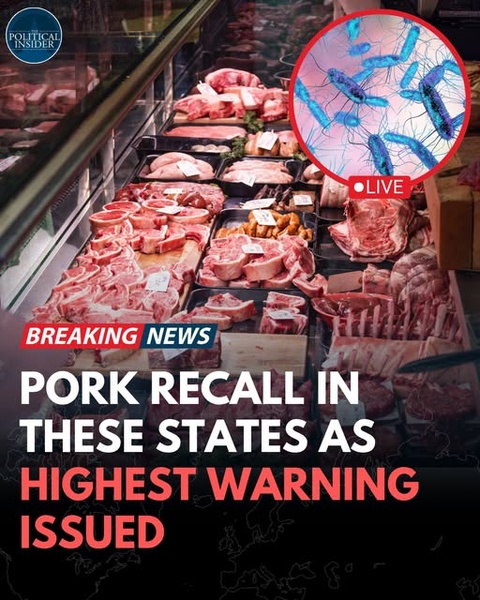
WASHINGTON — More than 1,500 pounds of imported ready-to-eat pork have been recalled across eight U.S. states after federal inspectors detected possible contamination with Listeria monocytogenes, prompting the USDA’s highest-risk recall classification.
A Nationwide Food-Safety Alert
The recall involves approximately 1,513 pounds of dry-cured pork jowl, known as guanciale, imported from Italy and distributed through retail and food-service locations in eight states.


The affected states are California, Florida, Idaho, Illinois, Michigan, New Jersey, New York and Texas, according to the U.S. Department of Agriculture’s Food Safety and Inspection Service.
The products were recalled by Prime Line Distributors Inc. and Ferrarini USA Inc. after routine import reinspection testing detected Listeria monocytogenes in a product sample.
Why the USDA Issued Its Highest Warning
The recall carries a Class I classification, the USDA’s most serious category for food recalls because consuming the contaminated product could create a reasonable probability of serious health consequences or death.
Importantly, the Class I designation does not mean that everyone who eats the product will become seriously ill, nor does it indicate that deaths have occurred. No illnesses had been reported when the recall was announced.
Federal officials discovered the problem through routine inspection procedures rather than through a reported outbreak, highlighting the role of testing in identifying potentially dangerous contamination before illnesses become widespread.
Which Products Are Affected?
Consumers should look for recalled dry-cured pork jowl products carrying lot number 263311US and a best-if-used-by date of May 16, 2027, according to recall information.
The products were produced in Italy on May 21, 2026, imported into the United States in July, and subsequently distributed through retailers and food-service establishments in multiple states.
The affected packaging carries the Italian establishment number “IT 1937 L CE,” a detail consumers and businesses can use when checking products stored in refrigerators or freezers.


What Is Listeria?
Listeria monocytogenes is a bacterium that can cause listeriosis, a potentially serious infection particularly dangerous for pregnant women, newborns, older adults and people with weakened immune systems.
Symptoms can include fever, muscle aches, nausea and diarrhea, while severe infections may cause confusion, loss of balance, seizures or other serious complications requiring medical treatment.
For pregnant people, listeriosis can be especially dangerous because infection may lead to miscarriage, stillbirth, premature delivery or serious illness in newborns, even when the mother’s symptoms appear relatively mild.
What Consumers Should Do
USDA officials are advising consumers not to eat the recalled products, while retailers and food-service operators should immediately check inventories and remove affected packages from sale or service.
People who discover affected products in their refrigerators or freezers should discard them safely or return them to the place of purchase rather than consuming them.
Consumers who believe they became ill after eating recalled pork should contact a healthcare professional, particularly if they belong to a group considered more vulnerable to severe listeriosis.
No Outbreak Has Been Reported
Despite the seriousness of the recall classification, authorities had not reported any illnesses connected to the recalled pork at the time of the USDA announcement.
That distinction is important because a food recall can occur after laboratory testing identifies contamination before investigators establish a connection between the product and human illnesses.
The USDA continues to monitor recall activity through its Food Safety and Inspection Service, which maintains a public database of meat, poultry and processed-egg recalls and health alerts.
A Warning for Consumers Nationwide
Although the recalled products were distributed across eight states, consumers elsewhere should continue monitoring official USDA notices because food products can move through restaurants, wholesalers and retail supply chains.
The latest recall demonstrates why consumers should pay attention to lot numbers, establishment codes and expiration dates, rather than relying solely on brand names when checking food-safety alerts.
The viral graphic accompanying this story correctly highlights a serious pork recall and the USDA’s highest-risk classification, but the situation is more specific than a warning against all pork products.
Only the identified recalled products are subject to this particular recall, and consumers should verify packaging information before deciding whether a product is affected.
As federal inspectors continue monitoring the recall, the central message remains straightforward: if the recalled guanciale is in your refrigerator or freezer, do not eat it—discard it or return it safely.
Comments (0)
Loading comments...
May You Like

FIGHT OVER OBAMA’S IRAN POLICY

TRUMP’S OHIO WARNING UNDER THE SPOTLIGHT