1st Owner vs. 7th Owner: What the Viral Car Meme Really Means
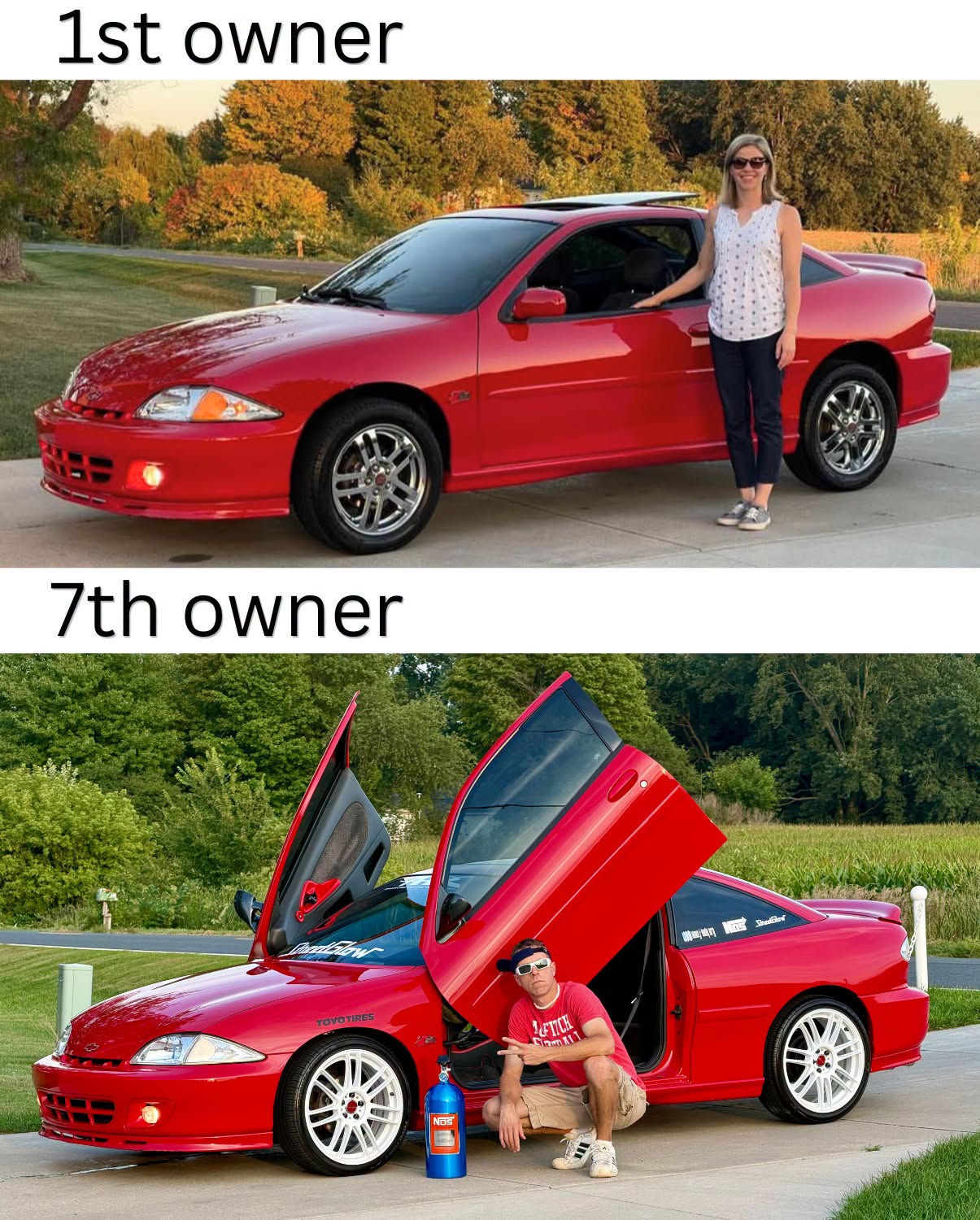
The viral image is simple: "1st owner" next to a pristine vehicle, and "7th owner" next to a beat-up version of the same car. The message is clear — the more owners a car has, the worse its condition. But is that actually true? Or is the "one-owner myth" just that — a myth?
The viral graphic plays on a deeply ingrained belief in the used car market: fewer owners equals better quality. The image contrasts the idealized "first owner" with the stereotypical "seventh owner" — someone who has inherited a car that has been passed down through multiple hands, often with questionable maintenance records and hidden issues.
But the full story behind the meme reveals a far more complex reality.
The One-Owner Myth
"One owner" is perhaps the most commonly overstated quality indicator in used car listings . Many buyers assume that a car with a single owner has been treated with care, driven gently, and meticulously maintained. But as experts point out, this is not always the case.
"One owner" does not indicate careful maintenance, gentle use, or good mechanical condition — it indicates that a single entity held the title throughout the vehicle's life. A one-owner car with no service records, high mileage, and deferred maintenance is a worse purchase than a three-owner car with complete documentation and consistent service history .
In fact, a car with one owner that was neglected — skipped oil changes, driven hard, never garaged — can be far worse than a car that passed through several meticulous owners who kept every receipt and service record .
Why a Car Might Have Many Owners
A car with seven or eight previous owners can be perfectly fine to buy . Here are some common reasons why a car accumulates multiple owners that have nothing to do with mechanical problems:
| Reason | Explanation |
|---|---|
| Demonstrator or pre-registered | The "first owner" is actually a dealership that registered the car to meet sales targets . |
| Short-term leases | A 3-year lease to the first owner, then sold to a second owner who also leased it briefly . |
| Title changes within the same family | A car can change hands multiple times within the same family through title transfers, showing multiple "owners" on the logbook . |
| Re-financing | When a buyer refinances a car, the title can show a new "owner" even though it's the same person driving it . |
| Sports cars and "fun" vehicles | Cars that are used for pleasure, not daily commuting, are often sold more frequently as owners get bored or want to try something new . |
One forum member shared a telling example: a Camaro he bought showed six previous owners on the Carfax. It turned out the first owner bought it single, re-titled it after marriage, re-titled it again after divorce, re-titled it after remarriage, then sold it to her sister, who sold it to a friend. Over 22 years, the car had accumulated five "owners" — but only two actual physical transfers .
The "Hot Potato" Red Flag
While many owners alone isn't a dealbreaker, there is one pattern that should raise concern: the "hot potato" car.
If a vehicle shows a series of owners who each kept it for less than a year, especially if records show it visited repair shops during those short periods, that's a big red flag . This pattern suggests the car had problems that each owner tried to fix but eventually gave up on — passing the problem to the next unsuspecting buyer.
A car with seven owners who each held it for two or three years, with consistent maintenance records, is a far safer bet than a car with two owners who each dumped it within six months.
What Experts Say
Service history matters far more than owner count. According to industry experts, a car with complete, verifiable maintenance records — regardless of how many owners it has had — is usually a better investment than a "one-owner" car with no paperwork .
The ideal ownership pattern for the lowest risk is:
-
Two to three owners over the vehicle's life
Each ownership period of two or more years
No fleet, rental, or commercial ownership (or full documentation if there was)
Consistent service record entries throughout each ownership period
The seller's account matches the documented record
Some Porsche enthusiasts have even argued that a car with multiple owners can be a good thing: "7 owners means 7 PPIs [pre-purchase inspections], updates, and services... that is a good thing" .
The Bottom Line
| What the meme suggests | What the data shows |
|---|---|
| 1st owner = perfect car | A one-owner car can be neglected and abused just like any other . |
| 7th owner = disaster | A seven-owner car with full service records can be an excellent purchase . |
| More owners = lower value | While resale value can be affected, condition and maintenance history are the true drivers of value . |
| The owner count tells the whole story | Owner count is a starting point for questions, not a quality certification . |
The viral image captures a common perception: the first owner is pristine, the seventh is a disaster. But the full story reveals that owner count alone tells you almost nothing about a car's actual condition. What matters far more is whether that car was maintained, how long each owner kept it, and whether the paperwork backs up the story.
Whether you're the first owner of a new car or the seventh owner of a used one, the key question isn't the number on the title — it's the history in the service records.
Comments (0)
Loading comments...
May You Like

TRUMP’S OHIO WARNING UNDER THE SPOTLIGHT

gfnhgmnghnmfgnbvvvvvvvvv