
A New Front Is Opening in Yemen — and the Houthis Could Threaten a Vital Global Shipping Route
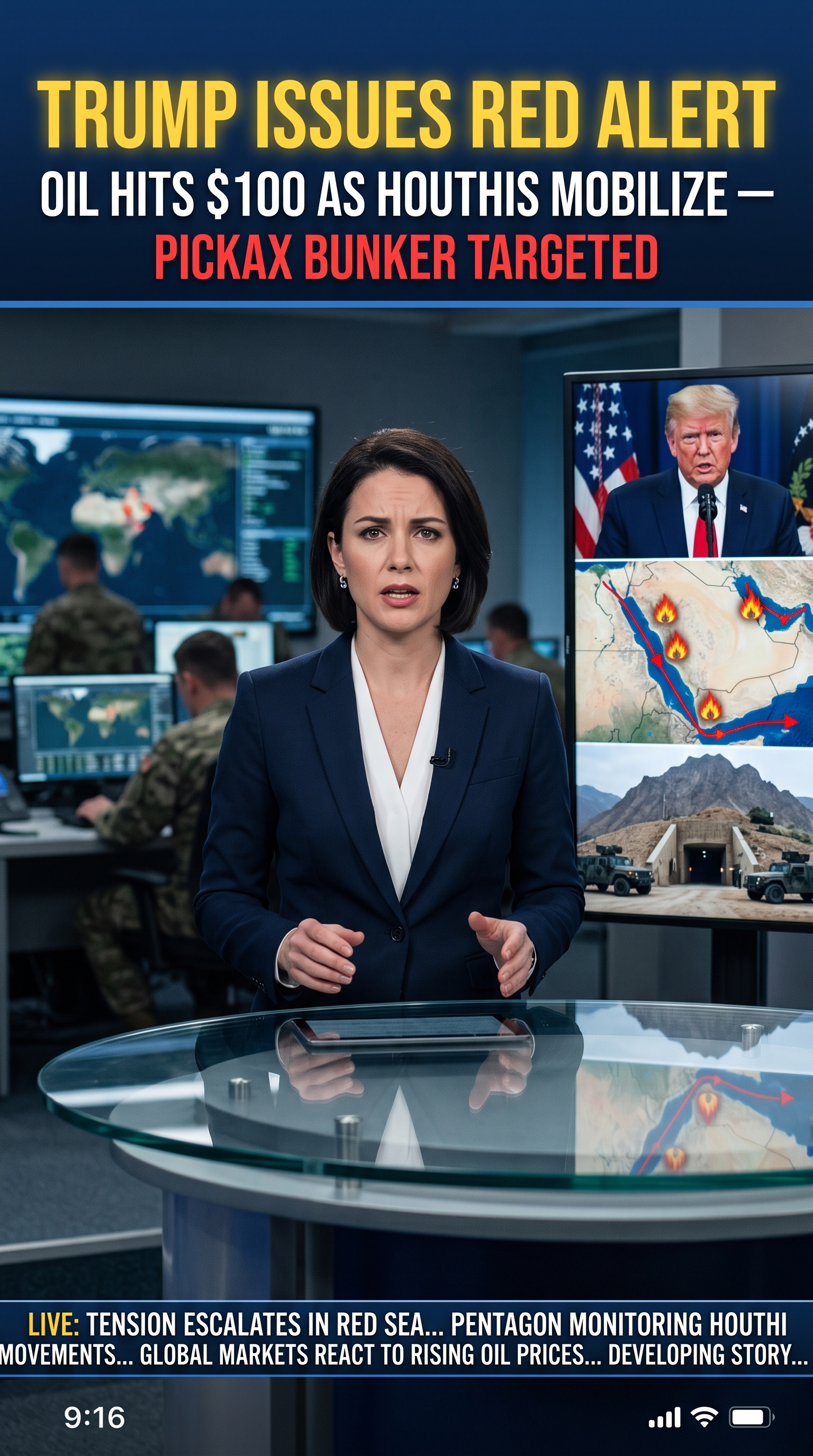
The Houthi advance toward the Bab el-Mandeb Strait is adding another dangerous dimension to the widening U.S.-Iran conflict, raising fresh concerns about global shipping, oil prices and the possibility of a broader regional war.
A new front is rapidly emerging in the Middle East.
Iran-aligned Houthi forces in Yemen have seized the strategically important port city of Mocha and advanced along the country's Red Sea coast, bringing the group closer to the Bab el-Mandeb Strait — one of the world's most important maritime chokepoints.
The development comes as the United States and Iran remain locked in a widening military confrontation and as shipping through the nearby Strait of Hormuz faces severe disruption.
The result is a potentially dangerous scenario in which Iran-aligned forces could exert pressure on two critical waterways on opposite sides of the Arabian Peninsula.
Reuters reported Thursday that the Houthi advance was supported by Iranian weapons and strategic guidance, according to Yemeni, Iranian and regional sources. Iran publicly denies directing the Houthis and has rejected the characterization of the group as simply an Iranian proxy.
But the strategic consequences are difficult to ignore.
Why Bab el-Mandeb Matters
The Bab el-Mandeb Strait connects the Red Sea with the Gulf of Aden and serves as a major gateway between the Indian Ocean and the Suez Canal.
For global shipping, it is far more than a narrow strip of water.
Commercial vessels traveling between Asia and Europe can use the route to avoid sailing around the southern tip of Africa. Any sustained disruption can therefore force ships onto longer and more expensive routes.
That makes control of the surrounding coastline strategically valuable.
The Houthis have previously demonstrated their ability to threaten commercial and military vessels in the Red Sea. U.S. maritime authorities have repeatedly warned that vessels with U.S., British or Israeli connections could face elevated risks in the region.
Now, the group is moving closer to the very territory that overlooks the strait.
The United Nations has warned that the renewed fighting could have serious consequences for Yemen and the wider region.
The latest offensive also threatens to undo a fragile period of relative calm that followed the 2022 truce in Yemen.
The Houthis Are Already Hitting Saudi Arabia
The escalation is not limited to Yemen.
On September 8, Houthi forces launched a major wave of missile and drone attacks against southern Saudi Arabia.
Saudi authorities said 73 people were wounded and reported fires at oil facilities and other infrastructure. Operations at several energy facilities were temporarily suspended.
The attacks targeted areas including Jazan, Abha, Najran and Khamis Mushait.
The Houthis said they were targeting Saudi military and economic infrastructure, including facilities connected to the country's massive energy industry.
Saudi officials described the attacks as a serious escalation and vowed to defend the kingdom.
That creates another potential problem for Washington.
Saudi Arabia is a major U.S. partner, while American forces remain deeply involved in protecting shipping and military assets across the region.
If Houthi attacks continue to expand, the United States could face pressure to respond directly.
What Happens If an Iranian Missile Hits a U.S. Warship?
That possibility has become one of the most dangerous questions surrounding the current conflict.
Iran has demonstrated a growing ability to launch ballistic missiles and drones across the region. American naval forces rely on layered air and missile defenses to protect ships and personnel.
But no defensive system is perfect.
If an Iranian missile were to successfully strike and seriously damage or destroy a U.S. warship, the political pressure for a major American response would be enormous.
Washington could potentially move beyond attacks on Iranian military assets and target command-and-control facilities, missile infrastructure, air-defense systems and other installations supporting Iranian military operations.
Such a response could trigger another round of retaliation.
And that is exactly the scenario U.S. commanders have sought to avoid: a cycle in which every strike produces a larger counterstrike.
The involvement of Russia and China is another concern raised by analysts, particularly regarding Iran's access to advanced military technology and targeting capabilities.
However, the precise extent of Russian or Chinese assistance to Iran remains difficult to independently establish.
Oil Is Becoming a Political Problem in Washington
The military crisis is already being felt at gas stations.
Brent crude recently moved above $100 per barrel as traders reacted to growing fears of supply disruptions. Reuters reported that Brent prices climbed more than 4% after the Houthi advance toward the Red Sea coast, while other market reporting put Brent above $105.
The significance goes beyond Wall Street.
For American consumers, higher crude prices can eventually translate into higher gasoline prices, higher transportation costs and renewed inflation pressure.
And with the U.S. midterm elections approaching, energy prices have become an increasingly sensitive political issue.
President Donald Trump has said he expects the broader war to eventually end, but the expanding conflict creates a difficult political calculation for the administration.
The White House has emphasized American military dominance in the region and has specifically pointed to U.S. intelligence capabilities monitoring Iran.
Trump Warns Iran Over Pickaxe Mountain
Trump has also publicly warned Iran against taking actions that Washington considers threatening.
In an appearance highlighted by the White House, Trump said U.S. intelligence was closely monitoring Pickaxe Mountain in Iran and credited the Space Force with providing highly capable surveillance of the area.
The comments were significant because Pickaxe Mountain is associated with Iran's sensitive military and nuclear infrastructure.
Trump warned Tehran not to "get cute," saying the United States would respond forcefully if necessary.
The statement underscored a broader reality of the conflict: American intelligence and surveillance capabilities are playing a central role in determining what Washington believes Iran is doing before deciding whether military action is required.
The Underground Problem
One of the hardest military challenges is Iran's network of hardened and potentially underground facilities.
Deeply buried installations are designed specifically to survive conventional attacks.
Destroying such facilities is considerably more complicated than striking a surface target.
Military planners can potentially target entrances, power infrastructure, communications systems and other supporting facilities, but the effectiveness of any attack would depend heavily on the depth, construction and configuration of the individual site.
That means a facility buried beneath a mountain presents a fundamentally different challenge from an exposed missile launcher or radar installation.
It also creates a dangerous incentive for both sides.
Iran has reasons to move sensitive military capabilities underground.
The United States has reasons to find ways to neutralize them.
The deeper that competition goes, the more difficult it becomes to control escalation.
Two Chokepoints, One Growing Crisis
Perhaps the most important development is how the various pieces of the conflict are beginning to connect.
Iran's confrontation with the United States is affecting the Strait of Hormuz.
The Houthi advance is threatening the Bab el-Mandeb.
Together, those waterways form two critical gateways for international commerce and energy shipments.
Reuters described the Houthi capture of Mocha as a move that could tighten Iran and its allies' influence around the Bab el-Mandeb while the wider conflict is already disrupting Hormuz.
That is why Washington, Riyadh and international shipping companies are watching Yemen so closely.
This is no longer simply another chapter in Yemen's long-running civil war.
It is becoming part of a much larger regional confrontation.
For American consumers, the consequences may eventually show up in the most familiar place of all: the gas pump.
For the U.S. military, the concern is even more immediate.
American ships could face additional attacks. U.S. forces stationed across the Middle East could come under pressure. And every successful Iranian or Houthi strike could increase demands for a stronger American response.
The biggest question now is not whether the Middle East has another front.
It does.
The question is whether that new front remains contained in Yemen — or becomes the next major escalation point in a conflict that is already threatening some of the world's most important shipping routes.
Comments (0)
Loading comments...
May You Like

gfnhgmnghnmfgnbvvvvvvvvv
TRUMP HIT WITH 26 ARTICLES OF IMPEACHMENT














