
A New Wave of U.S. Forces Is Moving Toward the Middle East — and Trump Is Signaling What Could Come Next
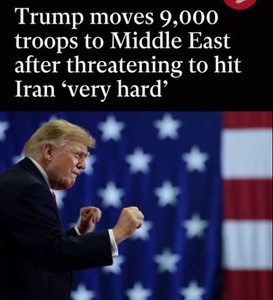
WASHINGTON — Thousands of additional U.S. sailors and Marines are heading toward the Middle East as President Donald Trump weighs further military action against Iran, adding a major new element to an already tense regional confrontation.
A Major Reinforcement Is Underway
The Pentagon is deploying roughly 9,000 additional U.S. personnel aboard a group of warships, according to a U.S. official cited by The Associated Press.
The force includes the USS Theodore Roosevelt Carrier Strike Group and the USS Makin Island Amphibious Ready Group, bringing another aircraft carrier and amphibious forces toward the region.
The deployment is expected to increase the number of U.S. personnel operating in the region to more than 20,000 once the additional forces arrive, according to AP and CBS News reporting.
The ships are not being described as an immediate launch force for a new attack. Their movement instead gives U.S. commanders additional naval and Marine capabilities while Washington considers its next steps.
Why the Timing Matters
The buildup comes after months of conflict between the United States and Iran, followed by an uneasy pause and unsuccessful diplomatic efforts to reach a broader settlement.
Trump has indicated that additional military action against Iran could resume after the U.S. midterm elections if negotiations fail, while also saying the conflict could end sooner. CBS News
The Wall Street Journal reported that the Pentagon's preparations could eventually put three U.S. carrier strike groups and thousands of additional personnel in the region.
That would give Washington a substantially larger concentration of naval aviation, missile-defense systems, aircraft and Marine forces at a time when tensions with Tehran remain unresolved.
The Iran Connection
Trump's latest warnings have also been linked to a recent incident involving a Flydubai flight traveling from the United Arab Emirates toward Israel.
The aircraft was diverted to Saudi Arabia after its Omani co-pilot allegedly attacked the captain during the flight. Passengers and crew members helped restrain him before the plane landed safely.
Trump has suggested that the co-pilot could have connections to Iran and said Iran would face severe consequences if investigators establish Tehran's involvement.
However, authorities have not publicly established an Iranian role in the aviation incident. Investigations involving several countries remain underway.
That distinction is important as the military buildup proceeds. The deployment is a confirmed movement of U.S. forces, while any Iranian connection to the Flydubai incident remains an allegation under investigation.
More Than Just an Aircraft Carrier
The USS Theodore Roosevelt is accompanied by its carrier strike group, providing a combination of fighter aircraft, support vessels and other naval capabilities.
The Makin Island Amphibious Ready Group adds another type of force, carrying Marines and aircraft capable of operating from the sea.
The U.S. Navy has previously described carrier and amphibious formations as forces capable of responding to a range of contingencies, including maritime security, evacuation operations and combat missions.
The combination gives American commanders several options without requiring all forces to operate from bases inside the region.
The Strait of Hormuz Remains Central
The military buildup is also unfolding as the United States and Iran remain at odds over the Strait of Hormuz, one of the world's most important energy routes.
reported that uncertainty surrounding the confrontation has already affected regional financial markets, while oil prices have responded to concerns about potential disruptions to energy supplies.
Iran has proposed conditions for ending hostilities and reopening the strait, according to , but Trump has rejected the latest proposal as insufficient.
The dispute means that any renewed military action could have consequences beyond the battlefield, particularly for shipping, oil markets and countries dependent on Gulf energy exports.
Tehran Is Preparing for Another Possibility
Iranian officials are also preparing for the possibility that the United States resumes large-scale attacks.
reported that Iranian military commanders are reviewing potential retaliation plans and that Tehran could expand the range of targets if American strikes resume.
That creates a difficult security calculation for Washington: additional forces can provide greater military flexibility, but their arrival could also increase the number of U.S. personnel and assets potentially exposed to Iranian retaliation.
Regional governments are therefore watching the deployments closely as diplomatic efforts continue alongside military preparations.
What Happens Next?
The immediate question is not simply whether more U.S. forces are arriving, but what mission they will ultimately receive.
The additional ships and personnel give Trump more military options, but their deployment alone does not establish that another major attack on Iran has been ordered.
For now, Washington continues to weigh military pressure against negotiations, while Tehran prepares for the possibility of renewed strikes and regional markets react to the uncertainty.
The next major signal could come from either diplomacy or military orders. If negotiations fail and Trump follows through on his warnings, the forces now moving toward the Middle East could become part of a much larger escalation.
Comments (0)
Loading comments...
May You Like

OBAMA STEPS BACK INTO THE POLITICAL SPOTLIGHT

South Korea–Ukraine Rift Deepens Over North Korean POW Transfer as PURL Draws New Scrutiny

Obama Steps Back Into the Political Spotlight as Democrats Target Trump’s Senate Majority













