A Police Officer Shot Herkimer
Wendy Love and Jay Hamm spent years challenging the 2019 shooting of their 14-month-old dog. A federal appeals ruling kept their Fourth Amendment claim alive, the Supreme Court declined to intervene, and Loveland ultimately agreed to a $675,000 settlement with new recurring canine-interaction training.
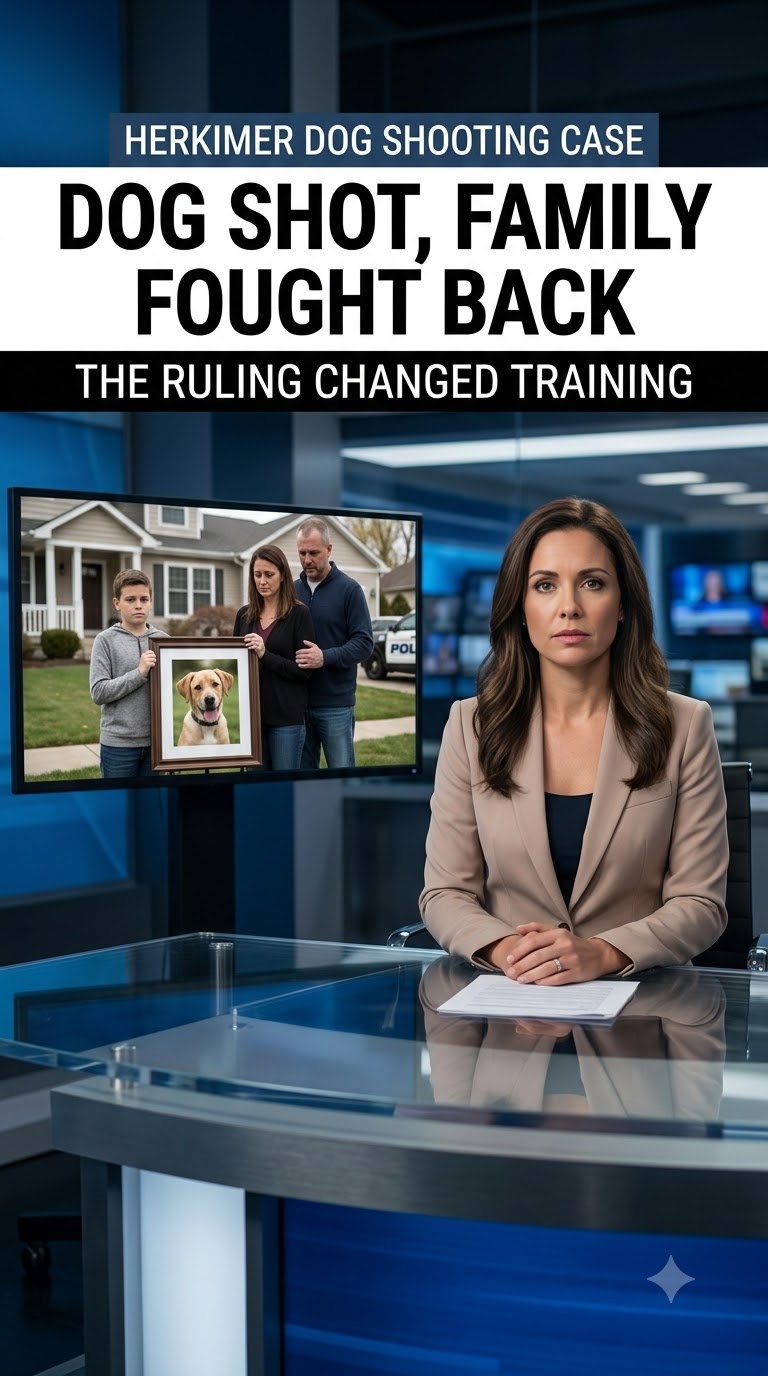
When Loveland police Officer Mathew Grashorn stepped out of his patrol car in a Colorado parking lot in June 2019, the encounter that followed lasted only seconds.
Its consequences lasted nearly seven years.
Grashorn fired twice at Herkimer, a 14-month-old Staffordshire terrier and boxer mix belonging to Wendy Love and Jay Hamm. Herkimer was badly wounded and was euthanized four days later.
The couple sued, arguing that the shooting was an unreasonable seizure under the Fourth Amendment. Grashorn maintained that the dog was charging him and posed an immediate threat.
That factual dispute became the center of a long legal battle — one that survived an appeal over qualified immunity, reached the U.S. Supreme Court’s docket, and eventually ended in a $675,000 settlement that also changed how Loveland officers are trained for encounters with dogs.
The case in five dates
What happened in the parking lot
According to federal court records, Love and Hamm had stopped in the parking lot of a commercial property after business hours. They had three dogs with them and said they were taking a break, repairing an ice box on their truck and giving the animals water.
The business owner saw the truck remotely and called police to report that people were on the property.
When Grashorn arrived, one of the couple’s dogs, Bubba, got up and moved toward him. Grashorn drew his firearm. Hamm called Bubba back, and the dog returned to the owners.
Herkimer then came out of the truck and moved in Grashorn’s direction.
What that movement meant is where the two sides sharply diverged.
The city and the officer described Herkimer as charging and failing to respond to commands. The owners said the young dog was friendly, was wagging his tail and was approaching without signs of aggression.
Grashorn fired two shots when Herkimer was only a few feet away.
Body-camera video captured the encounter, but the recording did not include audio during the critical opening seconds. That meant some disputed details — including what the owners were saying and how Herkimer was responding — could not be resolved simply by listening to the footage.
The central factual dispute
The owners’ account
Herkimer appeared curious and friendly, showed no aggression, and could have been controlled or avoided without lethal force. They argued that Grashorn had other options.
The officer and city’s account
Herkimer continued toward Grashorn after another unleashed dog had already approached him, creating what the officer perceived as an immediate safety threat.
Why the lawsuit became a constitutional case
Under federal law, killing a person’s dog can qualify as a “seizure” of property under the Fourth Amendment. The question is whether that seizure was reasonable under the circumstances.
Love and Hamm argued that it was not.
Grashorn sought qualified immunity, a legal doctrine that can shield government officials from civil liability when their conduct does not violate clearly established law.
The federal district court refused to grant him summary judgment on that basis. The court concluded that a reasonable jury could view the evidence in the owners’ favor and find that Herkimer did not pose an immediate danger.
Grashorn appealed.
In April 2025, the Tenth Circuit affirmed the district court’s ruling. The appeals court did not declare that Grashorn was automatically liable or decide every disputed fact. Instead, it held that, using the version of events a jury could reasonably accept at that stage, the shooting could amount to a clearly established Fourth Amendment violation if Herkimer posed no immediate threat.
It did not itself order Loveland to retrain officers or award the family money. It allowed the constitutional claim against Grashorn to continue despite his qualified-immunity defense.
The Supreme Court was asked to step in
Grashorn then asked the U.S. Supreme Court to review the case.
His petition challenged the way the lower courts had handled qualified immunity and the assessment of the disputed facts surrounding the dog’s movement toward him.
The Supreme Court did not take the case.
On January 12, 2026, the justices denied the petition for certiorari. As usual with such denials, the Court gave no opinion on the merits. The practical effect was that the Tenth Circuit’s decision remained in place and the lawsuit could continue.
That procedural development increased the pressure on the parties to either prepare for further litigation or reach a resolution.
The settlement changed more than the dollar amount
By May 2026, the City of Loveland had agreed to settle the case for $675,000.
The payment drew headlines because the family’s attorney described it as the largest settlement in Colorado history involving a police shooting of a pet. The city itself did not admit liability in announcing the resolution.
More significant for Love and Hamm was the policy component.
As part of the agreement, Loveland agreed to update its dog-encounter policies and training practices. Officers will be required to undergo dog-interaction training every three years rather than relying only on the one-time training required under Colorado law before employment.
The city said its policies and training had already evolved since 2019 and that additional updates were being reviewed and implemented.
What changed after the case
| Before the settlement | After the settlement |
|---|---|
| Colorado law required officers to receive canine-encounter training before employment, but did not require recurring retraining on a three-year cycle. | Loveland officers are now required to complete dog-interaction training every three years. |
| The litigation focused on whether the officer’s use of lethal force was constitutionally reasonable. | The city agreed to update its dog-encounter policy and training practices as part of resolving the case. |
| The case remained unresolved for years while qualified immunity was litigated. | The $675,000 agreement ended the civil case without a trial and without an admission of liability by the city. |
The shooting also raised questions about what happened afterward
The original lawsuit challenged more than the moment the trigger was pulled.
Love and Hamm said they wanted to take Herkimer for veterinary treatment immediately. Court records show that they were allowed to leave with him roughly ten minutes after the shooting.
The couple was also cited in connection with a dangerous-dog allegation. That charge was later dismissed by the district attorney’s office.
Herkimer survived for four days before being euthanized because of his injuries.
The emotional impact of that sequence became a major part of the family’s public explanation for continuing the case long after the shooting itself had left the news cycle.
Their attorney repeatedly argued that the lawsuit was intended not only to compensate the owners but to force institutional change in how officers assess dogs before using lethal force.
What the court ruling did — and did not — establish
One detail is especially important because the case is easy to oversimplify.
The Tenth Circuit did not make a final factual finding that Herkimer was harmless, nor did it rule after a full trial that Grashorn had committed a constitutional violation.
The court was reviewing the officer’s request for qualified immunity at the summary-judgment stage. In that setting, it had to work from the district court’s view of what a reasonable jury could find when disputes in the evidence were considered in the owners’ favor.
Under that version of the facts, the appeals court said a jury could conclude that Herkimer presented no immediate danger and that shooting him would violate clearly established constitutional law.
The settlement then ended the case before a jury resolved those factual disputes at trial.
Confirmed vs. often overstated
| Confirmed | Too broad or misleading |
|---|---|
| The Tenth Circuit allowed the owners’ Fourth Amendment claim to proceed past qualified immunity. | “The appeals court ruled that the officer illegally shot the dog.” |
| The Supreme Court declined to hear Grashorn’s appeal. | “The Supreme Court ruled against the officer on the merits.” |
| The settlement required policy and training updates, including recurring dog-interaction training. | “The court ruling itself ordered new police training.” |
| The city paid $675,000 to resolve the case without trial. | “The settlement was a jury verdict finding the city guilty.” |
The legacy of a few seconds in 2019
For Love and Hamm, the settlement could not undo the loss of Herkimer.
But it did produce the kind of institutional change they said they had wanted from the beginning: officers in Loveland will now receive recurring training on how to handle encounters with dogs, and the department says it is updating its policies as well.
The case also left a significant appellate ruling in place. In the Tenth Circuit, the decision reinforced the principle that an officer cannot rely on qualified immunity at the summary-judgment stage when the evidence could allow a jury to find that a dog posed no immediate threat before being shot.
That is why the strongest version of the story is not that one court ruling suddenly rewrote police training.
The ruling kept the family’s constitutional claim alive. The Supreme Court declined to disturb it. And the settlement that followed turned years of litigation into concrete policy changes inside the Loveland Police Department.
What began with two shots in a parking lot in 2019 ended, seven years later, with a payment, new training requirements and a legal record that may influence how similar dog-shooting cases are argued in the future.
Comments (0)
Loading comments...
May You Like
OBAMA STUNS ON INSTAGRAM: MESSAGE MARKING 34-YEAR MILESTONE SPARKS A BUZZ

Shocking news from Ohio: an unexpected development ahead of Trump's rally