
A Reproductive Controversy Takes Center Stage Following an Investigation Into a...
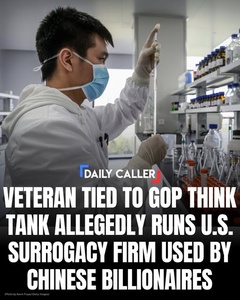
A Surrogacy Agency Draws Attention
Patriot Conceptions, founded in 2019 and based in Irvine, California, connects intended parents with surrogates and egg donors and operates within the state's established assisted-reproduction framework.
The company was founded by Bai, an immigrant and U.S. Army veteran who later became involved in the fertility and legal-services industries through several entrepreneurial ventures.
The controversy intensified after reporting identified Patriot Conceptions as the agency involved in a surrogacy arrangement involving a California woman and Chinese gaming entrepreneur Xu Bo.
The surrogate, publicly identified only as “Judy,” told CBS News that she initially understood she was carrying a child for a single father seeking to build his family.
She later learned through reporting that the intended father was Xu, whose extensive use of American surrogacy has previously been documented by The Wall Street Journal.
Questions About Xu Bo’s Family
Xu has become a prominent example in reporting about wealthy Chinese nationals using American reproductive services to have large numbers of children through surrogacy.
Previous Wall Street Journal reporting said Xu had fathered or was pursuing more than 100 children through U.S. surrogacy arrangements, although other claims about his total number of children have been disputed.
Xu's former partner has publicly alleged that he fathered roughly 300 children, but Xu has disputed that figure and his company has previously said the actual number was “only a little over 100.”
The unusual scale of those reported arrangements has raised broader questions about how American fertility agencies screen intended parents and communicate information to women who agree to become surrogates.
In Judy's case, reporting said she discovered the identity of the intended father only after documents reviewed by CBS News connected her pregnancy with Xu.
The Agency Responds
Patriot Conceptions acknowledged that it facilitated Judy's surrogacy journey but emphasized that it was not the only agency involved in Xu's broader reproductive arrangements.
In a September 17 statement, the company said it had one active case involving Xu at that time and had no involvement in separate surrogacy cases described in other reporting.
Bai said the agency believed the surrogate's concerns deserved to be taken seriously while arguing that reports should distinguish Patriot Conceptions' specific involvement from Xu's arrangements through other providers.
The company also said Xu had presented himself as a single father seeking to build a family and that the agency did not know the broader scale of his reported family arrangements.
Patriot Conceptions said its current screening process includes intended-parent applications, identity and financial documentation, background checks and questions concerning previous children and surrogacy experiences.
Bai’s Connection to the Hoover Institution
The controversy has also attracted attention because Bai was selected for the Hoover Institution's 2024–25 Veteran Fellowship Program at Stanford University.
Hoover describes Bai as an immigrant, U.S. Army veteran and entrepreneur in third-party reproduction and legal services, and lists Patriot Conceptions and TrustUS among his ventures.
The Hoover Institution's official announcement said the fellowship selected ten veterans and was designed to help participants develop policy projects while working with Hoover and Stanford scholars.
The fellowship itself does not establish any connection between Hoover and Patriot Conceptions' commercial activities, and available reporting does not indicate that the institution operated or supervised Bai's surrogacy business.
A Larger International Market
The controversy comes amid a broader international market for fertility treatment and surrogacy, with wealthy foreign clients seeking services in countries where reproductive arrangements are legally available.
A Wall Street Journal investigation reported that Chinese clients have become a significant part of the international surrogacy market in the United States, where arrangements can involve agencies, fertility clinics, lawyers and specialized support services.
Research cited in recent reporting has also found that Chinese nationals represented a substantial share of international intended parents using U.S. surrogacy services before the COVID-19 pandemic.
California has established legal procedures governing gestational-carrier agreements, including requirements concerning contracts, independent legal representation and court determinations of parentage.
Citizenship Adds Another Layer
The controversy also intersects with the longstanding U.S. debate over birthright citizenship and whether foreign nationals can use reproductive services to have children born in America.
On August 6, 2026, President Donald Trump issued an executive order targeting certain circumstances involving citizenship, including cases where foreign parents enter commercial arrangements involving a U.S.-based surrogate.
The order specifically addresses situations in which neither parent is a U.S. citizen and alleges that commercial transactions involving surrogacy can be connected to attempts to obtain citizenship.
The policy has added uncertainty for international intended parents and fertility providers, particularly as courts and government agencies continue to address the broader legal boundaries surrounding birthright citizenship.
What Comes Next?
For Patriot Conceptions, the immediate issue is whether its procedures provided prospective surrogates with sufficient information about intended parents and whether its screening practices adequately addressed unusual circumstances.
The company says it has strengthened protections and emphasizes that surrogates should receive clear information about arrangements, communication expectations and relevant facts that have been independently verified.
The broader controversy is likely to keep attention focused on international surrogacy, particularly arrangements involving wealthy foreign clients, large families and children potentially receiving U.S. citizenship.
At the same time, the available evidence distinguishes the specific Patriot Conceptions case from other reported surrogacy arrangements involving Xu and does not establish that the agency was responsible for all of them.
The case therefore raises questions about transparency, informed consent, international fertility markets and citizenship policy without by itself establishing wrongdoing by Patriot Conceptions or Bai.
Sources: The Daily Caller, The New York Post, The Wall Street Journal, Daily Mail, Hoover Institution, California Courts and Patriot Conceptions' September 2026 statement
Comments (0)
Loading comments...
May You Like

Barack Obama Draws Attention With New Literary Podcast


South Korea–Ukraine Rift Deepens Over North Korean POW Transfer as PURL Draws New Scrutiny












