
Accountability Under the Law: Why Investigations of Public Officials Remain a Test of U.S. Institutions
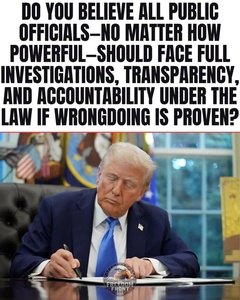
Debate over accountability for public officials has intensified in Washington, where investigations, lawsuits, and disputes over Justice Department independence have renewed questions about how legal scrutiny should apply to powerful political figures.
The central principle is that federal prosecutors are expected to enforce criminal law fairly and evenhandedly, while making charging decisions based on admissible evidence, applicable law, federal interests, and each case’s circumstances.
That standard does not mean every allegation should produce criminal charges. Investigations may reveal insufficient evidence, lawful conduct, jurisdictional problems, or facts that do not satisfy the elements required under federal statutes.
The Justice Department’s Public Integrity Section oversees investigations and prosecutions involving crimes affecting government integrity, including bribery, election offenses, and selected corruption cases involving elected or appointed officials at multiple government levels.
Public corruption cases are particularly sensitive because their subjects may be elected, politically connected, or widely known. Justice Department materials emphasize that both actual fairness and the appearance of impartiality matter.
Transparency also has legal limits. Grand jury secrecy, classified information, witness safety, privacy protections, and defendants’ due process rights can restrict what authorities publicly disclose before charges are filed or litigation concludes.
Those protections are important because an investigation is not proof of wrongdoing. Public officials, like other potential defendants, retain constitutional safeguards and should not be treated as guilty without established evidence and lawful proceedings.
At the same time, holding public office does not create blanket protection from investigation. Federal authorities have long pursued corruption cases involving officials at federal, state, and local levels when evidence supports prosecution.
Current disputes surrounding the Justice Department show how quickly investigations can become politically contentious. In September 2026, prosecutors continued a broad inquiry concerning alleged misconduct by former intelligence and law enforcement officials.
Associated Press reported that subpoenas continued after the lead prosecutor left the inquiry. Critics questioned the investigation’s legal foundation, while supporters argued that earlier government conduct deserved additional examination and scrutiny.
Such disputes highlight a recurring institutional challenge: legitimate oversight must remain separate from partisan retaliation. Federal policy states that prosecutors and agents may not use investigative or charging decisions to influence elections.
Credibility therefore depends heavily on process. Investigators should rely on evidence, established legal standards, documented procedures, and review mechanisms rather than political popularity, personal hostility, media pressure, or demands for predetermined outcomes.
Accountability also extends beyond criminal prosecution. Congressional oversight, inspectors general, civil litigation, ethics rules, public records laws, and elections can expose misconduct, conflicts, or administrative failures without proving that a crime occurred.
Courts provide another check by reviewing government actions, resolving constitutional disputes, and requiring agencies to comply with applicable law. Judicial review can therefore affect transparency even when a controversy does not involve criminal prosecution.
Independent journalism also plays a distinct role by testing official claims, obtaining records, questioning policymakers, and reporting inconsistencies. That function has recently become part of separate legal disputes over White House press access.
In September 2026, CNN, MS NOW, and Politico sued the Trump administration after their journalists lost White House access, alleging unconstitutional viewpoint discrimination. The White House argued that such access remained a discretionary privilege.
That lawsuit concerns press freedom rather than alleged public corruption, but it illustrates the broader accountability structure in which courts, journalists, lawmakers, prosecutors, watchdogs, and voters examine government conduct through different mechanisms.
For citizens evaluating politically charged allegations, the most reliable approach is to distinguish verified facts from accusations, prosecutorial decisions, disputed interpretations, and final court findings instead of assuming guilt or innocence from partisan identity.
Meaningful accountability therefore requires two principles at once: public officials should not receive immunity merely because of power or office, and investigations alone should never be treated as conclusive proof that wrongdoing occurred.
In a polarized environment, public confidence in justice depends on consistent legal standards, credible evidence, transparent procedures where law permits, independent review, and equal treatment regardless of an official’s party, status, or influence.
Related Images

Comments (0)
Loading comments...
May You Like

South Korea–Ukraine Rift Deepens Over North Korean POW Transfer as PURL Draws New Scrutiny

Obama Steps Back Into the Political Spotlight as Democrats Target Trump’s Senate Majority

gfnhgmnghnmfgnbvvvvvvvvv












