
Al Green Demands Medical Care for Transgender Immigrants in ICE Detention
HOUSTON — Rep. Al Green is demanding that the Trump administration restore access to hormone therapy and specialized medical care for transgender immigrants held in Immigration and Customs Enforcement custody, escalating a growing dispute over detention conditions.


Green Puts ICE Medical Care in the Spotlight
At a September 10 press conference in Houston, Green joined the Houston LGBTQ+ Political Caucus and the Montrose Center to raise concerns about the treatment of transgender immigrants in ICE detention facilities.
The Democratic congressman had already contacted Homeland Security Secretary Markwayne Mullin on September 4, seeking answers about alleged restrictions on specialized medical care and protections for transgender detainees.
Green argued that people held by the federal government should not lose access to necessary medical treatment simply because they are transgender or undergoing immigration proceedings.
“Transgender persons deserve to live without fear that their identity will be used as a reason to deny them care,” Green said in his official statement.
The controversy centers particularly on hormone therapy, which some transgender detainees rely on as part of ongoing medical treatment before entering immigration custody.
“Will I Receive My Hormones?”
At the Houston event, Daron Perez, a TransWellness coordinator at the Montrose Center, described concerns surrounding transgender migrants detained by federal immigration authorities.
Perez framed the issue around questions that transgender detainees may face after entering custody: whether their medication will continue, whether their identity will be respected and whether they will remain safe.
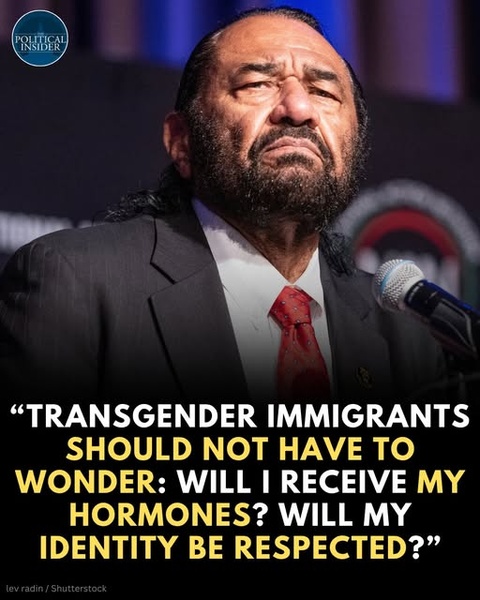
Those concerns formed the basis for the statement circulating widely online: “Transgender immigrants should not have to wonder: Will I receive my hormones? Will my identity be respected?”
The viral graphic, however, compresses a broader policy dispute into a highly emotional message and should not be interpreted as evidence that every transgender detainee has been denied hormone therapy.
Instead, the controversy concerns reported changes in detention practices, individual access to medication and broader questions about how transgender people are treated while in federal custody.
A Broader Policy Shift
The dispute comes amid sweeping changes to transgender policy under President Donald Trump, whose administration has moved to restrict federal recognition and funding of gender-affirming care.
In immigration detention, advocates have raised particular concerns about medical treatment, housing arrangements and protections for transgender people following policy changes affecting federal detention systems.
A New York Times report in August examined allegations that transgender migrants in ICE detention were losing access to protections and medical care, bringing renewed attention to the issue.
Earlier research has also documented longstanding difficulties transgender detainees have experienced in obtaining hormone therapy and appropriate medical care while incarcerated or detained.
A peer-reviewed study published through the National Institutes of Health found that transgender detainees have reported denial of hormone replacement therapy and other forms of medical treatment.


The Administration’s Position
The Trump administration has generally taken a sharply different approach to gender-related policy, emphasizing biological sex in federal policy and opposing government support for many forms of gender-affirming treatment.
Those policies have extended beyond immigration detention, including restrictions affecting transgender military personnel and federal funding for gender-affirming treatment.
In August, the administration announced that Medicaid and CHIP would stop covering certain gender-affirming surgeries and hormone treatments for transgender minors, with the policy scheduled to take effect in October.
The administration has argued that such restrictions are intended to prevent what officials describe as inappropriate or harmful medical interventions, particularly involving minors.
The dispute over detained adults is different, however, because Green is focusing on whether people already receiving medication should be able to continue necessary treatment while under government control.
A Question of Government Responsibility
Green's argument rests on a basic principle: once the government takes someone into custody, officials assume responsibility for providing adequate safety and medical care.
His office said transgender detainees deserve “dignity, safety, and basic health care,” including access to medications they require.
Advocates argue that abruptly interrupting hormone therapy can create significant physical and psychological consequences, particularly for people who have been receiving treatment continuously.
Medical researchers have documented reports of anxiety, distress and other negative outcomes associated with interruptions in hormone treatment among transgender detainees.
At the same time, individual medical decisions in detention can depend on a detainee's medical history, prescriptions, facility policies and the judgment of healthcare providers.
That distinction matters because allegations involving particular detainees should not automatically be generalized to every transgender person held by ICE.
Political Fight Intensifies
Green's intervention also arrives during an increasingly polarized national debate over immigration enforcement and transgender rights.
Republicans have generally emphasized stricter immigration enforcement, while Democrats and LGBTQ+ organizations have increasingly focused on detention conditions and alleged civil-rights violations.
Green has positioned himself firmly against policies he believes discriminate against transgender people, arguing that immigration enforcement cannot override basic standards of humane treatment.
The Montrose Center and Houston LGBTQ+ Political Caucus have similarly called for greater accountability and immediate action concerning transgender immigrants held in federal custody.
For the Trump administration, however, the controversy creates another political challenge surrounding how its immigration crackdown intersects with its broader transgender policy agenda.
What Happens Next
Green is seeking answers from DHS rather than announcing a new federal law, meaning the immediate dispute is centered on oversight, detention practices and administrative policy.
His September 4 communication to Secretary Mullin specifically questioned the denial of specialized medical care and the removal of protections affecting transgender detainees.
Whether DHS changes its policies remains unclear, and the administration has not publicly accepted Green's characterization of conditions as discriminatory.
The controversy could nevertheless draw additional congressional scrutiny as lawmakers investigate ICE detention practices and the treatment of vulnerable populations.
For transgender immigrants in detention, the dispute is ultimately about more than politics: it concerns access to medication, personal safety and whether gender identity will affect their treatment while in government custody.
As Green and advocacy organizations push for answers, the debate is likely to become another flashpoint in the broader confrontation over immigration enforcement and transgender rights under the Trump administration.
Comments (0)
Loading comments...
May You Like

Jack Smith Defends His Integrity as Trump Investigations Face Renewed Political Firestorm















