Al Sharpton Vows to Secure Reparations Before He Dies: 'Our Ancestors Were Enslaved... Helped Build This Country'
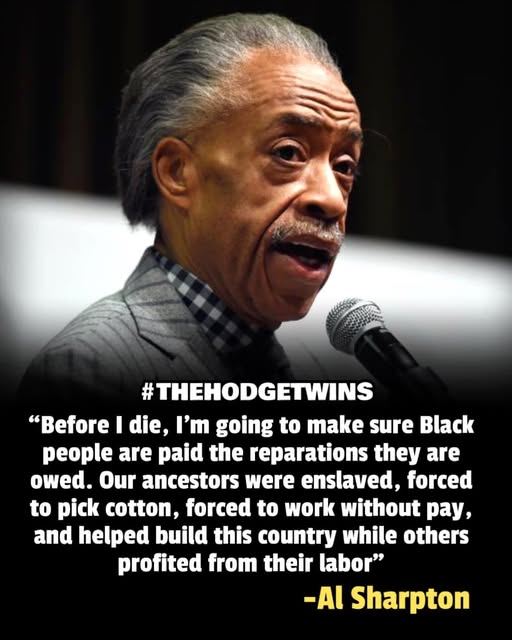
Civil rights leader Rev. Al Sharpton has made a powerful pledge to secure reparations for Black Americans before he dies, declaring that descendants of enslaved people are owed compensation for centuries of forced labor that helped build the nation while others profited from their exploitation.
NEW YORK – The image circulating online captures a moment of fierce conviction from Rev. Al Sharpton: "Before I die, I'm going to make sure Black people are paid the reparations they are owed. Our ancestors were enslaved, forced to pick cotton, forced to work without pay, and helped build this country while others profited from their labor."
The statement, made at a National Action Network event, reflects Sharpton's decades-long commitment to the reparations movement — a cause he has championed since at least 2004, when he told the Democratic National Convention that the promise of "40 acres and a mule" was never fulfilled.
What the Graphic Shows vs. What Sharpton Actually Said
| What the graphic suggests | What Sharpton has actually said |
|---|---|
| Sharpton will "make sure" reparations are paid before he dies | He has made this pledge multiple times; it reflects his lifelong commitment |
| His argument focuses only on slavery | He also cites housing discrimination, redlining, and ongoing economic disparities |
| Reparations are just about cash payments | He has supported studies and commissions to determine the best approach |
The Historical Argument: '40 Acres and a Mule'
Sharpton's call for reparations is rooted in a long history of unfulfilled promises.
The phrase "40 acres and a mule" dates back to Union General William T. Sherman's Special Field Orders No. 15, issued in January 1865. The order set aside land along the southeastern coast for newly freed Black families — 40 acres per family, with the option to rent mules from the military. After President Abraham Lincoln's assassination, President Andrew Johnson reversed the order, returning the land to its former Confederate owners.
Sharpton has invoked this history repeatedly:
"Mr. Lincoln signed the Emancipation Proclamation, after which there was a commitment to give 40 acres and a mule. That's where the argument, to this day, of reparations starts. We never got the 40 acres. We went all the way to Herbert Hoover, and we never got the 40 acres. We didn't get the mule. So we decided we'd ride this donkey as far as it would take us".
The Modern Reparations Movement
Sharpton has been at the forefront of efforts to bring reparations into the mainstream political conversation. In April 2019, he pressed Democratic presidential candidates at his National Action Network convention to support H.R. 40, a House bill first introduced by former Rep. John Conyers that would create a commission to study reparations.
One by one, candidates including Sens. Cory Booker, Elizabeth Warren, and Kamala Harris pledged to sign the bill if elected.
Sharpton has also highlighted state-level efforts. In January 2023, he interviewed Kamilah Moore, chair of California's Reparations Task Force, which estimated that Black Californians could be owed more than $223,000 each for housing discrimination and other harms. Moore said the task force found that redlining practices between 1933 and 1977 had a direct impact on today's homeless community.
The 250th Anniversary Controversy
Sharpton's recent comments on reparations have been sharpened by his criticism of America's upcoming 250th anniversary celebration.
"They're going to celebrate the 250th anniversary of the country July 4th, but that's not our celebration," Sharpton said at the National Action Network's 35th Anniversary National Convention in April 2026. "We were slaves then, and they celebrate signing the Declaration of Independence 1776. We were not even emancipated until 1863. So I don't know what everybody getting ready for a celebration [for]. You know that it seems crazy for me to have on the birthday hat at your birthday party. That ain't my party".
He warned that young citizens were not aware of Black people's history due to efforts to remove "woke" aspects in education: "When White kids hear us talking about reparations or affirmative action, they think it's an attack because they don't know what their granddaddy did to us".
Sharpton's Global Advocacy
The civil rights leader has also taken the reparations cause to the international stage. In March 2026, Sharpton declared his full support for Ghana President John Mahama's initiative to have the transatlantic slave trade recognized by the UN General Assembly as the "gravest crime against humanity".
The Bottom Line: What the Pledge Means
| What Sharpton is pledging | What it would require |
|---|---|
| Secure reparations before he dies | Legislative action at federal or state level |
| Compensation for centuries of forced labor | Determining eligibility and payment amounts |
| Recognition of Black contributions to building America | Shifting public narrative about slavery's legacy |
Rev. Al Sharpton's pledge to secure reparations before he dies is not a new promise — it is the culmination of a lifetime of activism. But as America approaches its 250th anniversary, the question of whether the nation will finally address "the original sin" of slavery has moved from the fringe to the center of political debate.
Whether Sharpton will succeed in his pledge remains to be seen. But as he said in 2004, the promise of "40 acres and a mule" was never fulfilled — and he has not forgotten. Neither, he insists, should the country.
Comments (0)
Loading comments...
May You Like


Shocking news from Ohio: an unexpected development ahead of Trump's rally