America Will Never Be a Socialist Country
"America Will Never Be a Socialist Country": A Political Slogan That Resonates and Divides
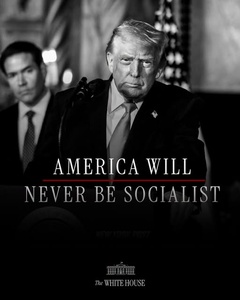
President Donald Trump and Republican candidates have increasingly used anti-socialist and anti-communist messaging as the 2026 midterm elections approach, placing ideological differences at the center of political debate.
The message echoes a theme Trump has used repeatedly throughout his political career: portraying socialism and communism as fundamentally incompatible with the American economic and political system.
In July, Trump delivered one of his strongest recent warnings against communism during remarks at Mount Rushmore, ahead of celebrations marking the 250th anniversary of American independence.
Trump said the United States should resist what he described as a renewed communist threat, linking his argument to recent electoral successes by progressive and democratic-socialist candidates.
The remarks came as several Democratic candidates associated with the party’s progressive wing gained attention in primary contests across multiple states, intensifying an existing debate over the party’s ideological direction.
Trump’s rhetoric has often grouped socialism and communism together, although political scholars and analysts distinguish the two ideologies and note important differences between their historical traditions and policy objectives.
The distinction has become increasingly relevant during the 2026 campaign, as Republicans seek to associate Democrats with socialism while Democratic candidates emphasize their positions on capitalism and market-based economics.
A recent Reuters report found that dozens of Democratic candidates in competitive races have publicly emphasized their support for capitalism in response to Republican accusations that the party is moving toward socialism.
According to Reuters, 60 Democratic candidates, including 10 sitting members of Congress, have signed a pledge declaring their support for capitalism rather than socialism.
The development represents an unusual political moment in which candidates from the Democratic Party are explicitly addressing an ideological label that Republicans have increasingly used against them.
Republican messaging has intensified as the November midterm elections approach, with Trump and other Republicans arguing that progressive victories demonstrate a broader movement toward socialist or communist politics.
At the same time, Democratic candidates targeted by those arguments have generally rejected the characterization, emphasizing economic policies that operate within the existing American capitalist system.
The Washington Post has noted that several democratic-socialist candidates have won significant Democratic contests while also emphasizing that democratic socialism and communism are not interchangeable political philosophies.
Trump nevertheless continued using the broader communist warning during his July Mount Rushmore address, saying America would not become a communist country.
That rhetoric also appeared in government-funded television advertising in September, with one advertisement featuring Trump warning against communism while promoting patriotic themes associated with his administration.
The advertisements have generated a separate controversy over whether taxpayer-funded government messaging is too closely resembling political campaign material, although the White House has defended the broadcasts as public-service announcements.
FCC Chairman Brendan Carr said the advertisements did not raise concerns warranting FCC intervention, while Democratic Commissioner Anna Gomez and other critics offered a different interpretation.
The debate over socialism is therefore unfolding alongside broader arguments about government spending, taxation, healthcare, regulation, immigration, energy prices and the role of government in the economy.
For Republicans, the terminology provides a way to contrast their preferred policies with progressive proposals and to emphasize traditional themes involving private enterprise, individual responsibility and limited government.
For Democrats, the repeated accusations have encouraged some candidates to make explicit statements supporting capitalism while focusing their campaigns on economic affordability and other issues important to voters.
The competing messages illustrate how ideological language has become an increasingly visible part of the 2026 midterm campaign, particularly in closely contested congressional races.
As Election Day approaches, voters will encounter competing arguments over capitalism, socialism, government power and economic policy, with candidates offering different interpretations of what those labels mean for America’s future.


Comments (0)
Loading comments...
May You Like

Shocking news from Ohio: an unexpected development ahead of Trump's rally

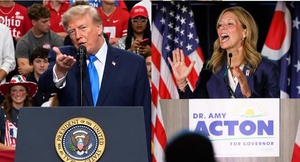
TRUMP’S OHIO WARNING UNDER THE SPOTLIGHT