America's New Political Firestorm: Trump's $5,000 Promise, the FCC Fight and the Conspiracy Storm Online
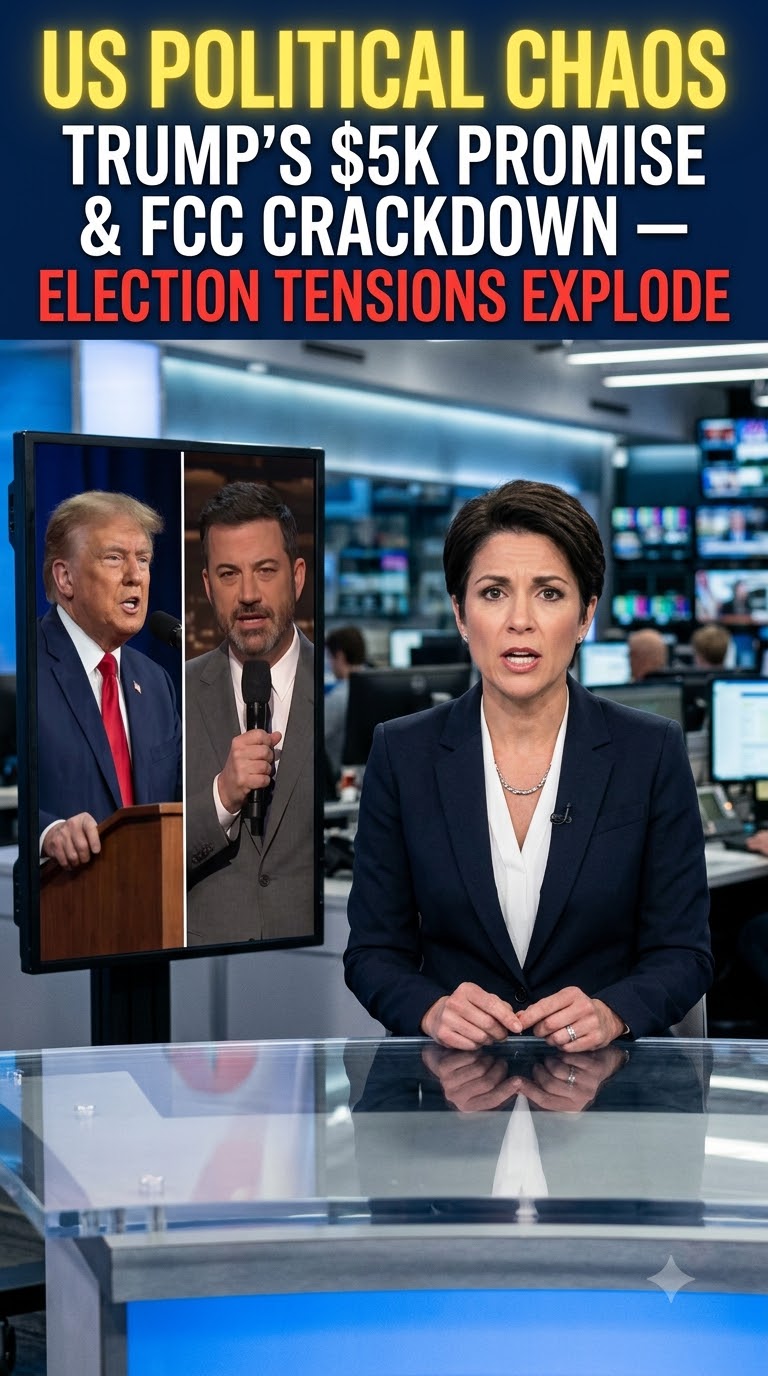
WASHINGTON — American politics is entering another volatile stretch, with President Donald Trump putting a dramatic new proposal at the center of the midterm campaign while a separate fight involving late-night host Jimmy Kimmel and the Federal Communications Commission is intensifying concerns about political speech and government regulation.
At the same time, conspiracy theories surrounding the assassination of conservative activist Charlie Kirk continue to spread across social media, adding another layer of anger and distrust to an already deeply divided political environment.
The three stories are different, but together they illustrate the increasingly combustible political climate heading into the November midterm elections.
Trump's $5,000 "Dividend"
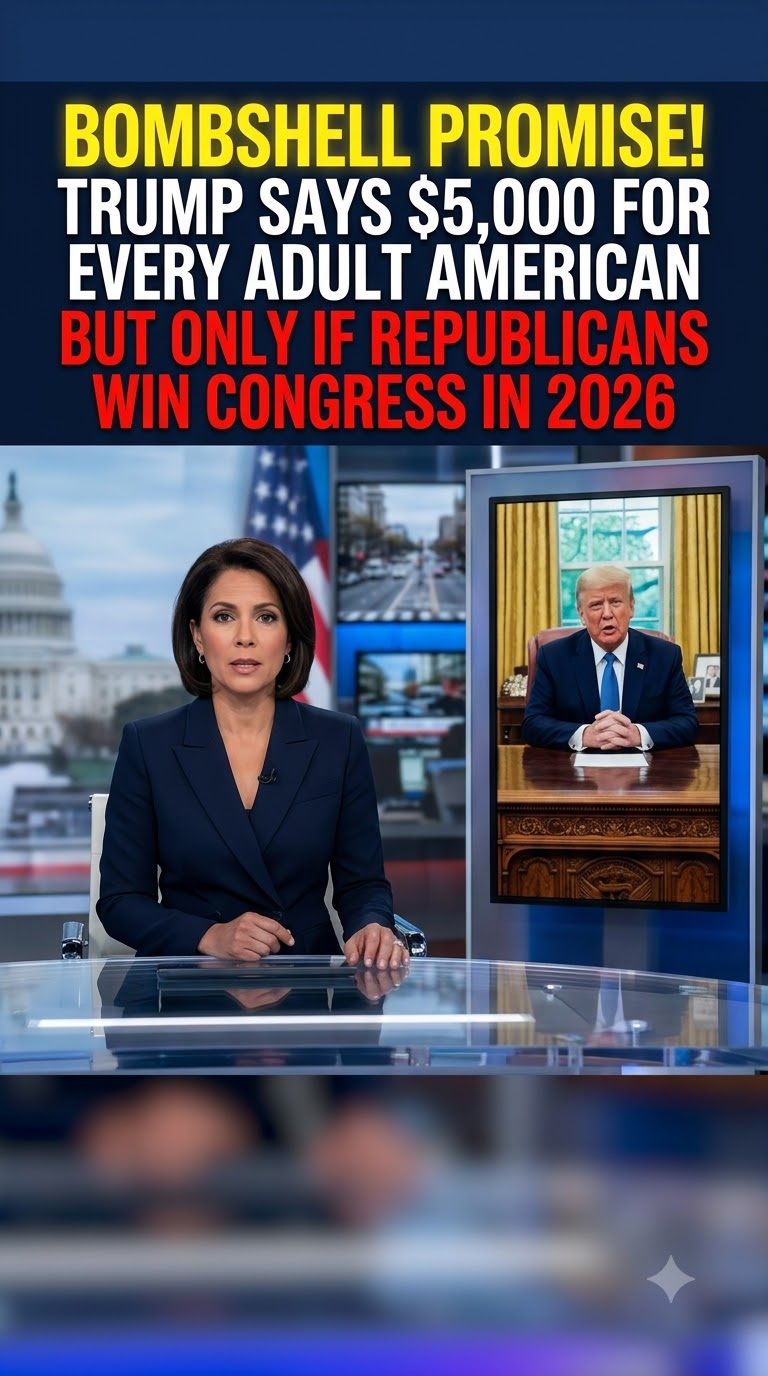
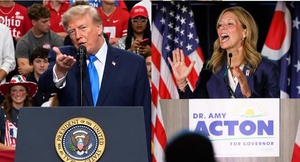
Trump announced at the Republican National Midterm Convention in Dallas that he wants to give every adult American citizen a $5,000 payment if Republicans retain control of Congress in the upcoming elections.
Trump has described the proposal as a "dividend," arguing that Americans should benefit from what he says are the economic gains generated by his administration.
But the proposal immediately raised major questions.
How would the payments be funded? Who would qualify? Would higher-income Americans receive the money? And could the president actually implement such a program without congressional approval?
Those questions remain unanswered.
Reuters reported that the proposal could cost roughly $1.35 trillion, while AP and other outlets noted that the federal government is already running a substantial deficit. Economists have also warned that injecting such a large amount of money into the economy could increase inflationary pressure.
Trump has pointed toward tariff revenue as a potential source of funding. But analysts have questioned whether tariff collections would be anywhere near large enough to cover the full cost.
That has led critics to characterize the proposal as an election-year political maneuver rather than a realistic economic program.
Supporters see it differently, arguing that Americans deserve to receive a direct benefit from tariff and economic policies.
For voters, however, the biggest question may be simple: Will the $5,000 ever actually arrive?
The FCC and Jimmy Kimmel Clash
While Trump's economic proposal dominates political headlines, another fight is unfolding in the world of television.
Jimmy Kimmel recently said an interview with Democratic Texas Senate candidate James Talarico would not air on ABC television and would instead be released on YouTube.
Kimmel attributed the decision to pressure surrounding the FCC's interpretation of the federal equal-time rule, which requires broadcasters to provide comparable opportunities to opposing political candidates under certain circumstances.
The FCC has increasingly scrutinized political content on entertainment programs, including programs such as Jimmy Kimmel Live! and The View.
Kimmel has accused the agency of using regulatory power to intimidate broadcasters and restrict political speech. FCC officials, however, have defended their authority and said broadcasters must comply with federal requirements.
The dispute has become politically explosive because the FCC operates under an administration led by Trump, while Kimmel has been one of Trump's most outspoken late-night critics.
That has transformed what might normally be a regulatory dispute into a much broader argument over the First Amendment, political influence and the future of broadcast television.
The central question is no longer simply whether a television program can air a political interview.
It is whether government regulators are crossing the line between enforcing broadcasting rules and influencing what Americans are allowed to hear.
The Charlie Kirk Conspiracy Storm
The third piece of the political firestorm is unfolding almost entirely online.
One year after the assassination of Charlie Kirk, conspiracy theories surrounding his killing remain widespread across social media.
Kirk, the founder of Turning Point USA and a prominent conservative activist, was assassinated while speaking at Utah Valley University in September 2025.
A suspect, Tyler Robinson, was arrested and charged in connection with the killing. The criminal case remains ongoing.
Despite the investigation and court proceedings, speculation surrounding the assassination has continued.
Researchers and journalists have documented false claims involving the identity and motives of the suspect, alleged political involvement and claims that the killing was part of a larger operation.
Experts warn that such theories can spread rapidly when a politically charged event intersects with social media algorithms, partisan distrust and a lack of confidence in traditional institutions.
Importantly, the existence of viral conspiracy theories does not establish that those theories are true.
That distinction has become increasingly important as manipulated images, misleading videos and AI-generated material make it easier for false narratives to appear convincing.
One Election, Three Battles
Taken together, these stories point toward a broader problem facing American politics: trust is becoming as important as policy.
Trump's $5,000 proposal is forcing voters to debate whether a massive direct payment is an economic opportunity or an unrealistic campaign promise.
The FCC-Kimmel dispute is forcing Americans to debate where legitimate regulation ends and political interference begins.
And the Charlie Kirk conspiracy theories demonstrate how quickly uncertainty surrounding a major political event can become a breeding ground for misinformation.
With the midterm elections approaching, each controversy could become a campaign issue.
Republicans are betting that Trump's economic message and political agenda can energize their voters. Democrats are likely to use the $5,000 proposal and the FCC controversy to argue that the administration is abusing political and regulatory power.
Meanwhile, millions of Americans will encounter competing versions of these stories through social media feeds, podcasts, television programs and partisan news outlets.
That makes one thing increasingly clear:
The next phase of American politics may not be decided only by what happens in Washington — but by which version of reality voters ultimately believe.
Comments (0)
Loading comments...
May You Like
gfnhgmnghnmfgnbvvvvvvvvv
OBAMA STUNS ON INSTAGRAM: MESSAGE MARKING 34-YEAR MILESTONE SPARKS A BUZZ