
As ‘Communism’ Takes Center Stage, Kaitlan Collins Draws a Line Trump’s Rhetoric Blurs
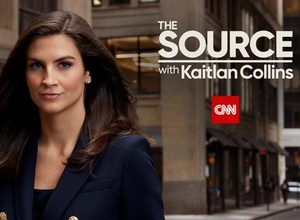
WASHINGTON — A familiar political word has returned to the center of America’s election debate. As President Donald Trump increasingly invokes “communism,” CNN’s Kaitlan Collins challenged the way the label is being applied to democratic socialism.
A Sharp Exchange Over One Political Label
The discussion followed a series of Democratic primary victories in New York involving candidates associated with the Democratic socialist movement, including contenders backed by New York Mayor Zohran Mamdani.
Trump responded by describing democratic socialists as “hardcore godless communists,” warning that their rise represented what he called the greatest threat to the United States in its history.
On her CNN program, Collins drew a distinction between the terms, saying that socialism, “much less democratic socialism,” is not communism, while noting that Democrats were debating what the primary results meant.
Her comment placed a broader ideological argument at the center of the discussion: whether democratic socialism should be understood as a distinct political tradition or treated as part of communism’s historical tradition.
Why Trump Is Using the Language
Trump’s comments came after several progressive candidates secured Democratic primary victories, giving Republicans an opportunity to frame those results as evidence of a broader ideological shift inside the Democratic Party.
At the Faith and Freedom Coalition’s June conference, Trump warned that Democratic victories could lead to attacks on religion and repeatedly described the movement using explicitly communist language.
The rhetoric has continued beyond that speech. In September, Trump again described Democrats as communists during a Republican convention, making the label part of his broader midterm political message.
Republican leaders have also focused on the Democratic Socialists of America and its growing influence, arguing that the movement’s policy agenda represents a significant ideological change within the Democratic Party.
The Definitions Matter
Democratic socialism and communism share historical roots in socialist thought, but they are not interchangeable political systems, according to political researchers and fact-checking organizations examining the current debate.
Democratic socialism generally emphasizes pursuing greater economic equality and public ownership or control through democratic institutions, elections, legislation and political organizing rather than revolutionary government overthrow.
Communism, by contrast, is associated with a classless society based on collective ownership and, historically, communist governments have often operated through centralized one-party political systems.
The distinction does not mean every organization or politician using socialist terminology shares identical goals. The American movement contains different factions, positions and interpretations of how far economic transformation should go.
What the DSA Actually Says
The Democratic Socialists of America describes democratic socialism as a system in which working people exercise greater democratic control over workplaces, the economy and society, explicitly rejecting authoritarian versions of socialism.
Its current program advocates substantial changes, including public ownership of major economic sectors, expanded social programs and structural changes to political institutions, reflecting a broader critique of capitalism.
That platform has nevertheless provided Republicans with new material for their attacks, particularly after DSA-backed or aligned candidates accumulated victories in Democratic primaries across several states during 2026.
reported that the organization’s membership had grown substantially and that its influence had expanded beyond local politics into congressional and statewide Democratic contests.
The Debate Inside the Democratic Party
Democrats themselves have not reached a uniform position on the movement. Some embrace the democratic socialist label, while others have increasingly emphasized capitalism as Republicans intensify attacks ahead of November.
reported in September that more than 60 Democratic candidates had signed a pledge affirming their support for capitalism, including candidates worried about being portrayed as socialist or communist.
That response illustrates the political tension surrounding the terminology: progressive Democrats are gaining attention with policies centered on economic inequality, while other Democrats fear those labels could overshadow their broader economic messages.
For Collins, the immediate issue was narrower: whether calling democratic socialists “communists” accurately describes their political ideology, particularly when the candidates themselves operate through American democratic elections.
A Debate That Is Not Going Away
The argument over terminology is likely to remain part of the 2026 midterm conversation as Republicans continue emphasizing communism and Democrats debate how prominently to embrace or distance themselves from socialism.
For voters, the distinction ultimately involves more than competing labels. The relevant questions include what individual candidates propose on ownership, taxation, healthcare, labor, government spending and the role of markets.
Collins’ intervention therefore became part of a larger national argument over whether political language is accurately describing an evolving movement—or compressing several different ideologies into a single campaign label.
As the midterms approach, the contrast between “democratic socialism” and “communism” is likely to remain one of the clearest examples of how definitions themselves have become part of America’s political battle.
Comments (0)
Loading comments...
May You Like

Obama Steps Back Into the Political Spotlight as Democrats Target Trump’s

Russian Drone Strikes Kyiv Bridge as German Chancellor Arrives in Ukraine













