
BARACK OBAMA ABRUPTLY HUMILIATED BY PROTESTER DURING MAJOR CAMPAIGN RALLY
Obama Confronted at Campaign Rally as Protester Interrupts Speech, Raising Questions About Political Civility and Public Anger
The image presents a dramatic political confrontation: former President Barack Obama speaking at a campaign rally while a protester appears to challenge him from the audience. The moment captures a familiar but increasingly significant feature of American politics: the growing tension between political leaders, their supporters, and citizens who believe their voices are not being heard.
However, the most relevant documented incident matching the Obama rally imagery took place in Detroit, Michigan, on October 29, 2022. Obama was campaigning for Democratic candidates, including gubernatorial candidate Gretchen Whitmer, when a heckler interrupted his remarks. The available reporting does not establish that Obama was humiliated or defeated in the exchange. Instead, the incident offers a revealing look at the growing divisions in American political life.

A Campaign Rally Takes an Unexpected Turn
Political rallies are carefully organized events. Campaign teams spend considerable time preparing speeches, coordinating supporters, arranging security, and ensuring that candidates can communicate their messages without unnecessary interruptions.
But live political events rarely follow a completely predictable script.
That reality became apparent when Obama appeared in Detroit, Michigan, in late October 2022. The former president had returned to the campaign trail to support Democratic candidates ahead of the midterm elections. His appearance was particularly important because Democrats were facing a difficult political environment and needed to maintain enthusiasm among their supporters.
Obama remained one of the Democratic Party's most recognizable public figures. His ability to attract large audiences and communicate directly with voters made him an important campaign surrogate.
Yet during his remarks, a man in the audience began shouting, interrupting the former president as he attempted to address the crowd.
The interruption quickly became a defining moment of the event.
Obama stopped and turned his attention toward the individual. Rather than immediately continuing his prepared remarks, he attempted to address the interruption and explain why allowing speakers to finish was important.
His response transformed an ordinary campaign appearance into a public discussion about political disagreement, free expression, and the increasingly confrontational atmosphere surrounding American elections.
The Protester's Challenge Was Connected to U.S. Foreign Policy
The interruption was not simply an argument about campaign promises or domestic political disagreements. According to reporting by Agence France-Presse, the protester was identified as Stewart Battle, who challenged Obama over American policy toward Ukraine and the possibility of a wider conflict with Russia.
Battle reportedly shouted that more people could be hurt if the United States moved closer to a nuclear confrontation. He also criticized decisions associated with the Obama administration's approach to Ukraine in 2014.
His comments reflected concerns about American foreign policy that had become particularly sensitive following Russia's full-scale invasion of Ukraine in February 2022.
The protester's argument was rooted in a broader debate over the United States' role in international conflicts. Some Americans have argued that Washington should take a more restrained approach to overseas confrontations, while others believe American leadership and support for allies are essential to international security.
The disagreement placed Obama in an uncomfortable position. As a former president, he remained closely associated with major foreign-policy decisions made during his administration. Even years after leaving office, those decisions continued to attract criticism from people who disagreed with his approach.
For Battle, the rally provided an opportunity to bring those concerns directly to a nationally recognized political figure.
For Obama, the interruption presented a different challenge: how to respond to a confrontational voice without allowing the entire campaign event to descend into disorder.

Obama's Response Draws Attention From the Crowd
Obama did not immediately abandon the stage or allow the interruption to end his appearance. Instead, he attempted to regain control of the conversation by addressing the protester directly.
He reminded the audience that democratic institutions have established procedures for allowing people to express their opinions.
His response included a pointed observation: while he was speaking, the protester should allow him to finish before demanding an opportunity to respond.
Obama also emphasized that people should not have to interrupt one another or shout over each other to participate in political discussions.
The exchange became especially interesting when members of the audience began reacting to the interruption.
Rather than remaining silent, supporters began chanting Obama's name. Their response demonstrated that the former president still commanded considerable loyalty among the people attending the event.
The cheering also made it increasingly difficult to hear the protester's argument.
At that point, the situation was no longer simply a disagreement between one individual and a former president. It had become a confrontation involving the speaker, the protester, and an audience that had its own expectations about how the event should proceed.
For political observers, this was an important distinction.
A protester can attract attention by interrupting a prominent politician, but the audience's reaction can determine whether that interruption becomes a lasting political moment or disappears into the background of an otherwise ordinary rally.
In Detroit, the crowd's supportive chants helped Obama regain the atmosphere of the event.

The Viral Claim That Changed the Story
The incident became even more controversial after footage began circulating online.
Some social media posts presented the confrontation as evidence that Obama had lost control of his audience. Certain versions suggested that people at the rally were chanting insults directed at President Joe Biden.
That interpretation was particularly damaging because it appeared to suggest that Obama's own supporters were turning against the Democratic administration.
But the viral version did not accurately represent what happened.
A fact-check published by AFP on November 1, 2022, found that the video had been manipulated. The original footage showed Obama responding to a heckler while the audience chanted his name in support.
The insulting audio directed at Biden had been added to the circulating version.
PolitiFact independently examined the same incident and reached the same conclusion. It rated the claim that the crowd had chanted an anti-Biden slogan during Obama's speech as false.
This distinction matters because a short video can dramatically change the apparent meaning of an event.
A recording showing a politician being interrupted may be genuine, while the audio, caption, or surrounding context attached to it may be misleading.
In this case, the interruption itself was real. The claim that the audience had turned against Biden through the reported chant was not.
The difference between those two facts completely changes how the incident should be understood.
It also illustrates why viewers should be cautious when political footage appears to show an extraordinary confrontation. Before accepting a viral interpretation, it is important to establish whether the original recording supports the claims being made.

Why the Incident Became a Political Talking Point
The confrontation attracted attention because Obama occupies an unusual position in American politics.
Although he is no longer president, he remains one of the Democratic Party's most influential public figures. His speeches can attract substantial media coverage, and his appearances often carry significance beyond the individual candidates he supports.
For Democrats, Obama represents a political figure capable of energizing voters and reminding them of the party's previous electoral successes.
For critics, however, his presidential record remains a source of disagreement. His decisions on foreign policy, economic issues, healthcare, and national security continue to generate debate.
That combination makes even a relatively brief interruption potentially newsworthy.
A protester does not need to dominate an entire rally to create a moment that attracts national attention. Sometimes, a few seconds of confrontation can become the most widely circulated portion of an event.
The reason is simple: conflict is more immediately compelling than a conventional campaign speech.
A politician discussing economic policy may deliver important information, but a heated exchange between a speaker and an audience member creates an immediate question. What did the protester say? How did the politician respond? Did the crowd support the speaker or the challenger?
These questions encourage viewers to seek out the original footage.
In the age of short-form video, that dynamic has become particularly powerful. A single moment can be separated from a longer speech, edited into a short clip, and distributed to millions of people who may never watch the complete event.
The result is that the public's understanding of a political rally can become shaped by a few seconds of footage rather than the full context.
A Difficult Period for the Democratic Party
The timing of Obama's Detroit appearance was also important.
The United States was approaching the November 2022 midterm elections, and Democrats faced the challenge of defending their congressional majorities while supporting candidates in competitive state races.
Michigan was particularly significant.
The state's political landscape had become an important battleground, with both parties competing for voters concerned about the economy, abortion rights, education, public safety, and the future direction of the country.
Democratic Governor Gretchen Whitmer was seeking reelection, and the party wanted to maintain its position in a state that had become central to national electoral strategy.
Obama's presence offered the campaign a recognizable messenger with a record of winning major elections.
His speeches were designed not only to criticize Republican candidates but also to encourage Democratic supporters to participate in the election.
However, campaign appearances during a polarized election season inevitably create opportunities for confrontation.
People attending rallies may support the candidate, oppose the speaker, or arrive with concerns that are not reflected in the official campaign message.
The protest in Detroit demonstrated that even a well-organized political event cannot completely control the opinions expressed by people in the audience.

The Bigger Debate: Free Speech Versus Political Civility
One of the most significant aspects of the confrontation was the question of how political disagreement should be expressed.
The United States has a long tradition of public protest. Demonstrations, heckling, criticism, and challenges to elected officials have all played a role in American political life.
Citizens are not required to agree with presidents, governors, senators, or former government officials. They have the right to question decisions, criticize policies, and demand explanations.
That principle is central to democratic government.
At the same time, political gatherings are organized around the expectation that speakers will have an opportunity to communicate with their audiences.
When someone repeatedly interrupts a speech, the event can become difficult to manage. Other attendees may become frustrated, security personnel may intervene, and the original subject of the discussion can disappear.
Obama's response in Detroit focused heavily on this second issue.
He argued that democratic discussion requires a degree of courtesy and that people should not need to shout each other down to be heard.
That message was particularly relevant during an election season when political disagreements were frequently becoming personal and emotionally charged.
But the incident also raised another question: when does an interruption become an effective form of protest?
Supporters of confrontational demonstrations often argue that powerful public figures have access to microphones, television networks, and political platforms, while ordinary citizens have far fewer opportunities to challenge them directly.
From that perspective, interrupting a prominent speaker can be viewed as a way to bring an overlooked issue into public discussion.
Others argue that disrupting public events can prevent meaningful debate and make it harder for audiences to hear competing viewpoints.
Both arguments reflect real tensions within democratic politics.
The challenge is finding a balance between protecting the right to protest and preserving the ability of public events to function.
Why Foreign Policy Criticism Remains Sensitive
The protester's remarks about Ukraine gave the confrontation an additional layer of significance.
American involvement in international conflicts has historically been one of the most divisive subjects in national politics.
The Obama administration's decisions concerning Ukraine in 2014 remain part of a wider discussion about American diplomacy, Russia's regional ambitions, and the responsibilities of the United States toward its international partners.
For critics, the response to events in Ukraine raised questions about whether Washington had acted decisively enough to deter Russian aggression.
For others, American policy must be evaluated within the limits of diplomatic, military, and international realities.
The debate became even more intense after Russia launched its full-scale invasion of Ukraine in 2022.
The conflict raised difficult questions about military assistance, economic sanctions, NATO, nuclear deterrence, and the risk of direct confrontation between major powers.
Those issues were not easily resolved by a short exchange at a campaign rally.
Nevertheless, the protester's decision to challenge Obama demonstrated that former presidents can remain accountable in the public imagination long after leaving office.
Political leaders may complete their terms, but their decisions continue to influence international relationships and domestic political debates.
That is one reason why former presidents frequently encounter criticism when they appear in public.
Their political legacies remain subjects of discussion, and campaign appearances can become opportunities for people to revisit decisions made years earlier.

Did the Protester Actually Humiliate Obama?
The headline circulating with the image uses the word "humiliates" to describe the confrontation. That wording creates a dramatic impression, but it is important to distinguish between an attention-grabbing description and what the available footage actually demonstrates.
Obama was interrupted. He appeared visibly focused on the disruption and temporarily shifted away from his prepared remarks. The protester's challenge attracted attention, and the exchange became a subject of online discussion.
However, the evidence does not establish that Obama was publicly defeated or that the crowd rejected him.
In fact, the audience's reaction was largely supportive. People chanted his name, and Obama eventually redirected the discussion toward his broader message about political civility.
Nevertheless, the confrontation exposed something that political campaigns cannot always control: the possibility that an unexpected voice can redirect attention away from the candidate's intended message.
For a campaign organization, this can be frustrating. Political events are designed to communicate carefully prepared arguments, reinforce campaign themes, and generate favorable coverage.
An interruption introduces uncertainty.
It can force a speaker to respond spontaneously, create an unexpected headline, and give political opponents material for commentary.
Even when the speaker handles the situation effectively, the interruption can become more memorable than the original speech.
That is the broader significance of the Detroit incident. It was not necessarily a personal humiliation, but it demonstrated how quickly an ordinary political appearance can become a national talking point.
The Power of Social Media in Modern Political Battles
The incident also highlights how social media has changed the way Americans consume political news.
In previous decades, most people would have learned about a campaign rally through television broadcasts, newspaper reports, or evening news programs.
Today, a short recording can spread across multiple platforms within minutes.
The same incident can be presented in completely different ways depending on the account sharing it.
One account may emphasize the protester's criticism. Another may highlight Obama's response. A third may focus on the crowd's reaction.
Some posts may include accurate footage but misleading captions. Others may combine genuine video with manipulated audio or unrelated material.
This creates a challenging environment for anyone trying to understand what actually happened.
The Detroit rally provides a particularly clear example. A genuine interruption was transformed into a misleading viral narrative suggesting that the audience had directed anti-Biden chants at Obama.
The false interpretation attracted attention because it appeared to confirm an existing political narrative about divisions within the Democratic Party.
But the original footage told a different story.
That does not mean the underlying political disagreements were imaginary. The protester genuinely challenged Obama, and the disagreement over Ukraine policy was real.
What was false was the claim about the crowd's alleged anti-Biden chant.
Understanding that distinction is essential when evaluating politically charged videos.
A Moment That Reflects America's Deepening Political Divisions
The confrontation in Detroit was brief, but it represented a much larger issue facing American democracy.
Political disagreement has always existed in the United States. Elections have produced intense arguments, public protests, and sharp criticism of elected officials throughout the country's history.
What has changed is the speed and intensity with which those disagreements can become national controversies.
Public figures are increasingly judged through short video clips, isolated quotations, and viral headlines.
An exchange lasting less than a minute can generate thousands of reactions and become part of a much larger political argument.
For politicians, this creates a difficult environment. They must communicate with supporters, respond to criticism, and maintain control of public appearances while knowing that almost any unexpected moment may be recorded and distributed.
For citizens, the challenge is determining which interpretations are supported by the available evidence.
The Detroit incident demonstrates that both sides of that equation matter.
The protester's right to criticize a former president is an important part of democratic expression. Obama's right to finish his speech and address the audience is equally important.
A functioning democracy requires room for disagreement, but it also depends on people being willing to listen to one another.
Without that balance, political conversations risk becoming competitions over who can shout the loudest.
Obama's Political Influence Remains a Subject of Debate
Despite leaving the White House in January 2017, Obama has continued to participate in Democratic political campaigns.
His appearances can bring national attention to candidates and issues, particularly in competitive states.
His supporters view him as an experienced communicator who can connect political arguments to broader questions about American identity and democratic values.
His critics continue to question aspects of his presidential record, including his approach to international affairs.
The Detroit confrontation brought these competing perceptions into the same public space.
For supporters, the incident demonstrated Obama's willingness to address an interruption without immediately abandoning his message.
For critics, the protester's challenge offered an opportunity to revisit controversial foreign-policy decisions.
Neither interpretation changes the underlying facts of the incident, but both help explain why the footage attracted attention.
Ultimately, the confrontation was a reminder that political influence does not eliminate public criticism.
Even former presidents must contend with citizens who strongly disagree with their decisions.
And even a well-known political figure with a supportive audience cannot guarantee that every public appearance will proceed according to plan.
The Real Story Behind the Viral Image
The image's dramatic headline suggests a humiliating political defeat, but the documented incident behind the Obama rally imagery tells a more complicated story.
A protester interrupted Obama during a Detroit campaign appearance in October 2022. The challenge concerned American foreign policy and Ukraine. Obama responded by asking the individual to respect the process of democratic discussion, while members of the audience rallied behind the former president.
The incident subsequently became the subject of misleading social media posts, including manipulated footage that falsely suggested the crowd was chanting insults against Joe Biden.
That episode is arguably more revealing than the original interruption itself.
It demonstrates how political confrontations can be transformed into viral controversies, how misleading edits can distort public perception, and how quickly a single moment can become part of a much larger partisan debate.
Whether viewers consider Obama's response effective or believe the protester raised legitimate questions, the central lesson remains the same: political accountability and freedom of expression are inseparable from democratic life.
The most important question is not simply whether a protester managed to interrupt a former president.
It is whether Americans can continue to disagree about consequential political decisions without allowing every disagreement to become another battle over truth, loyalty, and identity.
The Detroit rally offered a brief glimpse of that challenge, and the controversy surrounding its viral footage showed just how difficult it has become.
Comments (0)
Loading comments...
May You Like
NY AG James Faces Unwelcome Courtroom Scrutiny In Criminal Investigation
A MAJOR BREAKTHROUGH MAY BE WITHIN REACH — BUT IRAN'S NEXT MOVE COULD CHANGE EVERYTHING
TRUMP FACES A POLITICAL STORM AS VOTER ANGER GROWS BEFORE THE MIDTERMS
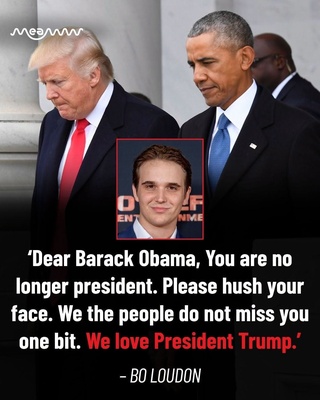
ORMER PRESIDENT BARACK OBAMA FACES MASSIVE BACKLASH AFTER BEING BRUTALLY SLAMMED BY MAJOR INFLUENCER
Latest Posts
Popular Posts
Danica Patrick Accuses Democrats
Nov 2, 2026
JD Vance’s Election Day
Nov 2, 2026