
Beatrice Keul’s 1993 Allegation Against Trump Returns to the Spotlight
Beatrice Keul’s 1993 Allegation Against Trump Returns to the Spotlight
A House Democrats’ report has renewed attention to a former Miss Switzerland contestant’s account. Trump denies the allegation, which has not been adjudicated in court.
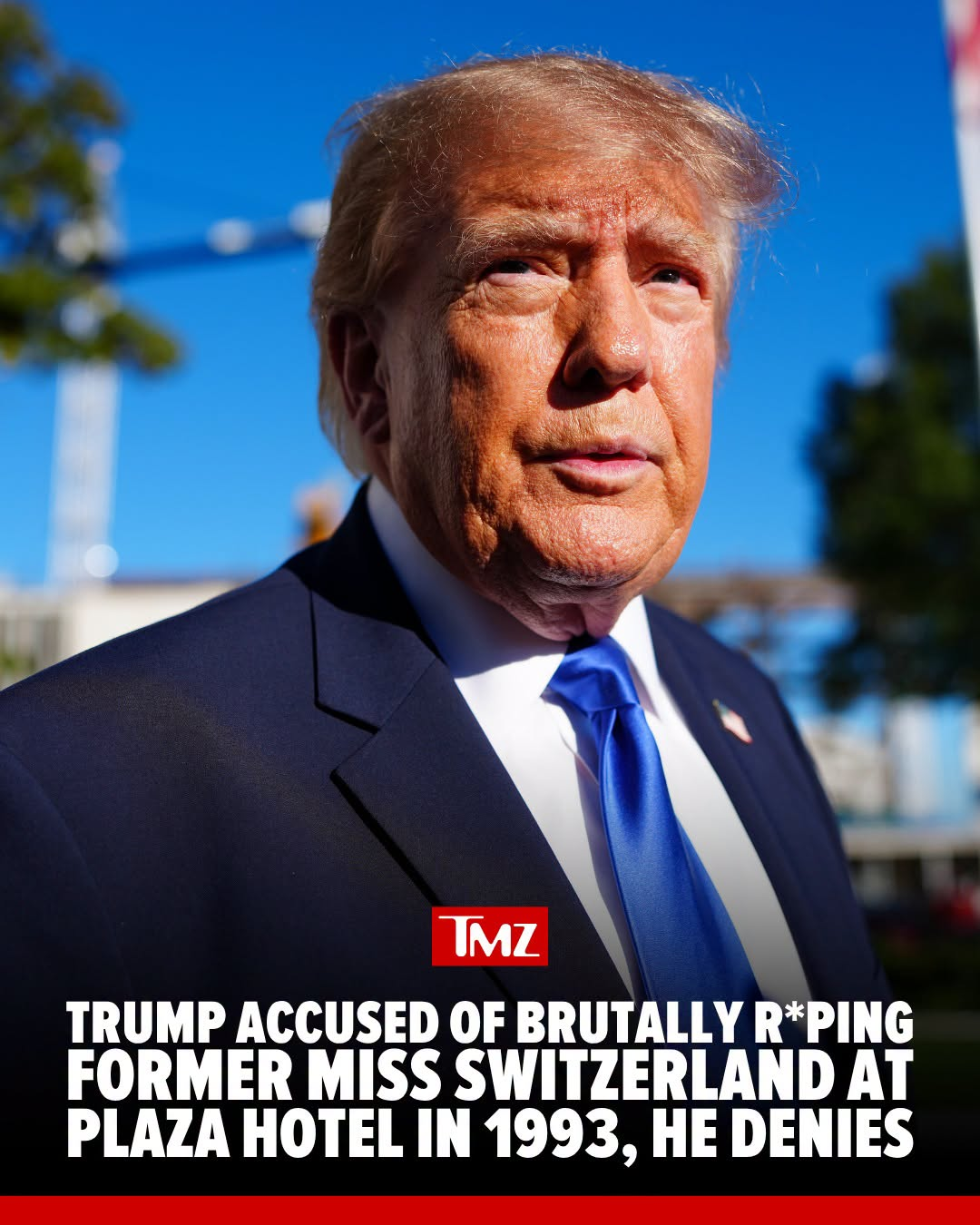
A serious allegation involving President Donald Trump has returned to the headlines after Democratic staff on the House Judiciary Committee published a report about his past association with Jeffrey Epstein. The report includes an account from Beatrice Keul, a former Miss Switzerland contestant who says Trump raped her at New York’s Plaza Hotel in November 1993. Trump and the White House deny wrongdoing.
The report was released on October 26, 2026, and draws on interviews, survivor accounts, FBI records and other documents. Its authors argue that the material warrants further scrutiny of the relationships and events described. The report was issued by Democratic committee staff, however, and should not be mistaken for a court ruling or a finding adopted by every member of the committee.
Keul was 24 and working as a model when she took part in the Donald J. Trump American Dream Pageant, according to her account summarized in the report. The event brought her into contact with Trump and Epstein in New York in 1993. The report says she met Trump during a luncheon connected with the pageant at the Plaza Hotel, which Trump owned at the time.
Keul told congressional staff that Trump discussed helping her obtain a U.S. visa and gain admission to New York University. She said Epstein then approached her, described himself as a close friend of Trump, and invited her to a gathering at Trump’s Mar-a-Lago property in Florida. These details are attributed to Keul and should be read as part of her account, not as independently established findings.
According to the report, Keul later received an invitation through a Trump representative to meet Trump in a private hotel suite. She says she expected a conversation about career opportunities, but alleges that Trump assaulted and raped her there. She described being injured and said she was subsequently pressured to stay quiet. The allegation has not been adjudicated in court.

The report further recounts Keul’s statement that she returned to Switzerland after the pageant and declined to participate in another Trump-backed competition. She also told investigators that Trump contacted her months later and again raised the prospect of assistance with a visa and university admission. The details are presented as her testimony to committee staff.
The story has a public history predating the new report. In 2024, Keul spoke to the media about an encounter with Trump at the Plaza Hotel in 1993, alleging that he kissed and groped her and tried to lift her dress. The 2026 report contains a more serious allegation and additional details than those in the earlier public account.
That distinction matters for accurate reporting. The earlier account and the more recent testimony should not be treated as identical, and the fact that an allegation has been repeated or expanded does not, by itself, establish whether it is true. A careful assessment depends on the testimony, any contemporaneous records, corroborating witnesses and other available evidence.
The White House has rejected Keul’s allegation. In a statement reported by TMZ, a spokesperson said the allegations were untrue and described the report as a politically motivated effort to distract the public. Trump has not been arrested or charged in connection with Keul’s allegation, according to the published reporting.
Democratic committee staff say the report covers accounts involving 11 women, including five who directly accuse Trump of rape or sexual assault in Epstein’s company or presence. Other accounts discussed in the report concern alleged approaches or attempts to introduce women to Trump. These are different categories of claims and should not be combined into a single, undifferentiated accusation.

The report’s broader focus is the social and professional world that connected Trump, Epstein and people in the modeling and pageant industries during the 1990s. The authors argue that the accounts and records raise questions about how young women were approached and whether powerful individuals received adequate scrutiny. Those arguments are the authors’ interpretation of the evidence and remain subject to independent examination.
Epstein was a financier and convicted sex offender whose connections included prominent figures in business, politics and entertainment. His documented social relationship with Trump has been the subject of years of public reporting. But evidence that two people knew one another or attended overlapping events does not, by itself, prove that one participated in a specific crime. Each allegation must be assessed on its own evidence.
The Democratic report calls for an independent special counsel and greater access to records connected to the Epstein investigation. These are recommendations by the report’s authors, not an announcement that prosecutors have opened a new case against Trump over Keul’s allegation. Any prosecutorial decision would rest with the appropriate authorities and would require an assessment of evidence, jurisdiction and applicable law.
A central question is how much of Keul’s account can be corroborated. The committee says the report draws on interviews and documents, and its summary refers to corroborating material from other people present at the pageant. Readers should consult the report itself for the authors’ description of that material and avoid assuming that every detail has been independently verified.
Allegations about events more than three decades ago can be difficult to investigate. Relevant records may be incomplete, witnesses may recall events differently, and evidence must be evaluated in context. These general challenges neither prove nor disprove Keul’s account. They underline why careful investigation and transparent sourcing are important.

The timing has also made the report politically contentious. It appeared shortly before the November 2026 midterm elections, as lawmakers continue to debate the government’s handling of Epstein-related records. Democrats say further disclosure and independent scrutiny are necessary; the White House says the report is partisan. Political motives should be considered as context, but they do not substitute for examining the underlying evidence.
The public response has highlighted two obligations for responsible coverage. First, a person making an allegation of sexual violence should be described accurately and without sensationalizing their account. Second, a report or accusation should not be presented as a proven fact when there has been no judicial finding. These principles can be applied together without presuming either guilt or dishonesty.
For Keul’s allegation, the most useful next developments would be independently verified records, additional on-the-record testimony, or formal investigative steps that clarify what can be established. Repeating the most dramatic phrasing from a headline adds little unless it is accompanied by evidence and clear attribution.
The report has renewed questions about Trump’s past association with Epstein and about how allegations involving influential people are investigated. The White House’s denial is part of the record, as are Keul’s statements and the committee staff’s description of the evidence. Those elements should be reported distinctly rather than blended into a conclusion that the available material does not establish.
For now, the core facts are limited but significant: Keul has made a grave allegation about an encounter in 1993; Democratic committee staff included her account in a report released in October 2026; Trump and the White House deny the claim; and no court has adjudicated this specific allegation. Further conclusions should await evidence that can be independently assessed.
Comments (0)
Loading comments...
May You Like

WEYMOUTH HORROR — FIRE TRUCK BRAKES TO SAVE DOG, ONE FIREFIGHTER DEAD, TWO CRITICAL!

WWE BRONSON REED DEAD AT 38, STIMULANTS DETECTED, $10M INSURANCE PAYOUT FROZEN!











Popular Posts



