Behind the Government-Funded Ads, a More Personal Role for Trump Emerges
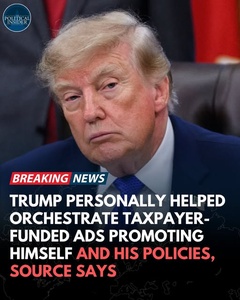
WASHINGTON — What initially appeared to be another government messaging campaign has taken on a more personal dimension after a source told CNN that President Donald Trump helped shape taxpayer-funded advertisements featuring himself.
A Campaign With an Unusual Sponsor
The advertisements have drawn attention because they promote Trump, his administration and several of his signature messages while carrying a disclosure stating that they were paid for by the U.S. government.
CNN reported that Trump personally drove the controversial campaign and helped select imagery and video used in the advertisements, according to a source familiar with their production.
Two Trump advisers told CNN that the advertisements were produced internally by the White House video team, which operates within the communications operation responsible for administration messaging.
The revelation adds another layer to questions already surrounding the campaign, which has attracted criticism from Democrats and several Republicans over its use of taxpayer money.
What Viewers Are Seeing
The first advertisement features Trump discussing communism, socialism and Marxism while rapidly edited images highlight his administration’s policies and accomplishments, including tax cuts, manufacturing and law enforcement.
A second advertisement uses footage from Trump’s July Fourth weekend speech near Mount Rushmore, including remarks about America and what he described as the beginning of a “golden age.”
The third advertisement is particularly notable because it closely resembles a video released by Trump’s 2024 presidential campaign, although the government-funded version carries a different payment disclaimer.
That advertisement shows Trump walking through a hallway while discussing what he calls a “final battle” against communists, Marxists, fascists, globalists and other political opponents.
Millions in Public Spending
AdImpact, a media-spending tracker, estimated that the three advertisements had cost more than $1.4 million by late September, although the eventual total could be higher.
The advertisements have appeared across television and streaming platforms, including major sports broadcasts, increasing their exposure beyond audiences that might normally encounter government announcements.
subsequently reported that funds from the Department of Homeland Security were used, with money moved into a Customs and Border Protection account for “commemorative events.”
Federal contract data reviewed by showed that a $20 million contract was awarded to Maryland-based LMD Agency for a “National Media Campaign” shortly afterward.
White House Defends the Messages
The White House has rejected the characterization of the advertisements as campaign material, describing them instead as public service announcements intended to promote patriotism and explain what makes America worth defending.
Officials have pointed to advertisements produced under previous administrations, including messages concerning Medicare, Affordable Care Act subsidies and COVID-19 vaccinations, as examples of government-funded public communications.
The administration also argues that Trump is not currently on a ballot and that the advertisements contain no explicit instruction telling viewers which candidate or party to support.
Why Critics Are Questioning Them
The controversy centers partly on federal restrictions governing how appropriated money can be used for publicity, propaganda and partisan political activity.
Several legal and ethics experts told news organizations that the advertisements appear different from traditional public service announcements because they prominently feature Trump and promote his political messages.
Former White House ethics official Richard Painter argued that the advertisements could raise serious questions under federal appropriations restrictions, while other experts have emphasized that the legal outcome remains unsettled.
The issue is further complicated by the timing. The advertisements are appearing only weeks before the November midterm elections, when debates over Trump’s policies and Republican control of Congress are intensifying.
Questions Beyond the Advertisements
There is also a separate dispute involving the music used in the first advertisement. Lawyers for musician JMSN asked the administration to stop using his song “Love Me,” saying permission had not been granted.
Meanwhile, congressional Democrats have requested information about the advertisements’ costs, contractors and funding sources, while some Republican lawmakers have also questioned whether taxpayer money should finance such messaging.
Senate Majority Leader John Thune said the advertisements should not have been paid for with taxpayer dollars, while Republican Senator John Cornyn similarly questioned the campaign’s use of public funds.
For the White House, however, the advertisements remain part of its broader effort to communicate directly with Americans about the administration’s priorities, achievements and view of national challenges.
The Bigger Question
The emerging details have shifted attention from what the advertisements say to how they were created, who directed them and why public money was used to distribute them.
CNN’s reporting that Trump personally helped select imagery and videos provides a more direct connection between the president and advertisements that are officially presented as government communications.
Whether that involvement ultimately has legal consequences will depend on how federal authorities, Congress or courts interpret the relevant restrictions and the specific circumstances surrounding the advertisements.
For now, the campaign has become an unusual intersection of presidential messaging, government spending and political communication, with its funding and production process receiving almost as much scrutiny as its content.
Comments (0)
Loading comments...
May You Like
Jack Smith Defends His Integrity as Trump Investigations Face Renewed Political Firestorm
Jack Smith Defends His Integrity as Trump Investigations Face Renewed Political Firestorm