Biden Revives Economic Clash With Trump, Declaring He Left Behind a
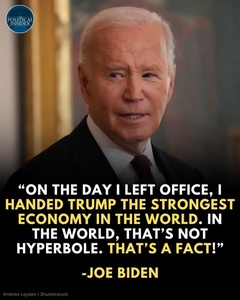
COLUMBIA, S.C. — Former President Joe Biden has reignited an economic dispute with President Donald Trump, declaring that he left his successor “the strongest economy in the world” when he departed the White House.
Biden’s Economic Defense
The remark came during a February 27, 2026 speech to South Carolina Democrats, where Biden criticized Trump’s economic record and contrasted job creation under their administrations.
Biden said his administration created more than 16 million jobs and highlighted an unemployment rate that remained low for much of his presidency, according to his speech.
He also claimed Trump had created 185,000 jobs during his first year, presenting the figure as evidence of a sharp difference between their economic records.
However, independent fact-checking later found that Biden’s comparison understated employment gains during Trump’s first year and overstated some figures associated with his own administration.
reported that revised data showed Biden’s job total was lower than he claimed, while Trump’s first-year employment gains were higher than Biden suggested.
What the Data Showed
Still, several indicators support Biden’s broader description of a strong labor market when he left office. The unemployment rate stood at 4.0 percent in January 2025.
That January report also showed employers added 143,000 nonfarm jobs, while the unemployment rate edged down from December’s 4.1 percent, according to the .
Economic growth was also continuing when Biden left office. Real gross domestic product increased 2.8 percent during 2024, according to the .
Consumer spending, investment, government spending and exports all contributed to annual growth in 2024, although inflation remained above the Federal Reserve’s longer-term target.
Inflation was one of the major weaknesses of Biden’s economic record. calculates that consumer prices increased 21.5 percent during his four-year presidency.
Gasoline prices also rose substantially during Biden’s term, while average weekly private-sector earnings declined after adjusting for inflation, according to ’s review of final economic data.
Inflation Complicates the Picture
The inflation surge followed pandemic-related supply disruptions and the global energy shock associated with Russia’s invasion of Ukraine, while Biden’s fiscal policies also contributed to demand.
By late 2024, however, inflation had eased considerably from its 2022 peak, and unemployment remained near historically low levels as the economy continued expanding.
Trump entered office promising to reduce inflation and improve living costs, while repeatedly arguing that he inherited an economy damaged by Biden’s policies.
That argument remains central to Trump’s political messaging. reported in September 2026 that Trump had invoked Biden nearly 900 times during the year, frequently blaming him for economic problems.
The economic debate has since become more complicated as Americans face persistent living-cost pressures. reported that Trump’s September 2026 approval on cost-of-living issues was only 17 percent.
A Continuing Economic Debate
Rising energy costs have added another challenge. The Iran war that began in February 2026 disrupted energy markets, contributing to higher gasoline and diesel prices across the United States.
Neither administration’s economic record can be reduced to a single statistic. Jobs, wages, inflation, GDP growth, energy costs and household purchasing power tell different parts of the story.
Biden’s resurfaced statement therefore reflects a continuing political argument over what Trump inherited, what Biden accomplished, and which administration should receive responsibility for America’s economic conditions.
Comments (0)
Loading comments...
May You Like

Shocking news from Ohio: an unexpected development ahead of Trump's rally