
Bo Loudon Tells Obama to “Hush” as Trump–Obama Feud Explodes Ahead of Midterms
Bo Loudon Tells Obama to “Hush” as Trump–Obama Feud Explodes Ahead of Midterms
A sharp message from conservative commentator Bo Loudon has added another flashpoint to the escalating political confrontation between President Donald Trump and former President Barack Obama just days before the 2026 midterm elections.
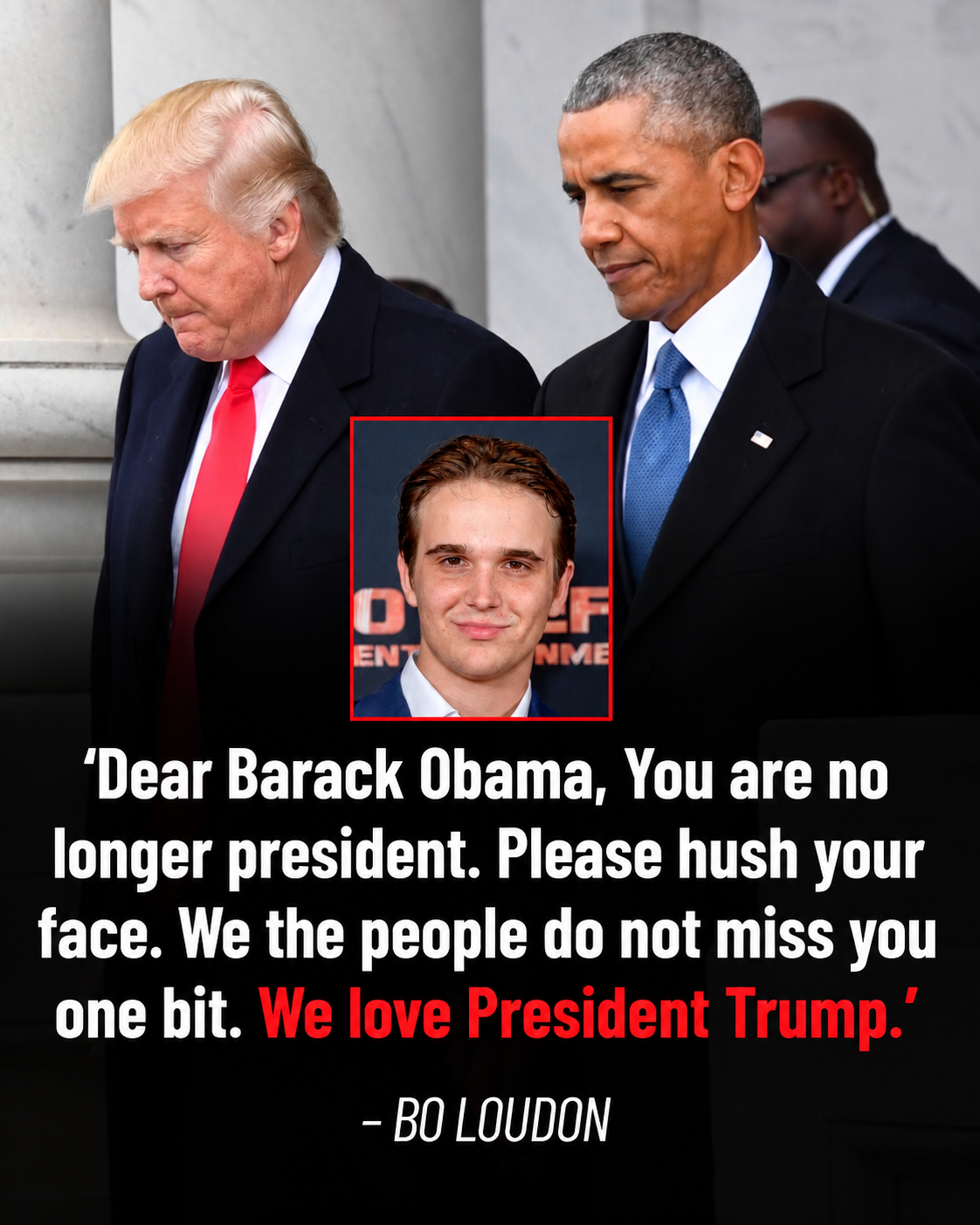
Loudon, a vocal Trump supporter with a sizable social-media following, addressed Obama directly in a post telling the former president that he no longer holds office and should stop speaking out against Trump. The message also declared support for the sitting president.
The post captured a familiar argument in American politics: whether former presidents should remain active voices in public affairs or step aside once their terms have ended.
But the timing was especially significant. Obama has returned to the campaign trail to support Democratic candidates, while Trump has been traveling across battleground states to energize Republican voters ahead of November 3.
Obama's recent appearances in Ohio and Michigan included pointed criticism of the Trump administration's policies, governing style and handling of major national issues. His remarks were intended to persuade voters that the midterm elections carry consequences beyond individual races.
At campaign events, Obama has argued that the administration has failed to address everyday concerns and has criticized the president's approach to economic and foreign policy questions.
Trump has responded with his own attacks, questioning Obama's record in office and defending the decisions made during his second administration. The exchange has made the two presidents unusually visible figures in the closing days of a congressional election.
Loudon's intervention belongs to this larger clash. Rather than engaging one specific policy argument, his message challenges Obama's continued public prominence and expresses a preference for Trump's leadership.
Supporters of that position contend that Obama had eight years to shape federal policy and that voters should judge the current administration without constant intervention from its predecessors.
Others reject the idea that leaving office should mean leaving the national conversation. Former presidents remain private citizens with the same rights to speak, campaign and criticize government actions as other Americans.
That distinction matters because Obama is not seeking to exercise presidential authority. His current role is political advocacy on behalf of Democratic candidates, a practice with a long history in both major parties.

The controversy has also highlighted the power of short social-media statements to turn a complicated argument about democratic participation into a direct personal confrontation.
Loudon's message uses emotionally charged language and claims to speak for Americans who agree with him. It should not be read as evidence that the entire country shares that opinion.
Indeed, the continuing prominence of both Trump and Obama reflects the deep political divisions that have shaped the United States for years. Each retains devoted supporters, and each remains a powerful symbol to opponents.
In Georgia, Obama has also campaigned for Democrats, including Senator Jon Ossoff, while criticizing Trump's priorities. Trump has continued to defend his administration and rally Republican voters in competitive contests.
The broader stakes are considerable. Every House seat is on the ballot in the November midterms, along with numerous Senate and state offices, making turnout a central concern for both parties.

Republicans hope Trump's direct appeal to his base will help preserve their congressional influence. Democrats are counting on Obama and other high-profile figures to motivate voters concerned about the direction of the country.
For voters, the arguments offer sharply different interpretations of the same political moment. One emphasizes loyalty to the sitting president and frustration with familiar Democratic leaders; the other emphasizes scrutiny of those currently holding power.
The personal tone of the exchange can easily obscure the underlying policy disagreements, from household costs and immigration to the use of executive power and America's role overseas.
As Election Day approaches, Loudon's viral-style rebuke is likely to remain one of many partisan messages competing for attention. The ultimate measure of political influence, however, will be the choices voters make at the ballot box.
Comments (0)
Loading comments...
May You Like

I-75 THANKSGIVING NIGHTMARE — MAIL TRUCK CRASH RAISES OVERPASS COLLAPSE FEARS!

IRAN DEFIES WASHINGTON — SUPREME LEADER CLAIMS U.S. MILITARY ATTACKS FAILED!

AMERICA'S ECONOMY IS GROWING — SO WHY ARE AMERICAN FAMILIES STILL STRUGGLING?













