
BOMB DISCOVERED AT NORTHWESTERN'S ELDER HALL AFTER 3 STUDENTS STOP AN ATTACK ON 10 GIRLS!
Northwestern Dorm Attack Raises Security Questions After Three Students Rescue Classmate From Alleged Intruder
EVANSTON, Illinois — November 19, 2026 — Three Northwestern University students helped rescue a female classmate from an alleged strangulation attack inside Elder Hall after a man followed other students into the residence building, bypassed multiple security barriers and entered her fourth-floor room, according to prosecutors and university officials.
The November 15 incident began when two students noticed a man apparently following them on Chicago-area trains and continued after they returned to Northwestern's Evanston campus.
A friend opened the residence hall entrance to let the students inside, but the heavy door closed slowly enough for the man to enter behind them, prosecutors said.
The suspect, identified in court records as 23-year-old Diaunte Adams of Chicago Heights, later entered another student's room, where prosecutors allege he grabbed her around the neck.
The woman escaped after nearby residents intervened.
She was treated at a hospital and released.
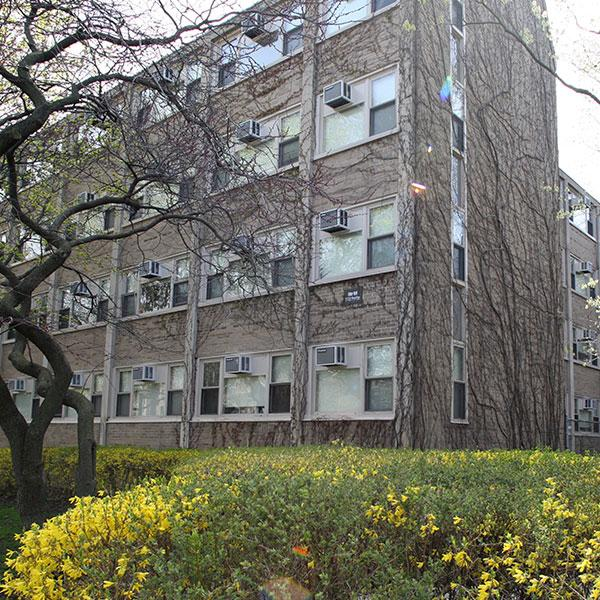
The events leading to the attack began before the suspect entered Elder Hall.
According to prosecutors, two Northwestern students were traveling home from Chicago at approximately 4:30 p.m. on Sunday.
They noticed a man watching them while riding the CTA Red Line.
The students subsequently transferred to the Purple Line.
The man, later identified by authorities as Adams, allegedly followed them during the transfer.
When they left the train at the Noyes Street station, they noticed that he continued in their direction.
The students became concerned and contacted a friend who lived in Elder Hall.
They asked the friend to help them enter the residence hall.
What happened at that entrance would become a central part of the investigation.
The two students, identified in television interviews as Callie Zhou and Braden Stone, described becoming increasingly frightened as the man continued following them.
They said they noticed him during their journey from Chicago.
The concern grew when he remained nearby after they changed trains and walked toward campus.
Zhou told ABC7 Chicago that the experience left her extremely frightened.
Stone said the pair contacted a friend and asked to be let into Elder Hall.
They then hurried toward the building.
The students' accounts show that they recognized a possible danger before reaching the residence hall.
They also explain why they were trying to get inside quickly.
Their decision to seek help from a friend was an attempt to reach safety, not an invitation to the man following them.
The central question about the residence hall entrance has a documented answer.
According to prosecutors, a friend who lived in Elder Hall opened the building door to admit the two students who had requested help.
The friend's identity was not established in the public reports reviewed.
The door then closed slowly, allowing the suspect to enter behind the students.
This detail is important because it distinguishes two different actions.
A resident opened the door for people she knew.
The suspect allegedly exploited the time before the door closed.
There is no evidence in the reviewed court reporting that the friend intentionally admitted the suspect or assisted him.
The incident instead exposed how an authorized entry can become an opportunity for an unauthorized person to enter a secured building.
Stone told ABC7 that he tried to close the entrance door as the man approached.
Prosecutors' account nevertheless indicates that the suspect managed to enter the building behind the students.
The reported sequence suggests that the entrance did not secure itself quickly enough to prevent the unauthorized entry.
A heavy door may take several seconds to close.
That interval can create an opportunity for someone to follow an authorized resident.
This type of entry is commonly known as tailgating.
It does not necessarily require the intruder to possess a key, access card or security code.
Instead, the person follows someone whose entry is permitted.
The Elder Hall case demonstrates why tailgating can remain a vulnerability even when a building has electronic access controls.
Northwestern officials said the man bypassed two additional layers of security after entering Elder Hall.
According to the university, he did so by following closely behind students through secured areas.
The building therefore had more than one controlled access point.
But those measures did not prevent the suspect from reaching the residential floors.
The distinction is significant.
A building may have several security barriers, yet each can become ineffective if an unauthorized person follows an authorized resident through it.
The case has prompted questions about how access points are monitored and how residents can report suspicious behavior.
Northwestern subsequently increased security in the area.
University officials also encouraged students to remain aware of their surroundings and report concerning activity.
Prosecutors said surveillance footage showed Adams entering an elevator inside Elder Hall.
He traveled to the fourth floor.
The video evidence helped establish his movement through the building after the initial security breach.
The public reporting does not establish that the complete surveillance recording has been released.
Nor does it identify every camera angle or provide a continuous recording of the entire incident.
What prosecutors described is specific: footage showing the suspect using an elevator to reach the fourth floor.
That detail matters because it places the alleged intruder inside the residence hall after he bypassed the entrance controls.
It also provides a documented link between the initial entry and the subsequent encounter with the student who was attacked.
After leaving the elevator, Adams allegedly encountered a student returning to her dormitory room.
Prosecutors said she was unaware of the earlier events involving the two students who had been followed from the train.
Adams allegedly followed her down the hallway and entered her room before she could close the door.
According to court records described by the Chicago Sun-Times, the woman turned around and saw him standing inside.
She asked whether he was all right.
Prosecutors said he shook his head.
The student then attempted to leave.
But Adams was positioned between her and the exit, according to the allegations.
What began as an unauthorized entry into the residence hall had escalated into an alleged assault inside a private dormitory room.
The woman tried to get past Adams and open the door.
According to prosecutors, she managed to wedge one foot into the doorway, preventing it from closing completely.
Adams allegedly grabbed her, wrapping his arms around her chest and neck.
Prosecutors said he squeezed tightly enough that she struggled to breathe and began losing consciousness.
The student's foot remained in the doorway during the struggle.
That detail would prove important when other residents heard her cries for help.
The partially open door allowed them to recognize that something was wrong and intervene.
The account comes from court allegations, which must be distinguished from findings made after a trial.
Adams is presumed innocent unless proven guilty.

Lucas Gonzalez, Logan Rogers and Andrew Kim were nearby when the attack occurred.
Gonzalez and Rogers were studying, while Kim was watching a football game.
Their routine evening changed when they heard frantic screams.
The students initially tried to determine what was happening.
Another resident was already attempting to intervene but had been unable to separate the attacker from the woman.
Gonzalez, Rogers and Kim then moved toward the room.
They saw the victim's foot holding the door partially open.
The students told NBC Chicago that the opening allowed them to enter and confront the attacker.
The three students said they entered the room and physically separated the attacker from the victim.
Rogers described seeing the man with his arms around the woman's neck.
Gonzalez said the group pushed together to free her.
Kim later explained that the students moved the attacker away and helped the woman reach the hallway.
Their actions allowed the victim to escape.
The students then faced another immediate problem: preventing the suspect from following her or attacking someone else.
According to prosecutors, they pushed the man back into the room and held the door closed.
They remained there until police arrived.
The account illustrates the importance of the students' intervention, but it does not establish that they prevented attacks on any additional identified victims.
The documented rescue involved one female student.
Kim told NBC Chicago that the suspect appeared to have a hand in his pocket after being pushed into the room.
The students did not know whether he possessed a weapon.
They decided it was safer to keep him contained rather than continue confronting him.
That uncertainty was part of their account of the incident.
It does not establish that the suspect actually had a weapon.
The students' decision allowed them to avoid further physical contact while waiting for officers.
Their response also helped prevent the suspect from leaving the room immediately after the alleged assault.
Police later took control of the situation.
The students' actions were praised by Northwestern officials and other members of the campus community.
Northwestern University Police responded to the residence hall, with assistance from Evanston police.
Officers found the suspect contained inside the student's room.
According to university officials, he initially remained inside rather than immediately surrendering.
He later opened the door and was taken into custody.
Cellphone footage obtained by local television showed officers escorting a man from the residence hall.
That video documented part of the police response.
It was separate from the security-camera footage prosecutors described showing the suspect using the elevator.
The distinction matters because the available videos capture different moments.
One relates to the suspect's movement inside the building.
The other shows the aftermath of his detention.
Neither provides evidence of a bomb or an attempted attack involving 10 female students.
The student who was attacked was taken to a local hospital.
Court records described injuries involving her neck and leg.
The neck injuries were associated with the alleged strangulation.
Her leg was injured during the struggle at the doorway, according to prosecutors.
University officials confirmed that she was evaluated and later released.
Hospital discharge does not necessarily establish that a person has fully recovered from the physical or psychological effects of an assault.
Protecting her privacy is especially important because the case concerns an alleged violent attack in a residential setting.
The publicly established outcome is that she survived, received medical care and was released from the hospital.
Authorities identified the suspect as Diaunte Adams, 23, of Chicago Heights.
He was not affiliated with Northwestern University, according to the school.
Initial university reports described his arrest in connection with criminal trespass to a residence, home invasion and aggravated battery.
Subsequent court reporting also identified a criminal-damage-to-property charge.
The precise charging status should be distinguished from the initial grounds for arrest because allegations may be reviewed or amended during prosecution.
ABC7 Chicago reported that Adams appeared in a Skokie courtroom on November 17.
A later report identified December 11 as his next scheduled court date.
The allegations remain subject to the judicial process.
The available reporting does not establish a conviction.
The reports from Northwestern, prosecutors and local news organizations describe an alleged home invasion and strangulation attack.
They do not document the discovery of an explosive device.
The published accounts do not describe a bomb squad responding to Elder Hall, an explosives-related charge or an evacuation ordered because of a suspected bomb.
Kim's statement about not knowing whether the suspect had a weapon reflects the students' uncertainty during the rescue.
It is not evidence that a weapon was discovered.
The distinction is important because the discovery of an explosive device would materially change the nature of the investigation.
It would require separate evidence, including an official police announcement or authenticated investigative record.
The documented case concerns unauthorized entry and an alleged violent assault.
The available court accounts identify one student who was physically attacked.
They also describe two students who believed they were being followed from Chicago and sought refuge inside Elder Hall.
Other residents became involved after hearing the victim's screams.
However, the records reviewed do not establish that Adams intended to attack 10 female students.
Nor do they document a plan involving a group of 10 victims.
Investigators may examine a suspect's movements and intentions as part of a criminal case.
But the existence of one alleged assault does not establish an additional planned attack.
The evidence supports reporting that three students intervened to rescue a classmate.
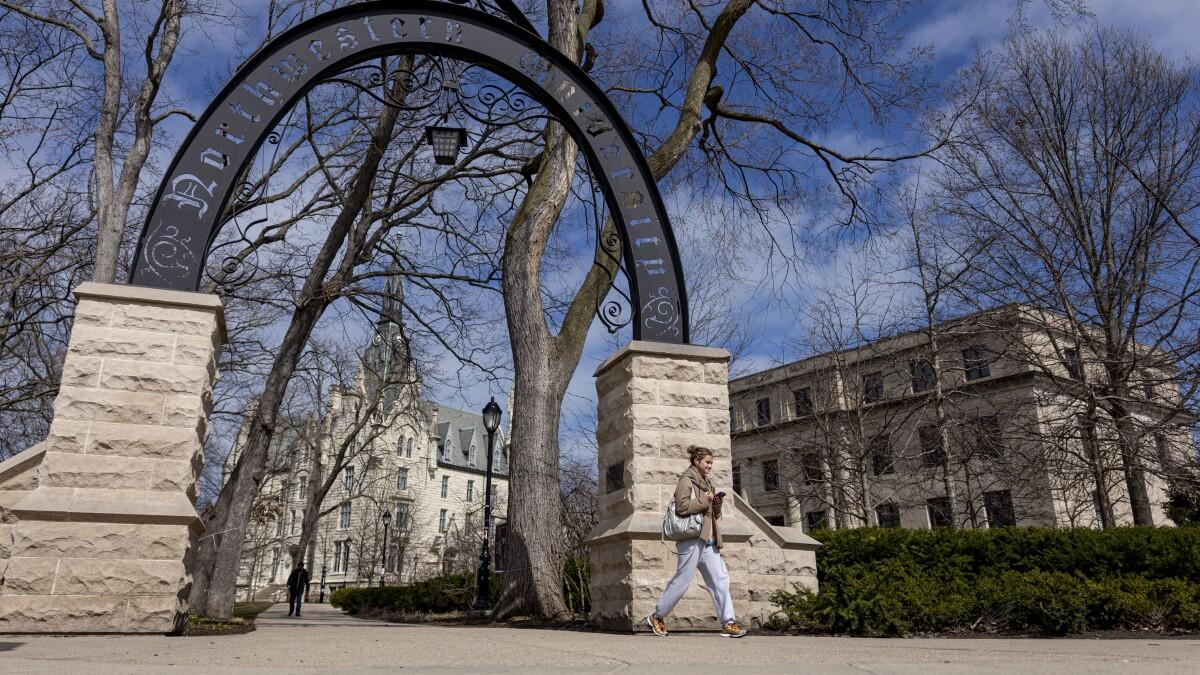
The case has focused attention on how residence halls control access.
According to prosecutors, the suspect did not need to defeat an electronic lock or obtain a stolen access card.
He allegedly entered behind students through a slowly closing door.
He then passed through two additional secured areas by following residents.
This sequence demonstrates a limitation of access-control systems that depend partly on people preventing unauthorized entry.
Students may be reluctant to challenge strangers, particularly when they cannot know whether someone belongs in the building.
A person who appears to be following another resident may therefore pass through a secured doorway without attracting immediate attention.
The Elder Hall incident illustrates why physical barriers, monitoring procedures and rapid reporting must work together.
Northwestern said it increased security in the area following the attack.
The university also thanked the students who intervened to protect their classmate.
Officials encouraged residents to pay attention to their surroundings and report suspicious activity.
The school said there was no continuing threat to the campus community from the incident.
That statement reflected its assessment after the suspect was taken into custody.
It did not mean that every concern about residence hall security had been resolved.
Students interviewed by local television described feeling unsettled.
Some questioned how an unauthorized person could pass through multiple security checkpoints.
Others said the attack had changed how they thought about holding doors open for people they did not recognize.
Gonzalez, Rogers and Kim received attention for helping stop the assault.
But they resisted portraying themselves as exceptional.
Kim told NBC Chicago that they recognized someone was in danger and believed others would have tried to help in the same situation.
Their comments emphasized the urgency of the moment.
They did not know the suspect's intentions or whether he possessed a weapon.
They acted after hearing the victim's screams and seeing that another student needed immediate assistance.
The incident demonstrates how quickly a situation can change inside a residential building.
It also highlights the role of other residents in alerting authorities and helping someone escape danger.
Their actions were central to the victim's rescue, according to prosecutors and university officials.
The criminal case will proceed through the Illinois court system.
Prosecutors will be responsible for presenting evidence supporting the charges.
The defense will have the opportunity to challenge that evidence and the allegations.
Surveillance recordings, witness statements and medical records may be relevant to the proceedings.
Northwestern also faces questions about the security arrangements that allowed an unauthorized visitor to reach the fourth floor.
The university has already increased security in the area.
Whether additional changes will follow remains a matter for university officials.
The broader concern is how colleges can maintain accessible residential communities while reducing the risk of unauthorized entry.
The investigation provides a specific explanation for how the suspect entered Elder Hall.
A resident opened the entrance to help two students who feared they were being followed.
According to prosecutors, the door closed slowly enough for the man to enter behind them.
He then allegedly followed other students through additional secured areas.
The surveillance footage described in court reporting showed him reaching the fourth floor by elevator.
There, prosecutors say, he entered a student's room and attacked her.
Three nearby students heard her cries, intervened and helped her escape.
Comments (0)
Loading comments...
May You Like

NYC EMERGENCY—MILLIONS FACE EVACUATION RISKS, MACY'S GIANT BALLOONS REMOVED FOR SAFETY!

AMERICA'S LUCAS DRONE — A POTENTIAL GAME CHANGER IN THE SOUTH CHINA SEA?

IOWA NIGHTMARE: SECOND ARMY BLAST, 10,000 EVACUATED, 201+ HOSPITALIZED!









Popular Posts




