Brazil Orders Federal Probe Into Network Linked to JD Vance as Foreign Influence Allegations Shake Washington and Brasília
WORLD POLITICS • BRAZIL • UNITED STATES • OCTOBER 28, 2026
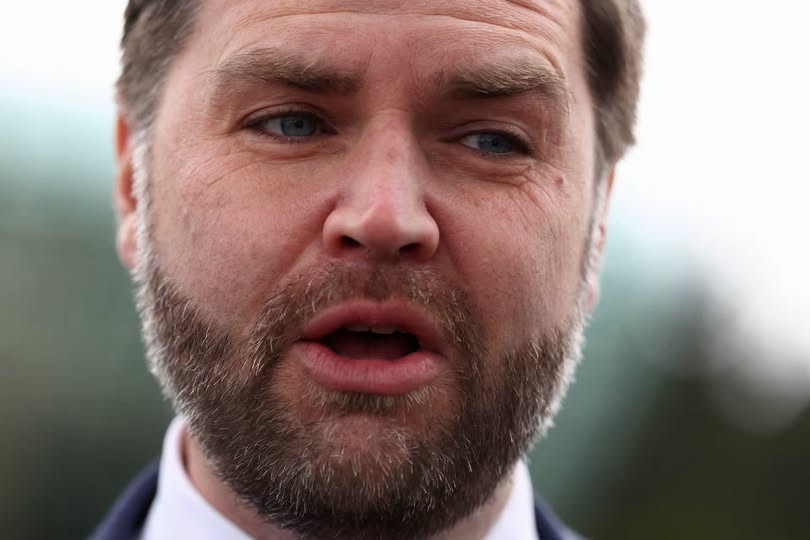
A Brazilian Supreme Court justice has ordered a police investigation into alleged links between a U.S. conservative donor network co-founded by Vice President JD Vance and the presidential campaign of Flávio Bolsonaro. The case is raising new questions about foreign political influence, campaign-finance rules and relations between Washington and Brasília.
BRASÍLIA — A developing political and legal controversy in Brazil is drawing renewed attention to the role of wealthy American donors and U.S. political organizations in foreign elections.
On October 27, Brazilian Supreme Court Justice Flávio Dino ordered federal police to investigate whether the Rockbridge Network, a U.S. conservative donor organization co-founded by Vice President JD Vance, provided financial resources, personnel, services or other economic benefits to the presidential campaign of Flávio Bolsonaro.
The order does not establish that illegal foreign financing occurred. Instead, it directs investigators to determine whether assistance was provided, where any resources originated and whether they were used in the campaign. Rockbridge has denied involvement, saying Brazilians who claimed to represent the organization misrepresented their relationship with the network.
The investigation comes amid a wider dispute over U.S. influence in Brazil, including a separate inquiry into a reported $1 million U.S. State Department grant for a program critical of Brazil's Supreme Federal Court.
With Brazil's presidential election now decided, the investigations could have implications for campaign-finance enforcement, political organizations operating across borders and the diplomatic relationship between the two countries.
1. The Judicial Order That Put Rockbridge Under Scrutiny
Justice Flávio Dino's order directs federal police to examine contacts between Rockbridge and Brazilian companies or political intermediaries to determine whether campaign assistance was provided to Flávio Bolsonaro.
Under Brazilian law, political candidates and parties are prohibited from receiving foreign funding or other forms of economic assistance from foreign sources.
That distinction is important because the investigation extends beyond direct cash donations. Investigators are also being asked to examine whether personnel, services or other economically valuable benefits may have been provided and whether intermediaries were used to conceal their origin.
The order also calls for scrutiny of election-related online advertising and potential involvement by social media platforms.
However, a judicial order to investigate allegations is not a finding of guilt. Authorities must establish whether the reported contacts resulted in prohibited assistance and whether any conduct violated Brazilian law.
2. What Is the Rockbridge Network?
Rockbridge is a U.S. conservative political donor network co-founded by JD Vance before he became vice president.
The organization has attracted attention because of its connections to influential conservative figures and its reported interest in expanding its activities beyond the United States.
A September investigation by Brazilian newspaper Folha de S.Paulo reported that people associated with a proposed Brazilian expansion had contacted businesspeople and politicians. Documents described a possible operation involving media, youth training and legislative activity.
The reporting also described membership proposals involving substantial annual contributions. But Rockbridge said its proposed Brazilian project did not move forward and that its name was being used improperly.
Those details help explain why investigators are examining the organization's contacts in Brazil. They do not, by themselves, demonstrate that the network financed an election campaign illegally.
The central question is whether the proposed activities remained exploratory or whether prohibited assistance was actually provided to a candidate.
3. The Allegations Involving Flávio Bolsonaro's Campaign
The allegations gained prominence during Brazil's 2026 presidential campaign.
Former presidential candidate Renan Santos alleged that people claiming connections to Rockbridge had discussed providing American support to Flávio Bolsonaro's campaign. The allegations prompted complaints to Brazilian authorities.
According to The Washington Post, Santos also alleged that individuals claiming to represent the network approached him with offers of campaign assistance. Rockbridge subsequently denied affiliation with those individuals, stating that they had made false representations and created documents without the organization's knowledge or consent.
Investigators must now establish who the individuals were, whether they genuinely represented any U.S. organization, what discussions took place and whether any resources or services were delivered.
These questions are central to the case because the existence of political contacts does not automatically establish illegal campaign financing.
The investigation will need evidence linking any alleged assistance to its source, recipient and actual use.
4. A Separate $1 Million U.S. Grant Raises Additional Questions
The Rockbridge investigation is unfolding alongside a separate controversy over a reported U.S. government grant.
On October 1, Brazil's Office of the Attorney General, known as the Advocacia-Geral da União, asked the Federal Police and Federal Public Prosecutor's Office to investigate allegations concerning U.S. funding for political and civil-society activities in Brazil.
The request followed a report by The Guardian that the U.S. State Department had allocated $1 million from its Human Rights and Democracy Fund to a program called Countering Lawfare and Censorship in Brazil.
The program was described as supporting civil-society groups opposing what they characterize as judicial overreach and censorship by Brazil's Supreme Federal Court. Brazilian authorities asked investigators to examine whether the funding could amount to improper foreign interference in the country's political and institutional affairs.
The controversy involves a difficult question: when does foreign support for civil society and criticism of government institutions become prohibited political interference?
That question cannot be answered solely by the program's title or the fact that it criticizes a court. Investigators must establish the intended recipients, the activities financed and whether the arrangements violated Brazilian law.
The two investigations should not be conflated. The reported State Department grant and the allegations concerning Rockbridge are separate matters, even though both have contributed to the wider debate about U.S. influence in Brazil.
5. Why Brazil Is Treating Foreign Political Influence Seriously
Brazil's restrictions on foreign campaign financing reflect a broader effort to protect electoral sovereignty.
The underlying principle is that Brazilian voters should determine their country's political leadership without candidates receiving prohibited financial support or economic advantages from foreign entities.
The rules also raise difficult enforcement questions in an era when political influence can involve more than conventional donations. Campaign-related services, digital advertising, communications support and intermediaries may all become relevant if they provide measurable economic benefits.
In this case, Justice Dino has directed investigators to consider whether alleged assistance involved resources beyond direct financial contributions.
At the same time, legitimate political speech, ordinary diplomatic engagement and lawful civil-society activities should not automatically be treated as election violations.
Establishing where those boundaries lie will require evidence about the specific arrangements under investigation.
6. The Election Result Changes the Political Landscape
The investigation has gained additional significance because the presidential election has already concluded.
President Luiz Inácio Lula da Silva defeated Flávio Bolsonaro in the October 25 runoff, according to reporting published after the vote. The result means the investigation is now unfolding after the campaign whose financing is under scrutiny.
The outcome does not eliminate the legal questions. Authorities can still investigate whether prohibited assistance occurred, identify any responsible individuals and determine whether the law was violated.
Nor does the investigation itself invalidate the election result or establish that any alleged outside support changed the outcome.
Those are separate questions requiring separate evidence.
For Brazil's political institutions, the challenge is to examine the allegations through established legal procedures while respecting the rights of the people and organizations involved.
7. Washington and Brasília Face Renewed Diplomatic Tension
The investigation arrives after a period of strained relations between the two governments.
The Trump administration previously imposed tariffs on Brazilian goods and sanctions on Brazilian officials amid disputes over the prosecution of former president Jair Bolsonaro, Flávio Bolsonaro's father.
The controversy over the reported State Department grant has added another dimension to disagreements about Brazil's judiciary, political sovereignty and the role of Washington in Brazilian affairs.
Brazilian officials have argued that foreign political interests must not interfere with decisions that belong to Brazilian voters and institutions.
From the American side, Rockbridge has denied involvement in the alleged campaign assistance, while the grant controversy concerns a separate government-funded program.
These distinctions matter. The investigations may increase diplomatic friction, but their eventual implications will depend on the evidence uncovered and how both governments respond.
8. Social Media, Online Advertising and the Digital Influence Question
The judicial order also addresses questions about online election advertising, including content linked to Polymarket and potential involvement by Meta.
Investigators have been asked to examine the origin of money used for certain election-related online content and whether digital platforms or intermediaries played a role in creating advantages or disadvantages for candidates.
These are allegations to be investigated, not established findings that a platform deliberately manipulated the election.
Meta has previously denied favoring a particular candidate in Brazil's election, according to reporting on the case. The company has pointed to technical incidents affecting campaigns across the political spectrum.
The wider issue is increasingly important in international politics. Digital campaigns can cross national borders quickly, while identifying who paid for particular content—and whether that activity violates local law—can require detailed financial and technical investigations.
9. What Investigators Must Establish Next
The next stage will depend on whether investigators can substantiate the allegations with documentary and financial evidence.
Several questions remain central:
-
Financial records: Did money or other economic benefits reach any campaign or associated intermediary?
Organizational links: Did the people involved genuinely represent Rockbridge, or were they acting independently?
Campaign assistance: Were any services, personnel or other resources actually provided and used?
Online activity: Who funded the election-related advertising and what role, if any, did intermediaries or platforms play?
Legal responsibility: If violations occurred, which individuals or organizations were responsible under Brazilian law?
The answers could help distinguish exploratory political networking from conduct that violates campaign-finance restrictions.
Until the evidence is assessed, it would be premature to characterize the allegations as a proven scheme or to conclude that any particular person is guilty.
10. The Bigger Picture: Can National Elections Be Protected From Foreign Influence?
The controversy illustrates a growing challenge for democracies: how to protect electoral independence while allowing lawful international cooperation, political expression and civil-society activity.
Foreign funding can take different forms, and not every cross-border political interaction is unlawful. But when money or valuable services are allegedly directed toward a candidate in violation of national law, authorities have a responsibility to investigate.
Brazil's legal process will now determine whether the allegations involving Rockbridge and the other reported activities are supported by evidence.
The outcome may influence how Brazilian authorities monitor campaign finance, assess online political activity and scrutinize organizations operating across borders.
It could also affect relations between Brasília and Washington, particularly if investigators establish links between foreign resources and prohibited campaign assistance.
Final Takeaway: A Major Investigation, Not Yet a Finding of Guilt
Brazil's decision to investigate alleged links between Rockbridge and Flávio Bolsonaro's campaign marks a significant development in the debate over foreign political influence.
A separate inquiry into a reported $1 million U.S. State Department grant has further intensified questions about how foreign funding intersects with Brazil's political institutions.
But the evidence must be evaluated carefully. Rockbridge denies involvement, and the judicial order does not establish that illegal campaign financing occurred.
The most important developments to watch are the findings of federal police, the financial and organizational records they examine, and any subsequent legal decisions.
The central issue is not whether the allegations make for a dramatic headline. It is whether investigators can establish what happened, who was involved and whether Brazilian law was violated.
The investigation is now underway. The conclusions, however, must follow the evidence.
Comments (0)
Loading comments...
May You Like
RAPE ACCUSATION AGAINST TRUMP! ★ THE 1993 CLAIM THAT TRIGGERED A FEDERAL DEMAND..
Trump Heads Back to Kansas for a Second Rally as Midterm Campaign Intensifies
Latest Posts
Popular Posts