British Expert Warns of China-Russia Alignment Against Israel, Aiming to Undermine US Influence

A prominent British analyst has raised concerns that the growing strategic alignment between China and Russia may be targeting Israel as a key avenue to weaken the United States' global standing. The assessment comes amid escalating tensions in the Middle East, where Moscow and Beijing have increasingly positioned themselves as a counterweight to US-led diplomacy, particularly in the wake of the recent conflicts involving Iran.
The expert's analysis reflects a wider geopolitical realignment, where the traditional US-led order is being challenged by a multipolar vision championed by Russia and China. This is evidenced by the two powers' coordinated diplomatic responses to the US-Israeli military operations in Iran and their continued refusal to condemn Russia's actions in Ukraine. Instead, they have sought to cast themselves as alternative "voices of reason" advocating for de-escalation, a stance that serves to undermine the influence of Washington in the region.
Diplomatic Efforts and Strategic Limits
In recent months, Chinese Foreign Minister Wang Yi and Russian Foreign Minister Sergey Lavrov have engaged in numerous diplomatic calls to project a united front, condemning actions they view as breaches of international law and calling for a ceasefire. Notably, China and Russia have jointly maneuvered within the UN Security Council to block measures that would support the US and Israel, while simultaneously stressing their global responsibilities as nuclear powers.
Despite their vocal opposition, analysts point out that both China and Russia have stopped short of any concrete military or economic intervention to protect their ally, Iran. Timofei Bordachev, a program director at the Valdai Discussion Club, emphasized that Russia, for instance, is bound by a strategic partnership with Iran rather than a mutual defense treaty, akin to its agreements with Belarus or North Korea. Therefore, direct conflict with a nuclear power like the US is not being considered.
The Battle for Influence in the Middle East
The ongoing crisis highlights a critical dilemma for the Russia-China axis. Both nations have invested heavily in expanding their influence in the Middle East through arms deals, energy partnerships, and diplomatic initiatives, seeking to establish a multipolar world order free from American dominance. However, their inability to decisively counter the US-Israeli intervention threatens to undermine their credibility as reliable security partners.
As noted by the Sejong Institute, the post-Iran War Middle East is likely to see a "managed multipolar order" where US security architecture remains intact even as China and Russia expand their strategic autonomy. This suggests that while the US may be challenged, its departure from the region is unlikely, leading to a complex equilibrium where the Gulf states continue to rely on the American security umbrella while simultaneously deepening economic ties with both China and Russia.
Comments (0)
Loading comments...
May You Like
OBAMA STUNS ON INSTAGRAM: MESSAGE MARKING 34-YEAR MILESTONE SPARKS A BUZZ
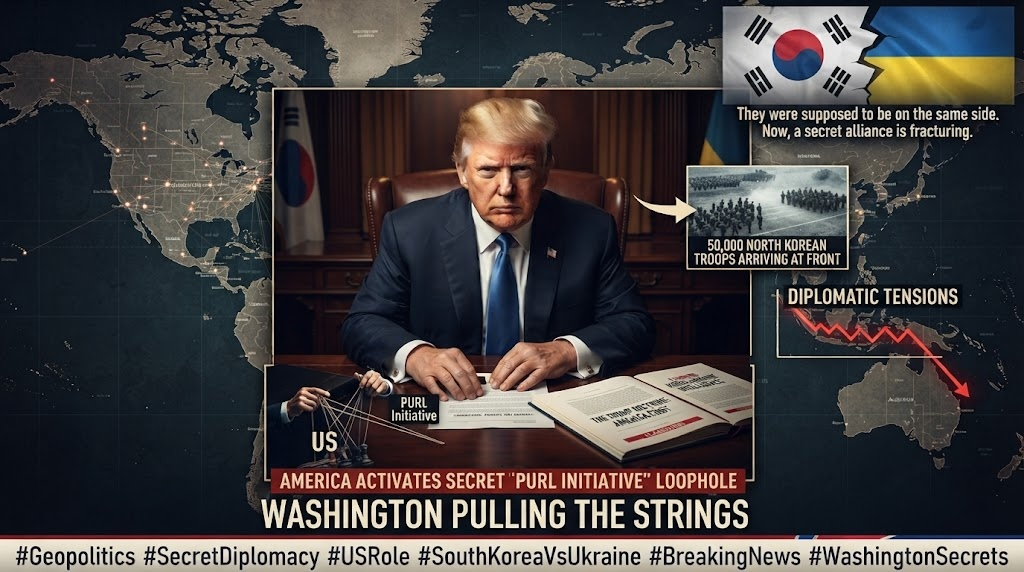
South Korea–Ukraine Rift Deepens Over North Korean POW Transfer as PURL Draws New Scrutiny
Shocking news from Ohio: an unexpected development ahead of Trump's rally