
BROOKLYN COLLAPSE: 8 U.S. DEAD, OWNER'S MONEY FILES MISSING!
BROOKLYN COLLAPSE: 8 U.S. DEAD, OWNER'S MONEY FILES MISSING!
NEW YORK — November 20, 2026 — Investigators are examining construction activity, property ownership records and a history of building violations after a three-story apartment building collapsed in Brooklyn, killing eight people and injuring 18 others. The disaster has raised questions about whether warnings were missed and who was responsible for protecting residents beside an active excavation site.
The building at 1321 Flatbush Avenue collapsed shortly after 4 p.m. on November 11, falling toward an excavation at neighboring 2625 Bedford Avenue.
The collapse destroyed homes and businesses, damaged another apartment building and trapped residents and construction workers beneath the debris.
New York City Mayor Zohran Mamdani confirmed that six adults and two children died.
Among the dead were two construction workers. Four firefighters were among the injured, according to the mayor's November 12 account.
The Department of Buildings, police and other authorities began examining the cause, while city records revealed earlier enforcement actions involving the neighboring construction site.
The investigation now centers on several documented questions: whether excavation contributed to the collapse, whether structural warnings were properly addressed and what responsibility belonged to the companies and individuals involved.
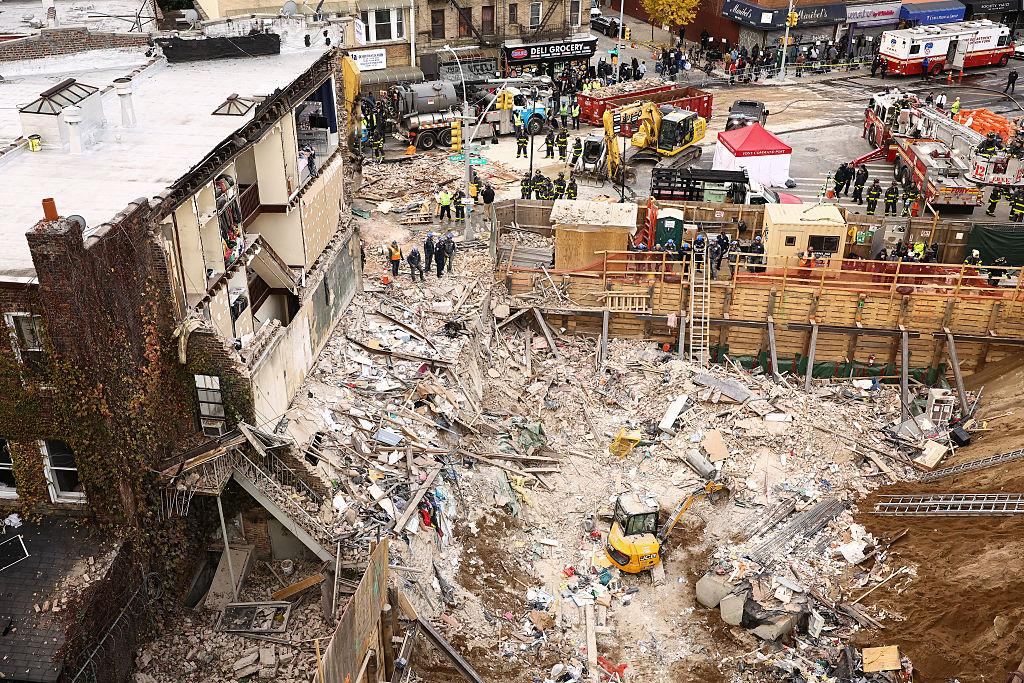
The collapse occurred during a busy Wednesday afternoon in Brooklyn's Flatbush neighborhood.
Residents were inside apartments above street-level businesses.
Construction workers were operating at the adjoining development site.
At approximately 4 p.m., the three-story structure gave way and fell toward the excavation.
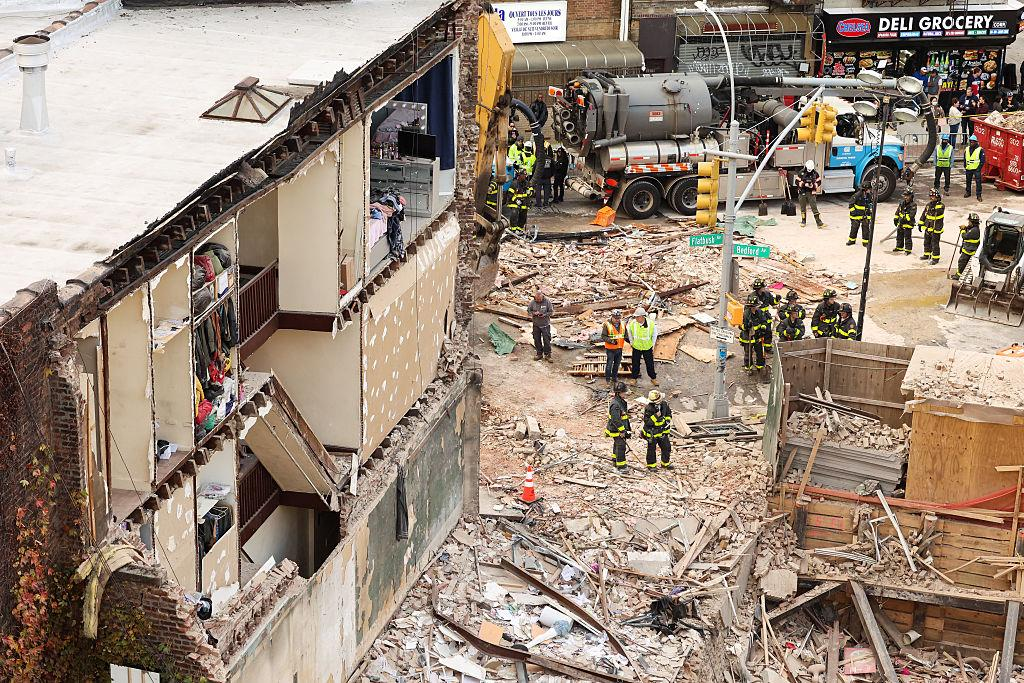
The collapse also tore away part of a neighboring building, exposing apartment interiors.
Witnesses described a sudden crash and clouds of dust.
Emergency calls brought firefighters and police to the scene almost immediately.
Fire officials said the first responders arrived within about a minute of the initial emergency call.
The scale of the destruction prompted a major rescue operation involving approximately 250 emergency personnel.
What had been an ordinary residential and commercial block became a scene of collapsed masonry, exposed rooms and urgent searches for survivors.
Authorities identified eight people who died in the disaster.
The victims included two children, ages 9 and 10, and six adults.
Police identified them as Nicole Daniela Salvada Rodriguez, 9; Kevin Santiago Reyes Gonzalez, 10; Gabriel Siguencia, 22; Barry Mamadou, 23; Jose Luis Caguana Cosquillo, 26; Edgar Sapon, 26; Juan Daniel Salvada Guzman, 31; and Ndiaye Mamadou, 31.
Two of the adults were construction workers.
Six victims were pronounced dead at the scene, while two died after being taken to hospitals.
Mayor Mamdani described the victims as members of the city's immigrant and neighborhood communities.
Their deaths affected families whose lives were connected to Brooklyn and other parts of New York City.
The confirmed list establishes the identities and ages of the victims, but does not establish the citizenship status claimed in the original headline.
The available reporting identifies the eight victims by name and provides some information about their residences and family backgrounds.
It does not establish that exactly five were American citizens.
Several victims had connections to immigrant communities from Latin America and West Africa.
That information should not be confused with citizenship status.
A person can be an immigrant and also be a naturalized American citizen.
A person can also reside in the United States without holding American citizenship.
Those distinctions matter when reporting fatalities.
Mayor Mamdani emphasized that the victims were New Yorkers whose lives were part of the city's community.
The documented figure is eight deaths, including two children and two construction workers.
A precise citizenship breakdown would require additional official records or verified family information.
Firefighters worked through the night searching for people trapped beneath the rubble.
The operation was dangerous because the remaining structures were unstable.
Emergency crews used search dogs, specialized equipment and careful manual removal of debris.
Several survivors were pulled from the wreckage.
Among them was a pregnant woman.
Officials also reported that construction workers who had narrowly escaped the collapse returned to help rescue others.
The effort continued into November 12.
That afternoon, the Fire Department of New York announced that rescue operations had concluded after teams determined there were no additional victims.
The site was then turned over to the Department of Buildings and the New York Police Department.
The focus shifted from searching for survivors to investigating why the building had fallen.
Several recordings documented the collapse and its immediate aftermath.
CBS News obtained surveillance footage showing the building and storefront falling.
The network also reported video from a baby monitor inside a nearby apartment, capturing a family's experience as the walls gave way.
Other footage from doorbell cameras showed the sudden destruction.
On November 19, a newly published video from an MTA bus showed the building collapsing within seconds.
These recordings provide visual evidence of the disaster.
They may help investigators reconstruct the timing and movement of the structure.
But the published descriptions do not establish that a camera captured someone stealing the owner's financial documents.
Public property records identify Isolag Realty Corporation as the owner of the building that collapsed.
CBS New York reported that Olufemi Falade was listed as the company's registered agent.
The distinction between a corporation and an individual is important.
A corporation may hold legal title to a property, while individuals serve as officers, representatives or owners of the business.
Identifying a registered agent does not, by itself, establish personal responsibility for a building's structural condition.
Investigators will need to examine ownership records, maintenance responsibilities, inspection history and communications involving the property.
Those documents may help determine who had authority to authorize repairs or respond to warnings.
The publicly reported ownership information identifies an important subject of the investigation.
The collapse involved two neighboring properties with different roles.
The residential and commercial building stood at 1321 Flatbush Avenue.
The excavation was taking place next door at 2625 Bedford Avenue.
Public records identified the collapsed building with Isolag Realty Corporation.
The development site was associated with a limited liability company linked to Robert Fischman and Judy Swimer.
These separate ownership arrangements matter because different parties may have had different responsibilities.
The landlord of an existing building may be responsible for maintaining that property.
The owner and contractors of a neighboring development may have responsibilities involving excavation, structural support and construction safety.
Determining whether any party failed to meet those responsibilities requires a technical and legal investigation.
The presence of separate property owners makes it particularly important not to assume that one individual controlled every aspect of the site.
The documented investigation concerns records that existed before the collapse.
These include property ownership filings, housing-code violations, construction permits, engineering plans and inspection reports.
Such documents can establish what conditions were known, what work was authorized and what safety measures were required.
They may also show whether city officials or contractors identified potential hazards.
The most important records are not necessarily financial documents.
Engineering drawings and structural surveys could provide more direct evidence about the building's stability.
Inspection reports may show whether approved safeguards were installed.
Communications between property owners, contractors and city agencies could help establish when concerns were raised.
The available reporting does not document a theft of financial files.
It does establish that investigators have a substantial body of construction and property records to examine.
City records showed 98 open housing-code violations associated with the collapsed building.
The violations covered a range of conditions, including leaks, electrical problems and other maintenance issues.
Engineering News-Record reported that 21 were classified as immediately hazardous.
The property also carried unpaid Department of Buildings penalties.
However, an important distinction emerged from the engineering review.
The recent housing violations did not specifically establish foundation failure or structural instability.
That means the violation count cannot, by itself, explain why the building collapsed.
It does demonstrate a substantial history of unresolved property-maintenance problems.
Investigators must determine which conditions, if any, contributed to the disaster.
The difference between a poor maintenance record and proof of structural causation is central to the case.
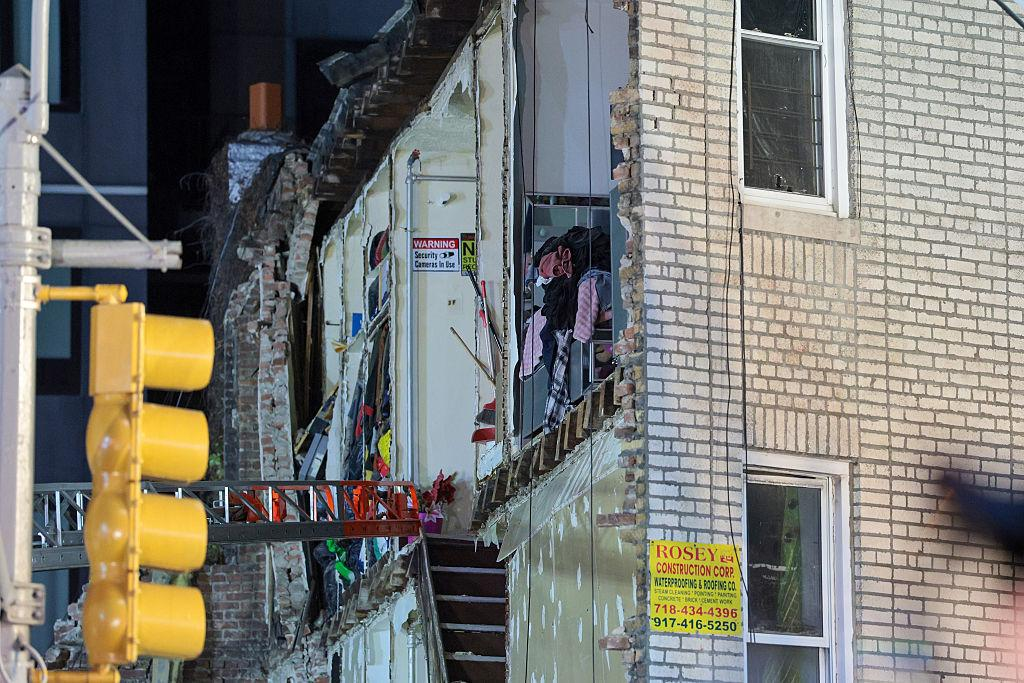
One of the most significant developments came from a pre-construction survey conducted in March.
The survey documented visible cracks in the building's exterior walls.
It rated the north facade, which faced the neighboring development site, as being in poor condition.
The report described substantial deficiencies.
Photographs recorded cracking and other visible problems.
The findings were submitted as part of the construction documentation.
Their existence has raised questions about what the developer, engineers and city officials knew before excavation began.
But the survey does not, by itself, establish the collapse's cause.
Engineers must determine whether the documented cracks reflected longstanding deterioration, structural movement or conditions made worse by later construction activity.
The survey was intended to document the condition of nearby buildings before construction proceeded.
That is a standard concern when excavation occurs close to existing structures.
Photographs and written observations can establish a baseline against which later damage is measured.
In this case, the north facade received a poor rating.
Visible cracks were recorded months before the collapse.
The findings are important because they demonstrate that concerns about the building's exterior were documented in advance.
Mayor Mamdani said he was deeply troubled by the information.
Buildings Commissioner Ahmed Tigani said the survey had not resulted in a structural violation or a related 311 complaint before the disaster.
The investigation must now examine whether the documented conditions warranted further action.
City officials said the developer had approval for a three-story building.
A separate application seeking a nine-story mixed-use project had not yet been approved.
Construction activity included excavation near the existing building's foundation.
Records indicated that the proposed work involved digging to a maximum depth of approximately 14 feet.
Excavation near older buildings requires careful attention to soil conditions, foundations and lateral support.
Removing earth can change the forces acting on nearby structures.
That does not mean excavation necessarily caused this collapse.
It does explain why investigators are examining the construction work so closely.
The precise relationship between the excavation and the building's failure remains a central unanswered question.
The neighboring development had already attracted enforcement attention.
On March 20, Department of Buildings inspectors found demolition work proceeding without adequate overhead protection for neighboring properties.
The city issued a stop-work order.
Inspectors returned in April and found that demolition had resumed despite the order.
That resulted in another violation.
The Department of Buildings later determined that the cited problems had been corrected and lifted the stop-work order in May.
Excavation work underway in November was being conducted under an active permit.
The earlier violations are relevant to the contractor's compliance history.
However, they do not automatically establish that the November collapse resulted from the same deficiencies.
Investigators must examine the conditions and procedures in place when the building actually fell.
Excavation beside an existing building can require measures to support neighboring foundations.
These may include shoring, bracing and underpinning.
Underpinning is used to support or strengthen an existing foundation when nearby work could affect its stability.
Approved engineering plans for the Bedford Avenue site included requirements for excavation support and monitoring.
Those plans called for attention to movement, cracking and vibration.
Engineering News-Record found that the public records did not establish whether all required support components had been installed before November 11.
The records also did not provide the latest monitoring measurements.
These gaps are significant because investigators must compare what was approved with what was actually constructed.
The approved plan alone cannot establish that every required safeguard was in place.
The most consequential unresolved records concern construction conditions immediately before the collapse.
Investigators need to establish how deeply workers had excavated along the property line.
They also need to determine whether the neighboring building was underpinned.
Other questions involve the installation of shoring and bracing.
Engineers must review monitoring data for movement, cracking and vibration.
Engineering News-Record reported that the relevant special-inspection category had not been certified as completed in the city's online system as of November 12.
That status does not prove that no inspection occurred.
It means the public system did not show the required certification.
The distinction matters because incomplete documentation and failure to perform an inspection are different findings.
Both require further investigation before responsibility can be assigned.
Residents reported experiencing vibrations and heavy impacts during construction next door.
Some said the shaking had continued for weeks.
These accounts are relevant because unusual movement can be a warning sign when excavation occurs near an older building.
However, vibration alone does not prove that a structure is about to collapse.
Engineers must consider its intensity, duration and relationship to existing structural conditions.
The Washington Post reported that residents had complained about the shaking before the disaster.
Those statements are part of the evidence investigators may examine.
They also raise questions about how concerns were communicated and whether they prompted inspections.
The central issue is whether observable warning signs were recognized and addressed before the structure failed.
A former resident, Dengane Omari Jack, filed a lawsuit alleging that he warned his landlord about cracks before the collapse.
According to the complaint, Jack noticed and photographed cracks near the building's entrance in October.
He alleges that he sent the images to the landlord but did not receive an adequate response.
Jack was away at work when the building collapsed.
He survived but lost possessions in the destruction.
His lawsuit seeks compensation for losses associated with the disaster.
The allegations have not been established as findings of fact by a court.
They nevertheless add another documented question to the investigation: whether warnings from residents were received and appropriately addressed.
The Guardian reported the lawsuit on November 18.
Financial records can become relevant in investigations involving property maintenance.
They may show whether money was allocated for repairs, which contractors were paid and what maintenance work was authorized.
Insurance documents, invoices and company records can also help establish relationships among the parties involved.
However, investigators must obtain and authenticate such documents before drawing conclusions.
A property owner's financial history does not automatically establish negligence.
Nor does the existence of corporate records imply that someone tried to conceal them.
The reports reviewed identify substantial property and construction documentation.
They do not identify missing financial files as an established part of the case.
There is also no verified public evidence that a stranger removed such documents before the building fell.
The strongest documented investigative leads concern structural conditions, excavation work and prior warnings.
Olufemi Falade, associated with the company owning the collapsed building, had previously attracted attention over property maintenance.
News 12 reported that he had been jailed for 12 days in 2006 over failures to make repairs at his properties.
The outlet also reported that his name had appeared on the city's public advocate's list of landlords with significant unresolved violations.
Those earlier matters provide context for the property-management record.
They do not establish that Falade caused the November 2026 collapse.
Investigators must distinguish historical enforcement actions from evidence directly related to the structural failure.
The current inquiry involves the building's condition, its maintenance and the construction activity next door.
A finding of civil or criminal responsibility would require evidence connecting specific actions or omissions to applicable legal duties and the disaster.
The owner of the neighboring development site also faces scrutiny.
The excavation created a direct physical relationship between the new project and the older building.
Contractors working near existing foundations must follow approved engineering plans and applicable safety requirements.
Those obligations can include monitoring adjacent structures and installing protective supports.
The Department of Buildings has been reviewing the development's permits and construction procedures.
The project had earlier been subject to enforcement during demolition.
However, the existence of those earlier violations does not establish the cause of the later collapse.
The investigation must determine what work was underway on November 11 and whether it complied with approved plans.
Responsibility may depend on the actions of multiple parties, including the owner, contractors, engineers and inspectors.
Excavation is one of the principal areas under investigation.
Removing soil near an existing foundation can alter the support available to a building.
If protective measures are inadequate, the resulting movement can place additional stress on walls and foundations.
Older structures may be particularly sensitive when they already have cracks or other deficiencies.
But these are engineering possibilities, not findings about this particular collapse.
Investigators must analyze the structure, soil conditions, excavation sequence and installed supports.
They must also examine whether the building had independent structural problems.
A comprehensive investigation could identify one principal cause or several contributing factors.
As of November 20, officials had not issued a final determination establishing the cause.
A forensic engineering investigation involves reconstructing events from damaged physical evidence.
Engineers may need to examine foundation remains, excavation boundaries and structural connections.
They must compare those findings with drawings, inspection records and construction logs.
Witness accounts and video footage can help establish the sequence of the collapse.
Monitoring data may show whether the structure moved before failure.
But some evidence can be difficult to recover once a building has fallen.
Debris removal must therefore be coordinated with investigators.
The city has hired an independent engineering firm to assist.
That step is intended to provide specialized technical analysis.
The findings will be important for determining whether the collapse resulted from construction activity, pre-existing structural weaknesses or a combination of factors.
The city's response extended beyond the immediate block.
Officials announced inspections of approximately 160 projects connected to six entities involved in the Bedford Avenue development.
The effort was intended to identify possible safety problems at other locations.
Gothamist reported that inspectors had issued full or partial stop-work orders at at least five projects linked to engineers associated with the Flatbush site.
The inspections do not establish that those other projects were responsible for the collapse.
They reflect a preventive effort to examine whether similar safety concerns exist elsewhere.
The Department of Buildings has also been reviewing engineering and inspection procedures.
The wider inquiry could reveal weaknesses in how construction plans are implemented and monitored across multiple sites.
The disaster has renewed attention to staffing levels at New York City's Department of Buildings.
The agency oversees a large number of properties and active construction sites.
City officials have acknowledged shortages in inspection personnel.
Associated Press reported that the department had a vacancy rate of approximately 9%.
A shortage of inspectors can make it more difficult to monitor projects and respond promptly to complaints.
However, staffing levels alone do not establish why the Flatbush building collapsed.
The investigation must determine whether required inspections occurred and whether officials responded appropriately to available information.
The broader policy question concerns whether the city has sufficient resources and procedures to identify construction hazards before they become emergencies.
For the families of those killed, the investigation is not an abstract engineering exercise.
It concerns why their relatives were inside a building that suddenly collapsed.
Some lost children.
Others lost parents, partners or relatives working at the construction site.
Survivors also face medical treatment, displacement and the loss of possessions.
Families have called for answers about the building's condition and the work occurring next door.
Their questions are directed toward property owners, contractors and city authorities.
They want to know what warnings existed, who received them and whether the disaster could have been prevented.
Those concerns will remain central as investigators review the evidence.
A technical explanation of the collapse may eventually help determine whether legal action is warranted.
The video evidence provides a visual record of the disaster.
Surveillance footage captured the building collapsing.
A baby monitor showed a family inside a nearby apartment as the walls gave way.
Other cameras recorded the damage and the rapid spread of dust.
A bus-mounted camera captured the collapse from the street.
These recordings may help investigators determine how quickly the structure failed and which sections moved first.
They do not, in the published reporting, establish that anyone removed financial documents before the collapse.
The most important unanswered questions concern the building's condition and the construction work beside it.
Those questions will be addressed through engineering analysis, documentary evidence and witness accounts.
The Department of Buildings and law enforcement agencies are continuing their investigations.
The Brooklyn district attorney's office is examining whether any conduct may warrant criminal prosecution.
Civil lawsuits have also begun.
The city has ordered additional safety measures at the excavation site and nearby damaged buildings.
Independent engineers are reviewing the physical evidence and construction documentation.
The results could affect how New York regulates excavation beside older structures.
They may also influence future enforcement against property owners and contractors.
But the findings must be established through evidence rather than assumptions.
The investigation's central task is to determine what caused the collapse and whether identifiable failures contributed to the deaths.
The collapsed building was owned by Isolag Realty Corporation, with Olufemi Falade identified in public records as its registered agent.
The neighboring excavation site had separate ownership and development arrangements.
City records show that the collapsed property had 98 open housing violations.
A March survey documented cracks and rated one exterior wall in poor condition.
The adjoining construction site had previously received stop-work orders.
Residents also reported shaking, and a former tenant has alleged that he warned the landlord about cracks.
Those are documented matters investigators can examine.
Comments (0)
Loading comments...
May You Like

WARNING: OVER 1 MILLION COULD LOSE POWER AND NEARLY 2 MILLION FACE WATER ALERTS ON THANKSGIVING!

BANGCHAK REFINERY IN THAILAND SHUT DOWN, U.S. OIL PRICES JUMP 10%!

IOWA NIGHTMARE: SECOND ARMY BLAST, 10,000 EVACUATED, 201+ HOSPITALIZED!











Popular Posts


