
BRUTAL PRESIDENTIAL MOCKERY
OBAMA’S MICHIGAN SPEECH REKINDLES DEBATE OVER PRESIDENTIAL RHETORIC — AND WHAT AMERICANS MISS ABOUT LEADERSHIP
A SPEECH THAT REIGNITED A FAMILIAR COMPARISON
Former President Barack Obama’s return to the campaign trail in Michigan has prompted a wave of online commentary about political communication, presidential presence and the contrast between the country’s recent leaders. A graphic circulating on social media captures that reaction in blunt language: its author says they have watched several videos of Obama speaking in Michigan and miss having a president who can speak in complete sentences and use a vocabulary more expansive than that of a 12-year-old. The sentiment is unmistakably personal, but it reflects a wider argument about what Americans expect from the presidency.
THE POST IS AN OPINION, NOT A POLL
The words in the graphic are attributed to a social media account, not to Obama, a news organization or a scientific survey. They should therefore be read as one person’s political reaction rather than evidence that most Americans share the same view. The post also does not establish that Obama’s speaking style is objectively superior by any measurable standard. What it does show is how a former president’s public appearances can become a focal point for nostalgia, frustration and partisan comparison.
WHY OBAMA WAS IN MICHIGAN
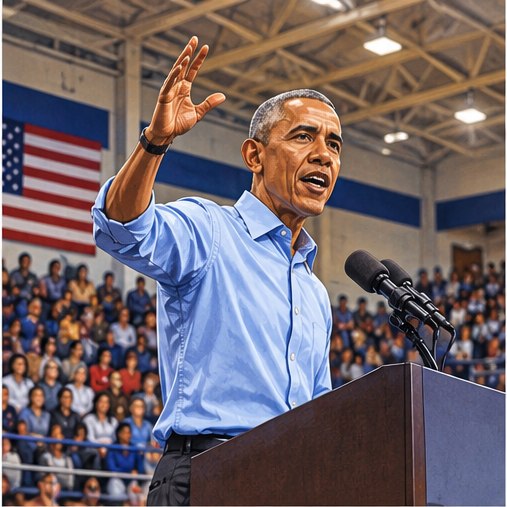
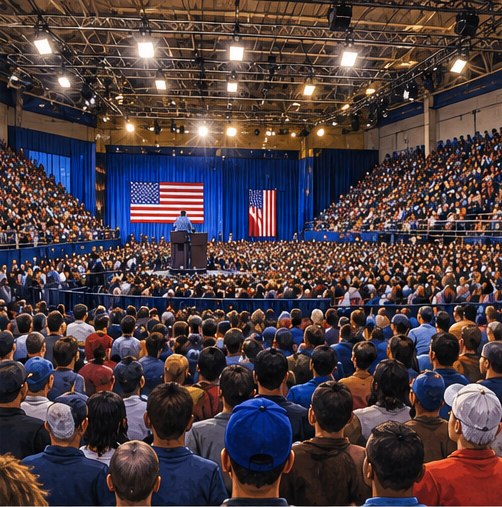
Obama appeared in Detroit on October 24, 2026, at a rally held at Cass Technical High School. He campaigned alongside Democratic candidates including Abdul El-Sayed, the party’s nominee for the U.S. Senate, and Jocelyn Benson, the Democratic nominee for governor. Other Michigan Democrats also took part. The appearance came with the November 3 midterm elections only days away, at a moment when control of Congress and several important state offices remained in play.
A RETURN TO THE MOTOR CITY
Obama opened by telling the Detroit audience that it was good to be back in the Motor City. He acknowledged the years that had passed since his presidency, joking about his gray hair and the advice he receives from Michelle Obama to step away from campaigning. The light opening helped establish an informal connection with the crowd before he turned to the stakes of the election. His speech mixed personal humor, praise for local candidates and an extended critique of the Trump administration.
THE MESSAGE: CHANGE AND ACCOUNTABILITY
Obama framed the election as an opportunity for voters to demand a different direction. He described the contest as a chance to bring accountability to Washington and argued that the country had reached a moment when citizens should decide whether the current political climate was acceptable. In Detroit, he urged supporters to vote not only for the candidates at the top of the ballot but also for Democrats running for other state and local offices. His appeal was designed to make the midterms feel consequential beyond any single race.
A SPEECH BUILT AROUND VALUES
One of the central themes was that politics should be about more than campaign tactics or the daily argument over economic statistics. Obama spoke about honesty, integrity, kindness and compassion, presenting them as civic values that can be found across religious and cultural traditions. He warned that a political culture driven by anger and division would make it harder for Americans to solve shared problems. The argument was not simply that voters should support one party; it was that the tone and standards of public life matter too.
WHY HIS DELIVERY STANDS OUT TO SOME VIEWERS
Obama’s speeches often rely on carefully structured arguments, transitions between ideas and repeated phrases that give a rally a clear rhythm. He frequently moves from a personal anecdote to a broader political point, then returns to a concise line intended to stay with the audience. Supporters may hear this as clarity, discipline and confidence. Critics may see the same techniques as overly polished political performance. Either way, his speaking style is recognizable, and that familiarity helps explain why short clips can travel widely online.
THE CONTRAST WITH TRUMP IS PART OF THE STORY
The social media graphic explicitly compares Obama’s speech with the communication style of the current president, Donald Trump. That comparison has become a recurring feature of American political debate. Trump’s public remarks often move rapidly between policy claims, personal attacks, improvisation and repetition, while Obama’s prepared speeches tend to follow a more linear structure. The difference is partly a matter of individual temperament and partly a difference in political branding: each man has cultivated a distinct way of speaking to supporters.
OBAMA’S CRITICISM OF THE TRUMP ADMINISTRATION
In Detroit, Obama sharply criticized the Trump administration, accusing it of corruption, incompetence and policies that have made life harder for ordinary Americans. He challenged the administration’s economic claims and argued that its priorities were misplaced. He also criticized the president’s approach to the war involving Iran and questioned the administration’s presentation of its foreign-policy achievements. These were campaign arguments from a former Democratic president, not neutral assessments; the administration and its supporters have offered sharply different accounts of its record.
THE IRAN WAR AND ECONOMIC PRESSURE
Obama argued that the conflict with Iran had created risks for global energy markets, particularly because of the importance of the Strait of Hormuz to oil shipments. He suggested that threats to shipping had given Tehran leverage, even as the administration described its approach as successful. The dispute illustrates how foreign policy can enter a domestic campaign: voters may judge a president not only on military decisions but also on the effects those decisions have on fuel prices, inflation and economic confidence at home.
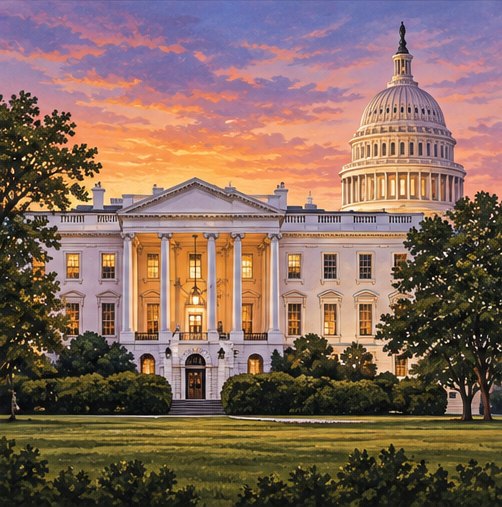
A SHARP LINE ABOUT THE WHITE HOUSE
One of the most widely repeated moments from Obama’s campaign appearances was a joke about the White House renovations. He mocked the ornate style of the changes and compared the result to a restaurant designed by a dictator. The line was crafted for a rally audience and quickly became a clip suited to social media. Its circulation illustrates how political speeches are now consumed in fragments: a single joke can reach people who never watch the full address or hear the surrounding policy argument.
THE CANDIDATES HE CAME TO SUPPORT
Obama’s presence was intended to help Michigan Democrats consolidate support in races that could influence both state government and the balance of power in Washington. Abdul El-Sayed, a physician and former public-health official, was running for the U.S. Senate against Republican Mike Rogers. Jocelyn Benson, Michigan’s secretary of state, was the Democratic nominee for governor and faced Republican John James. The rally also featured other Democratic candidates, reflecting the party’s effort to mobilize voters across the ballot.
A SIGNIFICANT MOMENT FOR EL-SAYED
El-Sayed’s nomination followed a closely fought Democratic primary against Representative Haley Stevens. The contest exposed disagreements within the party between progressive and more moderate factions. Obama’s endorsement and appearance in Detroit gave El-Sayed a high-profile opportunity to strengthen relationships with Democratic voters, particularly in the city and surrounding Wayne County. The Associated Press reported that the primary had been decided by less than one percentage point, making the work of unifying the party especially important.
WHY DETROIT MATTERS
Detroit and Wayne County are central to Michigan’s Democratic coalition. The region includes large numbers of Black voters and working-class communities whose turnout can have a major effect on statewide contests. Campaign appearances by nationally recognized figures are designed to energize supporters, attract media attention and encourage voters who might otherwise skip a midterm election. Obama’s familiarity with Detroit, where he has campaigned repeatedly over the years, gives him a ready-made connection with many local Democrats.
THE MIDTERM STAKES
The November 3 election is not a presidential contest, but its consequences could be substantial. Voters are choosing members of Congress as well as candidates for governor and other state offices. The results will shape the political environment in which Trump governs during the remainder of his term. Obama described the election as a chance to act as a check on the administration, while Republicans have urged voters to support the president’s agenda and maintain their party’s influence.
THE POWER AND LIMITS OF A FORMER PRESIDENT
Obama remains one of the most recognizable figures in the Democratic Party, and his appearances can attract large crowds and extensive coverage. The Associated Press reported that he had recorded a series of campaign advertisements for Democratic candidates and planned additional appearances during the closing weeks of the election. His role, however, is not the same as that of a candidate on the ballot. He can raise enthusiasm and help define the stakes, but the local campaigns must still persuade voters that their own candidates deserve support.
NOSTALGIA CAN BE POLITICAL
The reaction captured in the graphic is also a form of political nostalgia. People often remember a former leader through selected moments: a speech that felt inspiring, a crisis response they admired or a period they associate with greater stability. Such memories can become more powerful when the present feels exhausting or uncertain. But nostalgia is selective. It can emphasize a leader’s strongest performances while overlooking policy failures, controversies and the divisions that existed during the same administration.
ELOQUENCE IS NOT THE SAME AS POLICY SUCCESS
Clear speaking can help a president explain decisions, reassure the public and make complex issues understandable. It can also shape how people judge competence and authority. Yet communication skill alone cannot determine whether an administration succeeds. Economic outcomes, legislation, foreign policy, ethics, institutional conduct and the effects of decisions on ordinary people all matter. A president may be an effective speaker and still face serious criticism; another may communicate in an unconventional way while retaining strong support among voters who value different qualities.
WHAT THE FULL SPEECH REVEALS
Watching the full Detroit address provides more context than the viral quote alone. Obama spoke about the candidates, the cost of living, the war, public values and the importance of civic participation. He also used humor and crowd interaction to keep the rally moving. The speech was unmistakably partisan, delivered to help Democrats win an election, but it also contained a broader appeal for Americans to recover a sense of common purpose and responsibility.
THE ONLINE REACTION BECOMES ITS OWN POLITICAL MESSAGE
Once the clip and graphic began circulating, the conversation shifted from the candidates in Michigan to the way presidents speak. For some viewers, the post expressed frustration with Trump and a longing for the measured rhetoric they associate with Obama. For others, the comparison may feel like selective memory or partisan point-scoring. Social platforms reward concise, emotionally charged reactions, so a sharp sentence can spread faster than a careful discussion of a 40-minute campaign speech.
A REMINDER ABOUT THE SOURCE OF THE QUOTE
The statement reproduced in the image should not be presented as something Obama said, nor should it be described as a finding from a CNN, SSRS or other public-opinion poll. It is a social media user’s commentary, attributed by the graphic to the account shown at the bottom. The factual event behind the post is Obama’s October 24 Detroit campaign appearance. Keeping those two things separate is essential to reporting the story accurately.
THE BOTTOM LINE
Obama’s Michigan speech has renewed a familiar debate about presidential communication at a moment when the country is preparing to vote in consequential midterm elections. His supporters see a disciplined speaker who can connect policy, values and national purpose; critics may regard the praise as partisan nostalgia. The viral graphic is not proof that the country has reached a consensus. It is a vivid snapshot of how one person’s reaction to a political speech can become part of a much larger argument about leadership, language and the presidency.
Comments (0)
Loading comments...
May You Like


Latest Posts









Popular Posts





