
“Daddy’s Back!”: David Jolly Targets Byron Donalds’ Loyalty to Trump in New Florida Attack Ad as Cost-of-Living Battle Intensifies
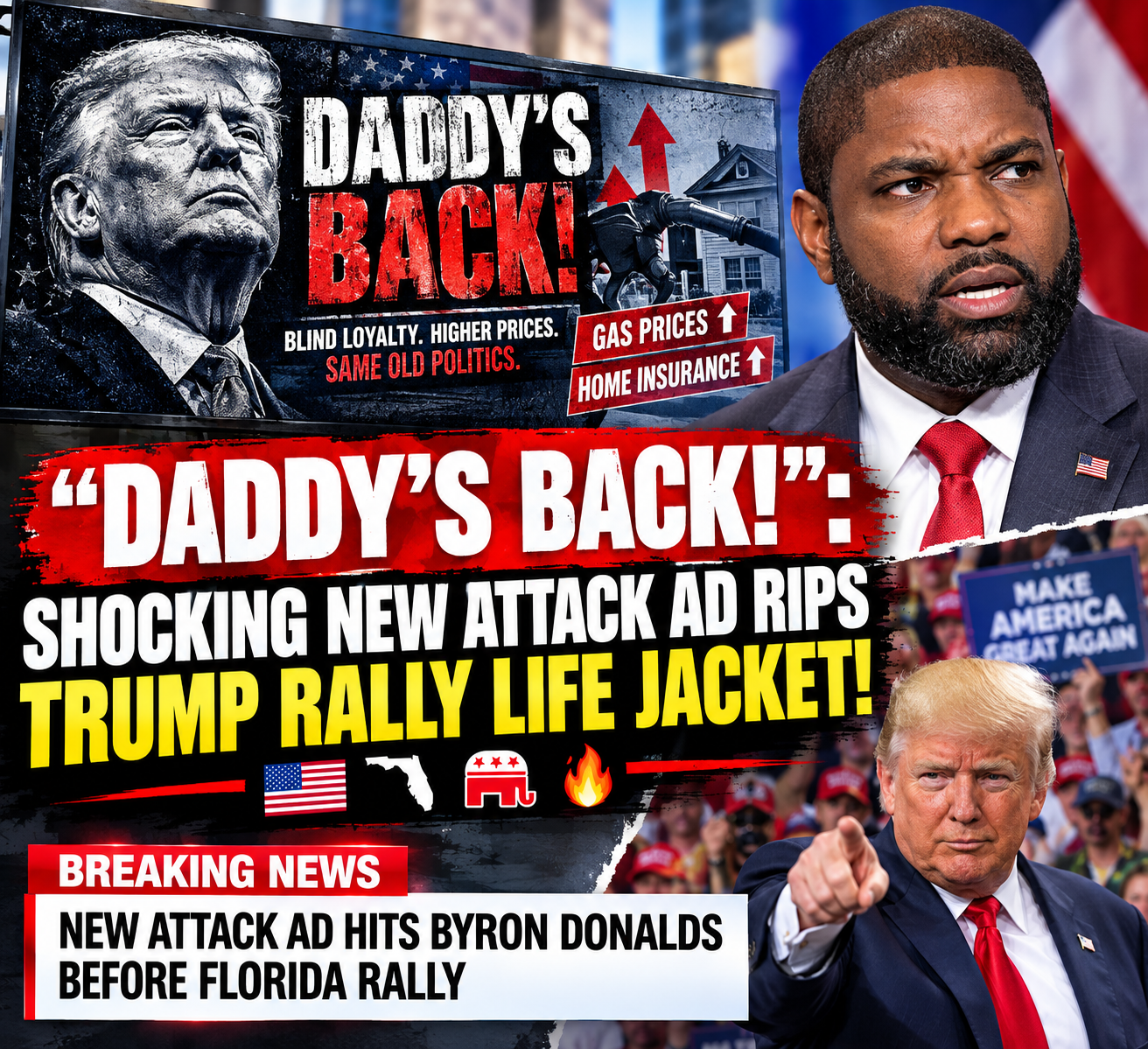
A new political advertisement has brought an old remark by Republican gubernatorial nominee Byron Donalds back into the spotlight, as Democrat David Jolly attempts to turn Donalds’ close relationship with President Donald Trump into a central issue in Florida’s increasingly competitive race for governor.
The 30-second advertisement, titled Daddy’s Back, was released October 22, just before Trump traveled to Fort Myers to campaign alongside Donalds. It takes a phrase Donalds used in 2025 to celebrate Trump's return to the White House and places it alongside criticism of rising household expenses, including gasoline, groceries and homeowners insurance.
The ad’s central argument is that Donalds has remained strongly supportive of Trump even as Floridians confront financial pressures. It presents the Republican candidate's public praise of the president as evidence of political loyalty that Jolly argues has come at the expense of ordinary households.
The timing was deliberate. Trump appeared at a major Republican rally at Florida Gulf Coast University in Fort Myers on October 23, supporting Donalds and other GOP candidates ahead of the November 3 election. Jolly's campaign sought to ensure that voters watching the president's appearance would also encounter a competing message about affordability and political accountability.


The new advertisement opens with Donalds' own words from a television appearance ahead of Trump's second inauguration. The phrase “Daddy's back” originally functioned as a celebratory expression among some Trump supporters. Jolly's campaign has now repurposed it to question whether Donalds would exercise independent judgment as governor.
The ad juxtaposes that statement with images and messages about living costs, then includes footage of Donalds awarding Trump an “A” for his handling of the economy. It also highlights Donalds' defense of Trump's record on prices, including his acknowledgment that gasoline had become somewhat more expensive amid the military conflict with Iran.
Its closing message is pointed: “Trump always gets Byron Donalds’ blind loyalty. You get the bill.”
That is a campaign argument, not an independently established conclusion about Donalds' motivations or responsibility for household expenses. The advertisement is designed to connect Donalds politically to Trump and to make the president's economic record a referendum on the Republican candidate.
Donalds, however, has sought to portray his relationship with Trump differently. His campaign has repeatedly emphasized the president's endorsement as evidence that Donalds can advance conservative priorities, while arguing that his own policies would lower taxes, reduce insurance expenses and make Florida more affordable.
The contrast is fundamental to the contest: Jolly wants voters to scrutinize Donalds' alignment with the president, while Donalds presents that same relationship as an advantage for Florida.
The exchange over the phrase had already become part of the campaign before Jolly released the advertisement. In an October interview with former Democratic congressional candidate and entertainer Luther Campbell, Donalds addressed the perception that his political identity was inseparable from Trump’s. He rejected the suggestion that Trump was literally or politically his father and discussed the challenges of being judged primarily through his association with the president.
That context makes the advertisement more than a simple replay of an old sound bite. Jolly is using a phrase Donalds had already been asked to explain, placing it before a statewide audience at the same moment Trump was returning to Southwest Florida to support the Republican nominee.
The advertisement also arrives during an unusually intense debate about affordability. Florida voters have faced substantial financial concerns involving housing, property insurance, transportation and everyday purchases. Those concerns have given both campaigns an opportunity to argue that their opponent's approach would leave households paying more.
The insurance dispute is particularly consequential because Florida's exposure to hurricanes, high rebuilding costs and the structure of its property insurance market make premiums a major concern for homeowners. Unlike a national campaign slogan, the competing insurance proposals involve detailed questions about who pays for catastrophic losses and how financial risks should be distributed.


Jolly has proposed moving hurricane and windstorm coverage out of the private insurance market and into a state-backed catastrophe fund. He has argued that this approach could reduce homeowners insurance costs by 60% to 70%, although that projected reduction is a campaign claim rather than a demonstrated outcome.
Donalds has attacked the proposal as a potentially expensive expansion of government involvement in insurance. His campaign has warned of a possible $1,000 annual cost to households, citing research from Florida State University. But reporting by WUSF and Florida Phoenix found that the cited study examined a different insurance proposal, not Jolly's specific plan. The study also identified both potential benefits and substantial financial risks associated with greater public responsibility for hurricane coverage.
Donalds has offered his own insurance package, called Bring Down the Bill. Its provisions include changes to the Florida Hurricane Catastrophe Fund, maintaining previous insurance litigation reforms, coordinating homeowner assistance grants and establishing a public scorecard showing insurers' prices and claims practices.
He has argued that the state should build on reforms adopted under Governor Ron DeSantis rather than move hurricane coverage into a substantially different public financing system. Jolly counters that the existing approach does not go far enough to reduce what homeowners pay.
The two proposals reflect different approaches to the same problem. Jolly favors a larger state role in financing catastrophic hurricane risk, while Donalds emphasizes changes to the existing insurance framework and increased transparency. Both candidates promise lower costs, but the actual effects of their plans would depend on legislation, implementation, market conditions and the financial consequences of future storms.
Meanwhile, the conflict involving Iran has given the affordability debate a wider national dimension. Higher energy prices have created political challenges for Republicans, particularly as Trump and his allies defend the administration's economic record. The Jolly advertisement attempts to bring that national issue directly into Florida's gubernatorial contest by highlighting Donalds' favorable assessment of Trump's economic performance.
The political confrontation became more visible at the October 23 rally, where Trump appeared with Donalds and Republican Senator Ashley Moody at Alico Arena on the Florida Gulf Coast University campus. With 11 days remaining before Election Day, the president urged supporters to back Republican candidates and criticized their Democratic opponents.
Trump portrayed Jolly as aligned with policies he considers too liberal for Florida, including on immigration. Donalds also attacked Jolly over his changing views on gun policy. Independent fact-checking by PolitiFact examined several statements from the event and found that some campaign characterizations omitted important context.


The rally illustrated the political value Donalds places on his relationship with Trump. His campaign has featured endorsements from both Trump and DeSantis in advertisements, including spots released in early October that highlighted conservative priorities and attacked Jolly's affordability proposals.
Donalds has also sought to introduce voters to his personal background through advertisements featuring his wife, Erika, and his mother, Meredith Brown. Those spots emphasize his upbringing, family experiences and financial struggles, presenting a different dimension of his candidacy from the political confrontation featured in Jolly's new ad.
Jolly, himself a former Republican congressman who later joined the Democratic Party, has pursued a campaign that attempts to appeal beyond traditional partisan divisions. His attack on Donalds' relationship with Trump is part of that effort, but it also carries risks. Trump remains an influential figure among Florida Republicans, and an advertisement intended to criticize Donalds' loyalty could be interpreted by Trump supporters as an attack on a relationship they view positively.
The political impact cannot be established simply from the advertisement's release or the attention it received. There is no reliable evidence in the reporting reviewed that the Daddy's Back spot has decisively changed voter preferences, forced a major campaign reversal or determined the direction of the race.
What is documented is that Jolly released the advertisement across Florida media markets ahead of Trump's rally, that it uses Donalds' own previous statements and economic assessments, and that it directly challenges the Republican nominee's relationship with the president.
The broader race has become more competitive despite Donalds' substantial fundraising advantage. CBS Miami reported on October 6 that the Republican campaign had intensified its advertising as Jolly sought to capitalize on voter concerns about inflation and the conflict with Iran. Donalds' campaign responded with advertisements emphasizing conservative endorsements, tax relief and its criticism of Jolly's policy proposals.
With Florida's election scheduled for November 3, the candidates are now competing not only over individual policies but also over the meaning of political leadership. Donalds presents his alliances with Trump and DeSantis as evidence of his ability to pursue a conservative governing agenda. Jolly argues that those alliances warrant scrutiny when the cost of living remains a pressing concern.
The Daddy's Back advertisement captures that disagreement in a deliberately provocative phrase. It does not settle the argument over Florida's economy or establish how voters will respond. But it shows how a remark made nearly two years earlier can return as a central campaign message when an opponent finds a way to connect it to current political concerns.
As the final days of the campaign unfold, the most consequential questions remain practical: whether either candidate can deliver the promised relief on homeowners insurance, how their economic proposals would affect households and how closely Florida's next governor should align with the White House.
Those are the questions behind the advertisement's confrontational presentation—and the issues voters will ultimately consider at the ballot box.
Comments (0)
Loading comments...
May You Like

EAST COAST MEGASTORM—2 MILLION HOUSES DAMAGED, 5 MILLION AT RISK OF BLACKOUTS, WATER FAILURES!

WEYMOUTH HORROR—80-MPH WIND GUSTS, FIRE TRUCK FLIPS, 3 FIREFIGHTERS CRITICAL!

WWE BRONSON REED—STAR COLLAPSES AT COMPANY EVENT, FATAL DRUG REACTION SUSPECTED!










Popular Posts



