
CAIRO INFERNO — CAR CARRYING SENIOR U.S. OFFICIAL SLAMS INTO FUEL TANKER, 31 DEAD, 21 INJURED!
CAIRO, Egypt — November 27, 2026 — Egyptian authorities are investigating a devastating highway collision that triggered a massive fuel tanker fire on one of Greater Cairo's busiest transportation corridors, destroying dozens of vehicles and leaving families searching for answers about the circumstances surrounding the disaster.
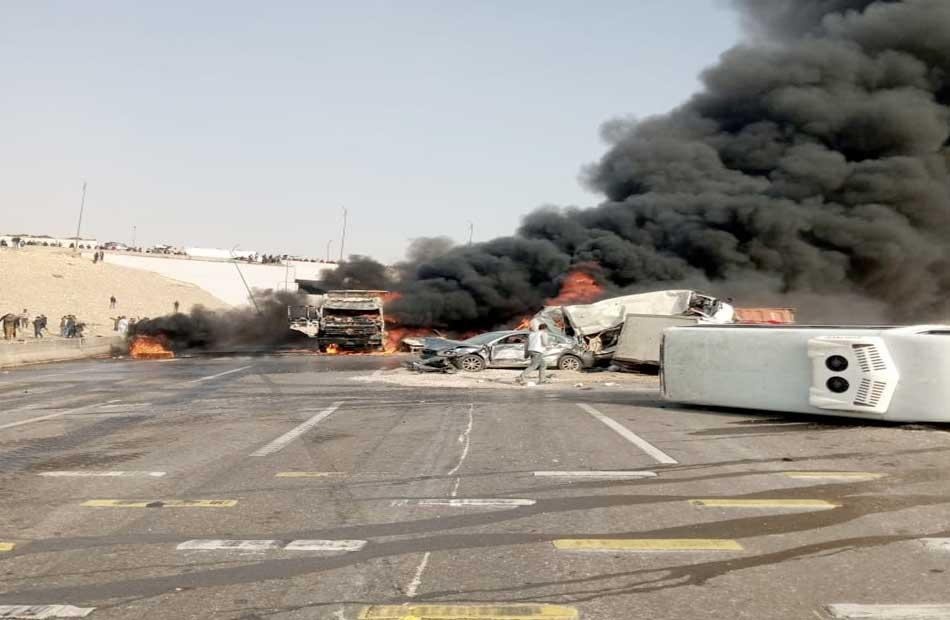
The incident occurred Wednesday evening in the Al-Warraq district of Giza, transforming an ordinary rush-hour journey into a major emergency. Thick smoke rose above the elevated highway as firefighters, ambulances and security personnel responded to a blaze that spread across multiple vehicles.
Egypt's Public Prosecution subsequently announced the detention of a driver suspected of causing the collision. Investigators began examining witness statements, vehicle damage and other evidence to establish the circumstances preceding the fire.
The scale of the disaster has prompted demands for greater accountability, raising questions about hazardous cargo transportation, highway regulations and the effectiveness of existing road safety measures.
Cairo's Ring Road is one of the most important transportation corridors serving the Egyptian capital. It connects residential neighborhoods, industrial districts and major highways across a metropolitan region where millions of people depend on road transportation for their daily activities. Passenger cars, motorcycles, minibuses and commercial trucks frequently share the same infrastructure, particularly during periods of heavy commuter traffic.
Wednesday's accident occurred on an elevated section of the highway in a densely populated district. The collision involved a passenger car and a tanker transporting petroleum products. The subsequent fire affected 27 vehicles, including cars and motorcycles, according to preliminary assessments reported by Reuters. The scale of the emergency required an extensive response from medical personnel, firefighters and transportation authorities.
The Cairo disaster has consequently renewed attention to the relationship between commercial transportation regulations and public safety, particularly on highways serving heavily populated urban communities.
Egyptian prosecutors have established that a passenger vehicle struck the tanker before the truck overturned. The resulting release of gasoline contributed to a fire that spread across surrounding traffic. Investigators subsequently detained the driver of the passenger vehicle and began examining his account of the accident alongside other available evidence.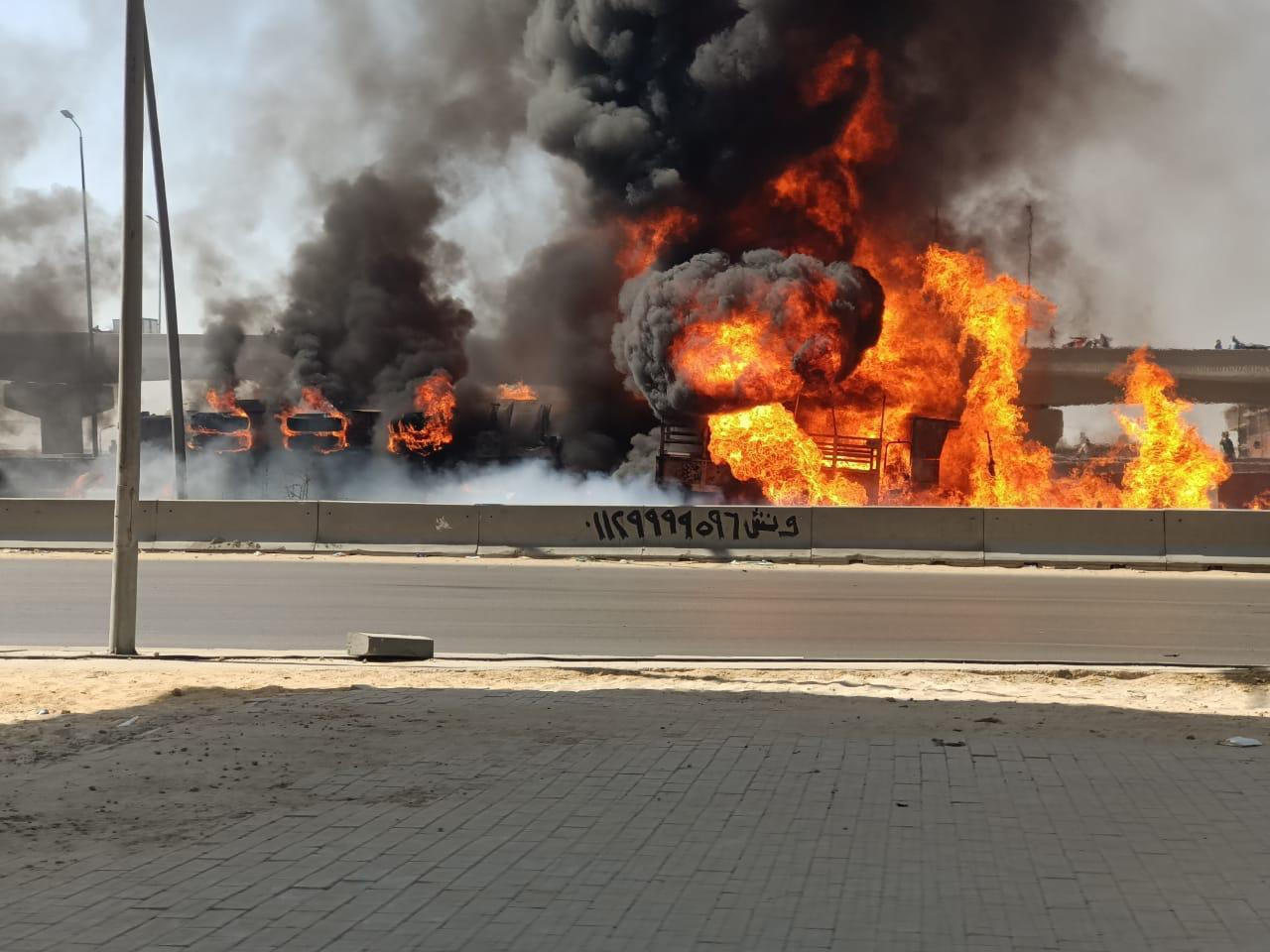
Determining responsibility in a major transportation disaster requires more than identifying the vehicles involved in the initial collision. Investigators must also examine whether the drivers complied with applicable traffic regulations, whether the vehicles were properly maintained and whether the surrounding infrastructure contributed to the severity of the incident.
Road conditions, vehicle movements, mechanical inspections and witness testimony may all become relevant to the investigation. Prosecutors must distinguish between the immediate cause of the collision and other circumstances that could have increased its consequences. These are separate questions that may involve different individuals, companies or regulatory authorities.
Petroleum transportation is an essential component of modern urban economies. Gasoline and diesel must be delivered to filling stations, commercial facilities and industrial customers, often through road networks that also serve residential communities. Although such transportation is routine, the flammable nature of the cargo means that accidents can require substantially different emergency responses from those associated with conventional freight.
When a tanker is damaged during a collision, emergency personnel must assess several potential hazards simultaneously. These may include fire, smoke exposure, environmental contamination and the possibility of additional damage to surrounding infrastructure. The presence of numerous passenger vehicles can increase the complexity of the response.
Many countries impose specialized requirements on hazardous materials transportation to reduce these risks. Such regulations may involve vehicle construction standards, safety inspections, driver training and restrictions on transportation through densely populated areas. Some jurisdictions also limit the hours during which heavy commercial vehicles can use particular urban highways.
The Cairo accident has therefore raised questions that extend beyond the conduct of any individual driver. It has highlighted the broader responsibility of transportation authorities to manage the movement of potentially hazardous cargo through heavily traveled public infrastructure.
The immediate priority following the fire was providing medical assistance to injured motorists and passengers. Egypt's Ministry of Health reported that 39 ambulances participated in the emergency response, reflecting the scale of the medical operation required at the scene.
Major fires involving multiple vehicles present considerable challenges for emergency medical services. Rescue teams must identify injured individuals, establish priorities for treatment and transport patients to hospitals capable of addressing their particular medical needs.
Patients suffering serious burns may require specialized facilities, while individuals exposed to smoke may need respiratory assessment and ongoing monitoring. Other injuries associated with vehicle collisions can require surgical intervention or intensive medical care.
The availability of hospital beds, specialized medical personnel and appropriate transportation arrangements can influence how quickly patients receive treatment. Coordination between hospitals is particularly important when numerous injured people arrive within a relatively short period.
Beyond the immediate medical response, survivors may face extended periods of rehabilitation. Serious burn injuries can require repeated medical procedures, physical therapy and psychological support. Families may also experience substantial disruptions to employment, household responsibilities and financial stability while relatives receive treatment.
These longer-term consequences are an important part of assessing the human impact of transportation disasters, even after the affected highway has reopened.
The severity of the fire complicated efforts to identify some of those who died. Egyptian prosecutors confirmed that forensic specialists were collecting DNA samples from relatives as part of the identification process. Authorities also interviewed injured survivors whose medical conditions allowed them to provide statements.
For families waiting for information, uncertainty can continue long after emergency personnel have completed their work at the accident site. Relatives may need to contact hospitals, police departments and forensic authorities while attempting to establish whether missing family members were traveling through the affected area.
According to Egypt's Central Agency for Public Mobilization and Statistics, the country recorded 5,829 road deaths during 2025, representing an increase of 10.8% compared with the previous year. The figure remains below the country's reported total in 2021, illustrating that improvements over a longer period can coexist with more recent setbacks.
The figures have renewed discussions about the importance of combining infrastructure investment with effective traffic management. Building additional roads may reduce congestion in certain locations, but preventing serious collisions also requires compliance with traffic laws, appropriate vehicle inspections and consistent monitoring of commercial transportation operations.
For lawmakers examining the Cairo incident, the challenge is determining whether existing safety measures were sufficient and whether additional restrictions could reduce the likelihood of similar disasters.
One of the most consequential issues surrounding the investigation concerns whether the tanker was permitted to operate on the Ring Road at the time of the accident. International reporting has identified a previous Egyptian government decision restricting trucks carrying more than four tonnes from using the highway during specified daytime and evening hours.
The applicability of those restrictions to the vehicle involved in Wednesday's collision remains an important question. Investigators would need to establish the vehicle's classification, operating authorization and whether any exemptions applied before determining that a transportation regulation had been violated.
Commercial transport restrictions are generally intended to balance economic requirements against public safety. Businesses must continue receiving essential supplies, but authorities may seek to reduce interactions between heavy freight vehicles and passenger traffic during periods of intense congestion.
The Cairo disaster has illustrated the potentially severe consequences when hazardous cargo transportation and densely concentrated passenger traffic intersect. For regulators, determining whether existing rules were followed may prove as important as identifying the actions that caused the initial collision.
Egyptian President Abdel Fattah el-Sisi expressed condolences to the victims' families, while senior government officials addressed the emergency response and treatment of injured survivors. Prime Minister Mostafa Madbouly visited patients receiving hospital care following the disaster.
The government's response has also involved questions about the responsibilities of institutions overseeing road transportation. Egyptian lawmakers called for greater attention to safety management following the collision, arguing that infrastructure development must be accompanied by effective measures to prevent accidents.
An investigation of this scale may eventually involve several separate areas of responsibility. Criminal proceedings could examine individual conduct, while administrative investigations may consider compliance with transportation regulations. Civil proceedings could address compensation and financial responsibility for losses suffered by affected families.
The development of the Cairo story illustrates how information can change during the first hours following a major emergency. Initial casualty assessments may be based on reports from responders at the scene, while subsequent figures incorporate hospital records and information collected by investigators.
Egypt's health authorities initially reported 21 injuries alongside the fatalities. A subsequent update increased the cumulative injury count to 26. Five injured people had been discharged, leaving 21 patients receiving treatment.
The different figures therefore reflect updates to the medical assessment rather than necessarily indicating a contradiction between news organizations. Reports published at different times may accurately describe the information available when they were written.
Similar changes can occur in accounts of an accident's cause. Early statements may focus on the vehicle that overturned, while later investigations identify another vehicle that contributed to the collision. These developments demonstrate why official updates and publication dates are important when evaluating reports of a rapidly evolving emergency.
The Cairo disaster received coverage from several major international news organizations, including Reuters, the Associated Press, CBS News, Fox News, The Guardian and Al Jazeera. Egyptian outlets also published detailed reports covering the investigation, medical response and statements from public officials.
Fox News+3
The prominence of international news coverage can vary between countries, particularly when several major events are occurring simultaneously. In the United States, the accident coincided with Thanksgiving, a period when domestic weather conditions, holiday transportation and other national developments compete for public attention.
Claims that a senior American official was traveling in the passenger vehicle have introduced another question about the identity of those involved. Establishing such a connection would require reliable documentation from Egyptian investigators, American diplomatic authorities or other sources with direct knowledge of the passenger's identity.
Neither the Egyptian prosecution statements nor the international news reports reviewed for this article identify a senior American official as an occupant of the vehicle.
The most significant information concerning the passenger vehicle emerged on November 26, when Egyptian prosecutors disclosed additional findings from their investigation. Authorities identified the detained suspect as a 21-year-old driver who told investigators that his father was accompanying him when the collision occurred.
Prosecutors ordered the driver held for four days pending further investigation and directed forensic authorities to conduct drug testing. The testing order does not establish that the suspect was intoxicated, and the investigation must determine whether he bears criminal responsibility.
The investigation may produce further information about the individuals, the commercial vehicle and the transportation arrangements involved. Until those findings are released, assigning the identity of an American political or diplomatic figure to either occupant would go beyond the available evidence.
For Egyptian authorities, the immediate priorities remain identifying victims, treating survivors and establishing legal responsibility. For the families affected by the disaster, the outcome of that investigation could determine whether the tragedy leads to meaningful changes in transportation safety and accountability.
Cairo's Ring Road has reopened, but the questions surrounding the disaster remain unresolved. The next significant developments are expected to come from forensic examinations, prosecutors' findings and the government's assessment of hazardous cargo transportation regulations.
Comments (0)
Loading comments...
May You Like

I-75 THANKSGIVING NIGHTMARE — MAIL TRUCK CRASH RAISES OVERPASS COLLAPSE FEARS!

BANGCHAK REFINERY IN THAILAND SHUT DOWN, U.S. OIL PRICES JUMP 10%!

IRAN WARNS WASHINGTON — HOW SERIOUS IS THE THREAT TO U.S. MILITARY BASES?













