
Caitlin Clark Gave the Fever an ‘F’ After a 102-85
Caitlin Clark Gave the Fever an ‘F’ After a 102-85 Playoff Loss — Here’s What Went Wrong
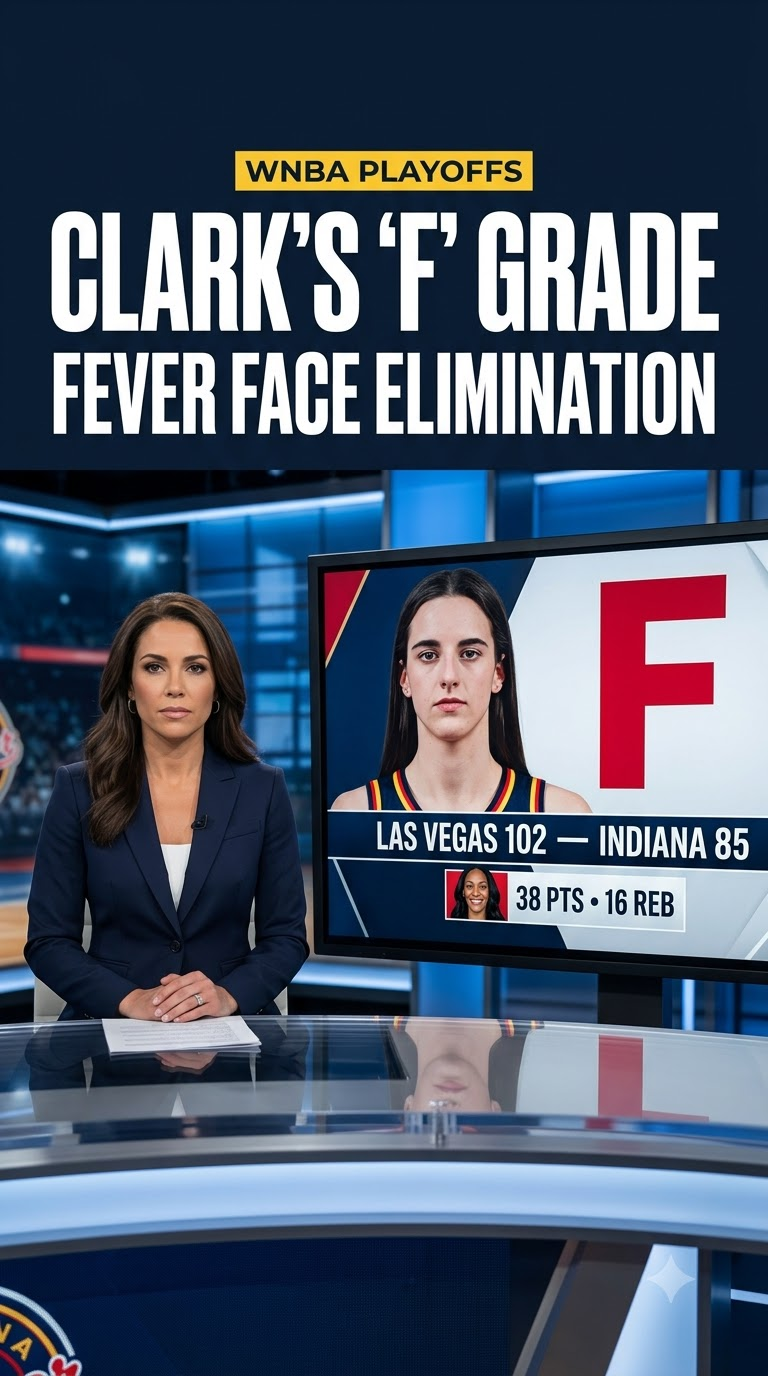
Caitlin Clark did not try to soften her assessment after the Indiana Fever opened the 2026 WNBA playoffs with a 102-85 loss to the Las Vegas Aces.
Asked how Indiana had done at forcing Las Vegas into difficult shots, Clark gave a one-letter answer: “F.”
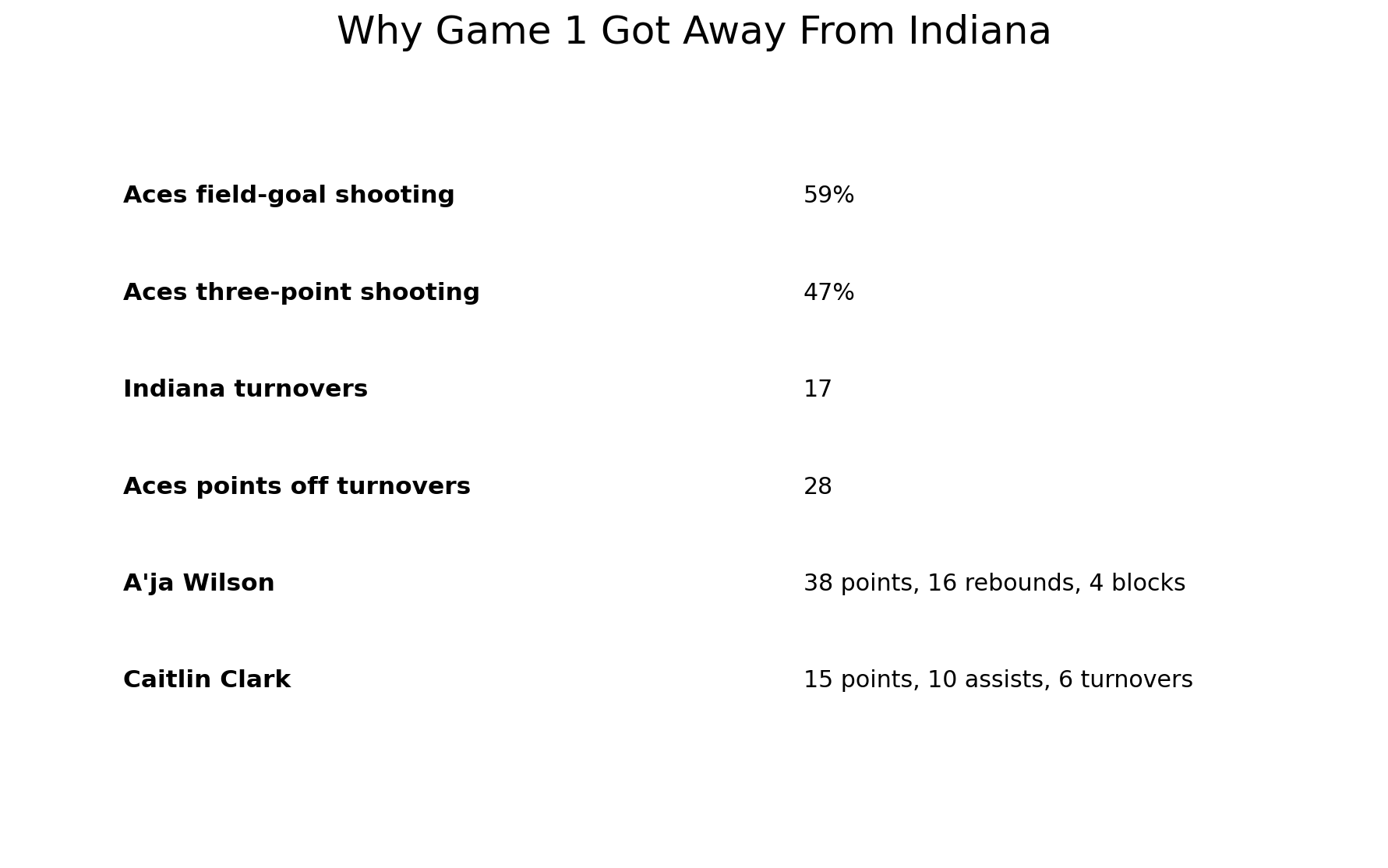
The grade matched the numbers. The Aces shot 59% from the field, hit 47% of their three-point attempts and repeatedly turned Indiana mistakes into points.
The loss gave Las Vegas a 1-0 lead in the best-of-three first-round series and sent the Fever home needing a win in Game 2 to keep their season alive.
Indiana Was Competitive Early — Then the Game Changed Fast
The final score makes the opener look one-sided from start to finish. It was not.
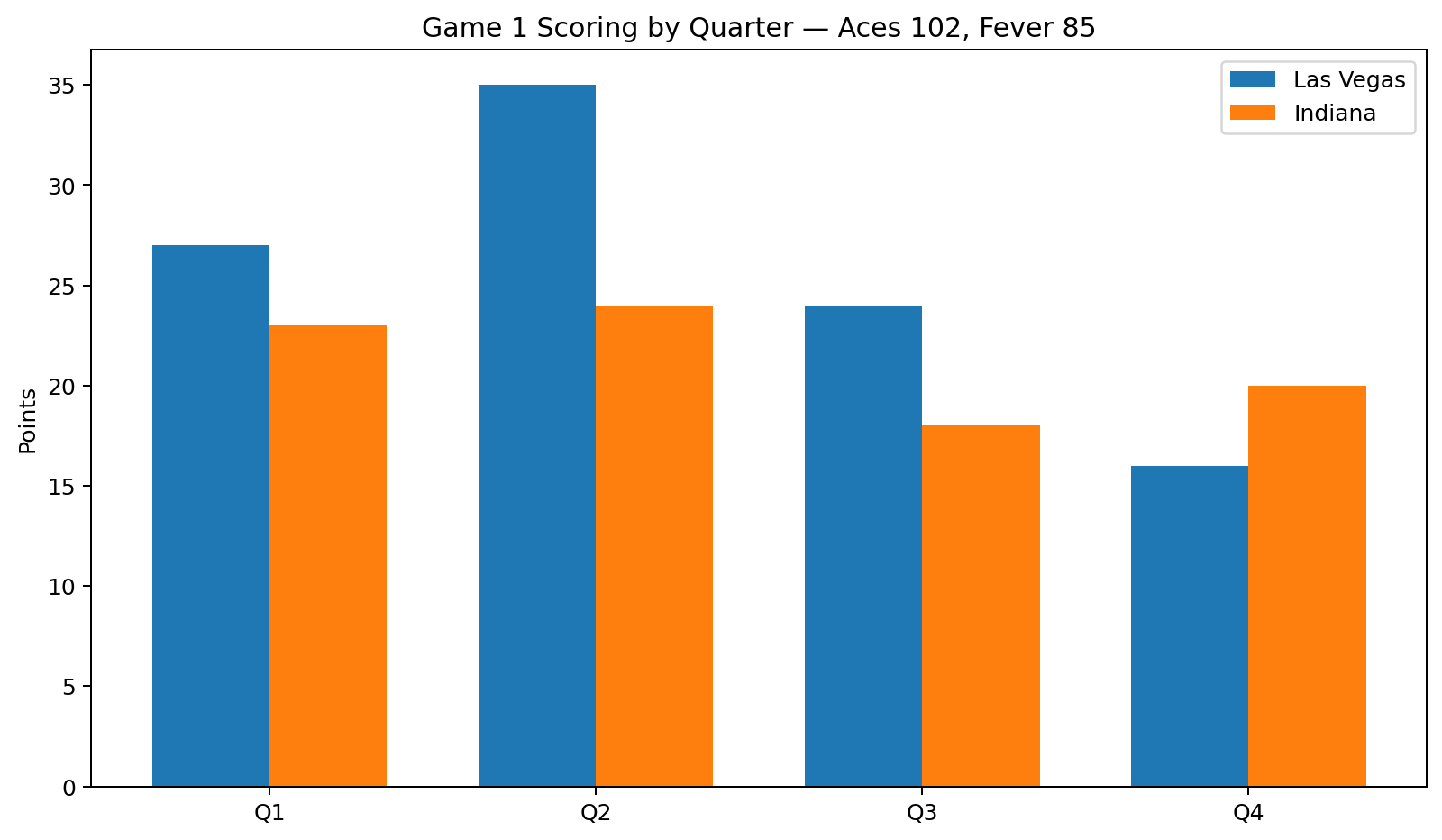
Indiana traded baskets with Las Vegas through much of the first quarter and briefly held a 34-33 lead in the second.
Then the Aces took over.
Las Vegas outscored Indiana 29-13 over the final seven minutes before halftime, turning a one-point Fever advantage into a 62-47 deficit.
That stretch became the hinge of the game. Indiana never recovered.
A’ja Wilson Controlled the Matchup
The biggest problem for Indiana was A’ja Wilson.
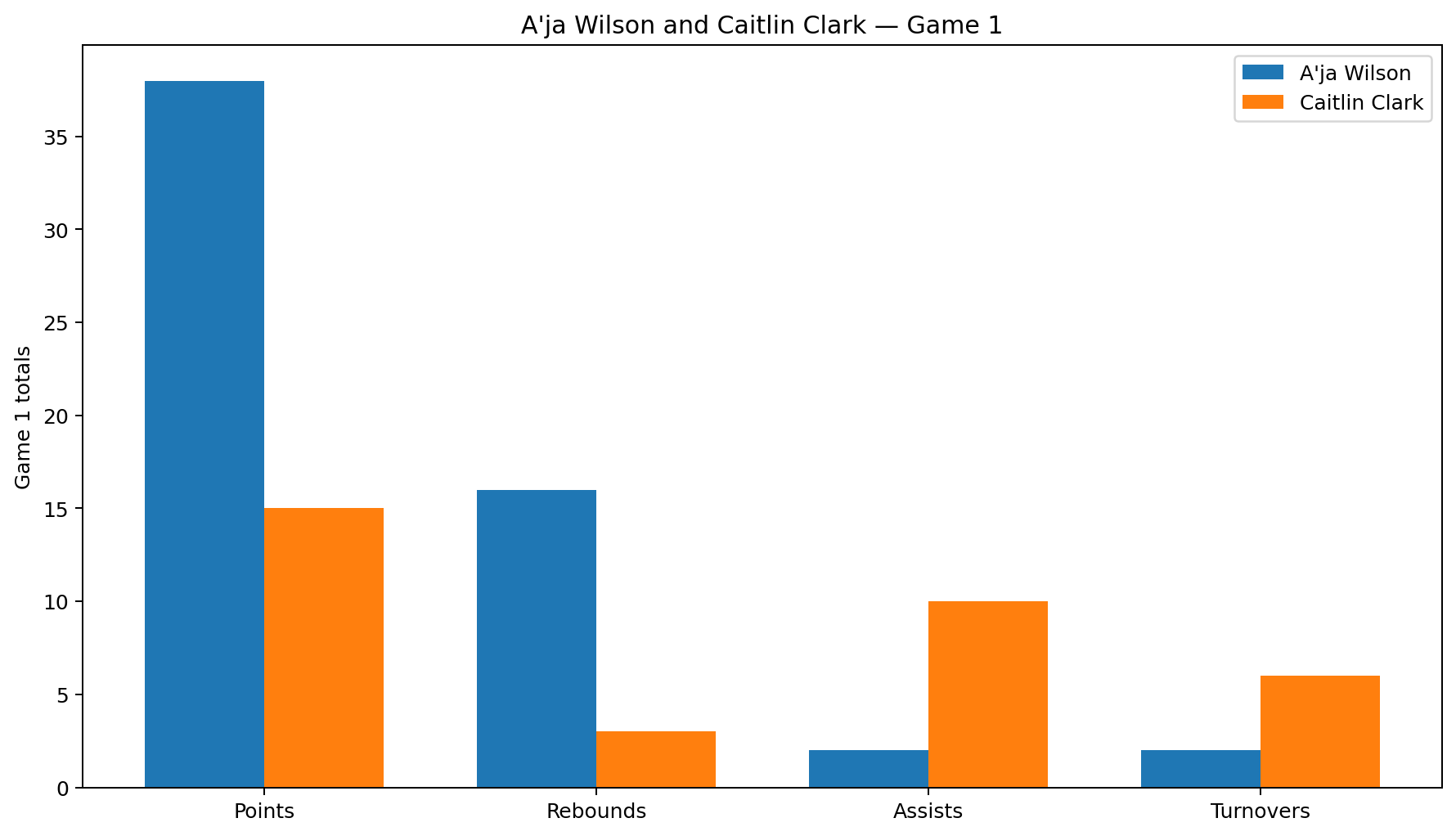
Wilson finished with 38 points, 16 rebounds, four blocks, two steals and two assists, tying playoff career highs in both scoring and rebounding.
She shot 15 of 19 from the field and made both of her three-point attempts.
Indiana tried different coverages and bodies against her, but the Aces consistently found ways to get Wilson the ball in favorable positions.
The Fever could not make her work hard enough for her points, which is exactly what Clark was criticizing after the game.
Las Vegas Had More Than One Answer
Wilson was the center of the performance, but Las Vegas was not relying on one scorer.
Jackie Young added 21 points and 10 assists, repeatedly creating pressure off the dribble and finding teammates when Indiana sent extra help.
Chelsea Gray finished with 14 points and eight assists, while Jewell Loyd added 10.
That balance made the Aces difficult to contain. Any attempt to crowd Wilson created space elsewhere, and Las Vegas punished those openings.
Clark Produced a Double-Double, but the Turnovers Hurt
Clark finished with 15 points and 10 assists, giving Indiana its strongest playmaking line of the night.
But she also committed six of the Fever’s 17 turnovers.
Those mistakes became especially costly because Las Vegas converted Indiana turnovers into 28 points.
Clark shot 6 of 17 from the field and 3 of 10 from three-point range.
The numbers were not disastrous on their own. The problem was how often empty Indiana possessions immediately became scoring chances for the Aces.
Aliyah Boston Led Indiana’s Scoring
Aliyah Boston finished with 18 points to lead the Fever, while Indiana placed five players in double figures.
That gave the Fever enough scoring to stay competitive in stretches.
But the offense was never able to match Las Vegas possession for possession once the Aces began playing at a higher level late in the second quarter.
Indiana also had to manage Boston’s minutes after a recent leg issue, another complication for a team already dealing with depth problems.
The Fever Entered the Playoffs Short-Handed
Indiana’s postseason began with another injury problem before Game 1 even tipped off.
Guard Tyasha Harris was ruled out for the remainder of the season after suffering a broken left fibula in the regular-season finale against Minnesota.
Harris had been an important reserve option in the backcourt, and her absence increased the pressure on Indiana’s remaining guards.
The Fever also entered the series monitoring Boston’s leg and Clark’s back, though both were available for the opener.
Against a veteran Las Vegas roster, those depth concerns matter even more in a short series.
Clark’s ‘F’ Grade Was About More Than One Possession
Clark’s postgame answer stood out because it was blunt, but it was also specific.
Indiana’s problem was not simply that Wilson had a great night.
The Fever allowed the Aces to get comfortable across the floor.
Las Vegas found clean looks in transition, punished defensive breakdowns and repeatedly reached its preferred spots without enough resistance.
When a team shoots close to 60% in a playoff game, the margin for error on the other end becomes extremely small.
The Second Quarter Was the Warning Sign
Indiana’s collapse before halftime may be the most useful part of Game 1 for the coaching staff to study.
The Fever had shown they could compete with the Aces for more than a quarter.
But once Las Vegas increased the pressure, Indiana’s offense became less organized and its transition defense deteriorated.
Turnovers piled up, the Aces ran, and a close game became a double-digit deficit in only a few minutes.
In a best-of-three series, preventing one bad stretch from becoming a decisive run can be the difference between extending a season and ending it.
Why Game 2 Became a Must-Win
The first round of the WNBA playoffs is a best-of-three format.
That gives the team that wins Game 1 an immediate chance to close the series in Game 2.
For Indiana, the equation was simple after Sunday’s loss: win at Gainbridge Fieldhouse and force a deciding Game 3, or see the season end.
The Fever had already shown during the regular season that they could beat Las Vegas, including two convincing victories earlier in the year.
But the Aces who appeared in Game 1 looked much closer to the championship-level team Indiana expected to see in the postseason.
What Indiana Has to Fix
The Fever do not need to reinvent their entire offense.
They do need to protect the ball, get back in transition and force Las Vegas into more difficult half-court possessions.
Indiana also needs more physical resistance around Wilson and better communication when the Aces use screens to create mismatches.
On offense, Clark’s passing remains a major advantage when the Fever maintain spacing and movement.
But six turnovers from the primary ballhandler are difficult to survive against a team that converts mistakes as efficiently as Las Vegas did.
The Series Is Now About Indiana’s Response
Game 1 delivered a clear message.
Las Vegas looked comfortable. Indiana did not make the Aces uncomfortable often enough.
Wilson dominated, Young and Gray created secondary pressure, and Indiana’s turnovers repeatedly erased its own good possessions.
Clark’s “F” grade was memorable because it captured all of that in one letter.
The more important question was what the Fever would do with that assessment.
After a 102-85 loss, there was no longer room for a slow adjustment period. Indiana entered Game 2 knowing the next response could determine whether its postseason continued at all.
Comments (0)
Loading comments...
May You Like

TRUMP’S OHIO WARNING UNDER THE SPOTLIGHT

South Korea–Ukraine Rift Deepens Over North Korean POW Transfer as PURL Draws New Scrutiny

Russian Drone Strikes Kyiv Bridge as German Chancellor Arrives in Ukraine












