Can Mr. Trump and Mr. Xi turn summit talks into concrete results in 2026
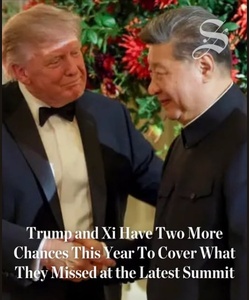
WASHINGTON — President Donald Trump and Chinese President Xi Jinping are expected to meet twice more before the end of 2026, creating new opportunities to address issues left unresolved during their latest Washington summit.
The additional encounters are expected at the APEC Economic Leaders’ Meeting in Shenzhen in November and the G20 Leaders’ Summit in Miami in December, according to officials and published schedules.
Two More Meetings Ahead
The meetings will follow Xi’s three-day state visit to Washington, which ended September 25 with both governments emphasizing continued dialogue despite limited public breakthroughs on several contentious issues.
Xi said the United States and China would support each other’s hosting of the two major international gatherings, creating two additional settings for direct presidential diplomacy later this year.
APEC leaders are scheduled to meet in Shenzhen on November 18-19, while the G20 summit in Miami is scheduled for December 14-15, according to published schedules.
The repeated encounters could give negotiators more time to work through trade disputes, technology restrictions, rare-earth supplies and agricultural purchases that remained central during the Washington summit.
Trade Truce Still Fragile
One concrete result from the latest talks was an extension of the existing U.S.-China trade arrangement, which had been scheduled to expire in November, reported.
The extension keeps tariffs largely unchanged while China continues rare-earth exports, leaving difficult questions for later negotiations instead of producing a comprehensive long-term trade agreement.
The arrangement provides businesses with additional planning time, but uncertainty remains surrounding market access, technology controls and the future structure of tariffs between the two economies.
The two governments have also been working through earlier commitments involving agricultural purchases, aircraft and other commercial issues, with progress varying across different areas of the relationship.
Technology And Artificial Intelligence
Artificial intelligence emerged as another important area for dialogue, reflecting broader competition between Washington and Beijing over advanced computing, chips, models and emerging technological capabilities.
said the countries agreed to establish a Super Intelligence dialogue and a communication channel for related incidents, with another exchange planned for November.
Such mechanisms could provide officials with regular contact over technological risks, although the summit did not resolve broader disagreements involving advanced semiconductors, artificial intelligence and export controls.
The November meeting therefore could become an early test of whether the newly announced technology dialogue develops into sustained cooperation or remains primarily a channel for managing strategic competition.
Taiwan And Security
Taiwan remained among the most sensitive subjects in the relationship. Beijing claims the island as part of China, while Washington maintains longstanding policies concerning Taiwan’s security and the status quo.
reported that the summit produced no major public breakthrough on Taiwan, underscoring how security issues remain harder to settle than narrower economic arrangements.
The leaders also discussed Iran, Russia and North Korea, while said they agreed that Iran should never possess a nuclear weapon and international waterways should remain open.
What Happens Next?
The November APEC meeting may provide the first opportunity to test whether the Washington understandings translate into concrete economic steps, particularly involving trade, technology and supply chains.
By December, the G20 meeting could offer another opportunity for Trump and Xi to review progress, address unresolved disputes and maintain direct communication before entering 2027.
With two additional meetings already planned, U.S.-China relations will continue combining cooperation, economic bargaining and strategic rivalry, making the substance of future agreements more significant than ceremonial diplomacy alone.
Comments (0)
Loading comments...
May You Like

Russian Drone Strikes Kyiv Bridge as German Chancellor Arrives in Ukraine