Carney Pushes ‘Unique Alliance’ With Europe as Canada Seeks Greater Strategic Independence
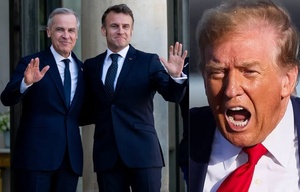
Prime Minister Mark Carney says Canada and the European Union are working toward an unusually deep partnership covering trade, defence, technology, energy and mobility, while stressing that Canada is not seeking full EU membership.
Canadian Prime Minister Mark Carney says Canada and the European Union are developing a “unique alliance” designed to deepen economic, security and technological ties without turning Canada into a full EU member.
Carney first used the phrase publicly before his latest European trip, saying Canada was not looking for EU membership but would soon begin discussions on a new form of alliance.
The proposal became more concrete during Carney’s September visit to Strasbourg, where he addressed the European Parliament and met senior EU leaders to discuss expanding Canada-Europe cooperation.
European Commission President Ursula von der Leyen then proposed moving beyond the existing CETA trade agreement toward what she called an “Alliance for the Future” between Europe and Canada.
Von der Leyen went further by proposing that Canada eventually become the European Union’s first “associate member,” although no such formal membership category currently exists in EU treaties.
Her proposal would create a relationship far deeper than a traditional trade agreement, potentially linking Canada and Europe in manufacturing, defence production, advanced technology, Arctic policy and economic security.
Carney welcomed the proposal while maintaining that Canada is not seeking conventional EU membership. His government instead describes the goal as a new partnership tailored specifically to Canadian and European interests.
The two sides are discussing expanded cooperation in critical minerals, artificial intelligence, quantum computing, cybersecurity, energy, space, financial services and defence industrial capacity, according to official Canadian statements.
Carney has argued that closer European ties would strengthen Canada’s strategic autonomy by giving businesses, workers and governments more options beyond traditional dependence on the American market.
Canada and the EU already have an extensive economic foundation through CETA, their free-trade agreement, which von der Leyen said has helped goods trade grow significantly since implementation.
Defence cooperation has also accelerated. Canada has joined the European Union’s SAFE defence procurement initiative, becoming the first non-European country to participate in that expanding security framework.
Ottawa says deeper integration could eventually make it easier for young Canadians and Europeans to live, work and study across the Atlantic while strengthening business and investment connections.
The initiative arrives during severe tensions between Canada and the Trump administration over tariffs, trade restrictions and broader disagreements concerning the direction of the North American economic relationship.
President Donald Trump reacted critically to the associate-member proposal, suggesting that an EU move toward Canada could be considered a “hostile act” depending on its purpose and implementation.
Trump also warned that Washington could respond with additional tariffs on Europe, underscoring how Canada’s growing European alignment has become part of the wider transatlantic trade dispute.
European leaders, however, have publicly framed the initiative differently. Von der Leyen said the emerging Canada partnership is intended to strengthen both sides rather than target another country.
Carney has similarly emphasized Canadian sovereignty and diversification rather than presenting the European strategy as an effort to sever ties with the United States or economically isolate Washington.
The photograph of Carney beside French President Emmanuel Macron reflects their close bilateral relationship, but the proposed alliance is being negotiated with EU institutions and governments, not France alone.
Major details remain unresolved because “associate membership” has no established legal definition. Any new status would require extensive negotiations over its rights, obligations and approval process among European governments.
Canada and EU leaders are expected to develop the concept further before their scheduled summit in Montreal on October 29 and 30, where the partnership could receive a clearer framework.

Comments (0)
Loading comments...
May You Like

Barack Obama Draws Attention With New Literary Podcast

South Korea–Ukraine Rift Deepens Over North Korean POW Transfer as PURL Draws New Scrutiny

FIGHT OVER OBAMA’S IRAN POLICY