
"CARTEL CHAOS: HELICOPTERS UNLEASH GUNFIRE AFTER KINGPIN ARREST—40 POLICE RELATIVES TAKEN HOSTAGE! "
CARTEL CHAOS: HELICOPTERS UNLEASH GUNFIRE AFTER KINGPIN ARREST—40 POLICE RELATIVES TAKEN HOSTAGE!
GUASAVE, Mexico — November 23, 2026 — Mexican military helicopters fired toward armed positions in the northern state of Sinaloa as security forces captured one of the FBI's most-wanted fugitives, triggering a wave of violence that left 11 people dead and forced residents to shelter inside homes, businesses and a baseball stadium.
The arrest of Fausto Isidro Meza Flores, known as El Chapo Isidro, followed an operation by Mexican Army and National Guard special forces supported by intelligence from the United States.
Authorities said four Mexican soldiers and seven alleged gunmen died during the confrontation.
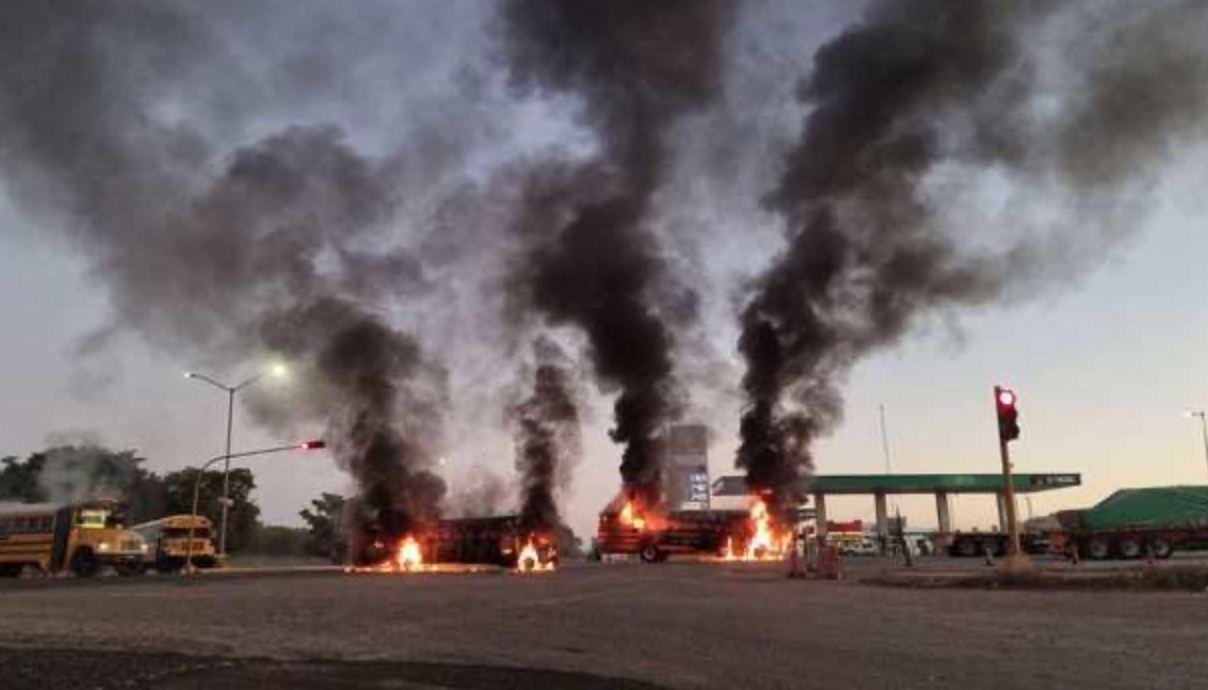
The violence spread beyond the immediate arrest location, with burning vehicles, highway blockades and gunfire disrupting Guasave and surrounding communities.
Videos showed military helicopters firing toward the ground while civilians fled nearby streets. CNN verified footage of the aerial gunfire and geolocated images showing spectators escaping a baseball game.
The operation secured a major fugitive, but the fighting raised a larger question: how much control can criminal organizations retain after their leaders are captured? 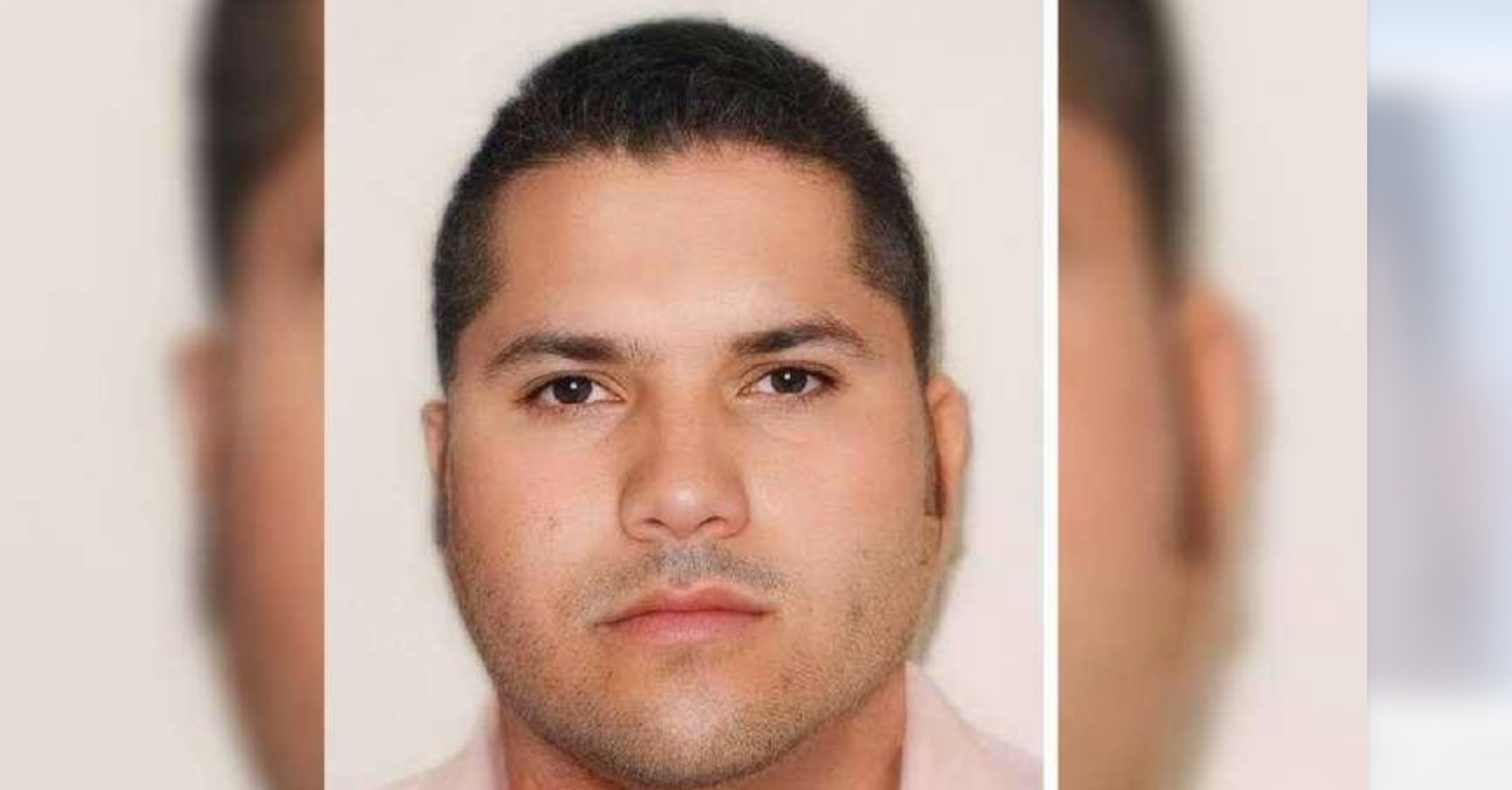
The operation began Friday evening, November 20, in Guasave, a municipality in northern Sinaloa.
Mexican forces moved to capture Meza Flores after intelligence identified his location.
The Defense Ministry said the troops encountered gunfire and explosives during the operation.
The resistance developed into a confrontation involving ground forces and military aircraft.
Security personnel established positions around the target area while armed men attempted to resist the operation.
Authorities ultimately detained Meza Flores and several alleged associates.
The arrest was significant because the suspected cartel leader had avoided capture for years.
His name had appeared on the FBI's Ten Most Wanted Fugitives list, placing him among the highest-profile criminal suspects sought by U.S. authorities.
The operation also demonstrated the risks of targeting a leader whose organization retained armed personnel and territorial influence.
Fausto Isidro Meza Flores, 44, is accused by U.S. authorities of leading a drug-trafficking organization operating in northwestern Mexico.
He has been associated with remnants of the Beltrán Leyva criminal network and the group known as Los Mazatlecos.
The organization has operated in areas of Sinaloa and neighboring states.
U.S. authorities accuse Meza Flores of involvement in trafficking cocaine, methamphetamine, heroin, fentanyl and other drugs.
He was placed on the FBI's Ten Most Wanted Fugitives list in February 2025.
The bureau offered a reward of up to $5 million for information leading to his arrest.
Those allegations concern criminal charges and investigative findings.
His capture does not itself establish guilt on every accusation.
Further judicial proceedings will determine how the charges are addressed.
The FBI's reward reflected the importance U.S. authorities placed on locating Meza Flores.
A reward of up to $5 million is intended to encourage information that could assist an arrest.
It is not a payment automatically made to the person who captures a suspect.
The fugitive designation also indicates that U.S. investigators considered the suspect a significant target.
Meza Flores had been sought in connection with drug-trafficking and firearms allegations.
His organization was accused of moving illegal drugs into the United States.
The arrest therefore attracted immediate attention from officials on both sides of the border.
It also demonstrated the extent of cooperation between Mexican security forces and U.S. intelligence agencies.
The operation itself was carried out by Mexican personnel.
Mexican authorities said U.S. intelligence contributed to the operation.
That cooperation helped security forces identify and locate the fugitive.
The arrest was conducted by Mexican military and security personnel, including Army and National Guard units.
The distinction matters because intelligence cooperation is different from foreign troops conducting a military operation inside Mexico.
Mexico's government has maintained that it will cooperate with the United States on security while preserving national sovereignty.
The operation took place during a period of intense pressure to disrupt major trafficking networks.
U.S. President Donald Trump has urged stronger action against cartels.
Mexican President Claudia Sheinbaum has supported cooperation but opposed unilateral U.S. military intervention.
The arrest therefore had diplomatic significance as well as immediate security consequences.
One of the most widely circulated images from the operation showed helicopters firing repeated bursts toward the ground.
CNN verified footage showing aircraft apparently belonging to Mexican security forces circling above Guasave.
Other reports identified the aircraft as UH-60 Black Hawk helicopters.
The footage captured sustained gunfire during a confrontation involving heavily armed suspects.
The exact positions being targeted were not fully established in public reporting.
Military helicopters can support ground operations by providing surveillance, transportation and firepower.
Their use in a populated area raises particular concerns about civilian safety.
In Guasave, the aircraft operated while gunfire was reported across parts of the city.
Residents were urged to remain indoors as the confrontation continued.
The footage provides evidence that helicopters fired during the operation.
It does not independently establish the identity of every person on the ground.
Nor does it reveal all the orders issued to pilots or ground commanders.
CNN reported that it had verified video showing rapid aerial gunfire.
The outlet also geolocated footage of civilians fleeing a nearby baseball stadium.
These findings helped establish that the confrontation occurred in Guasave during the arrest operation.
The videos are significant because they document the intensity of the military response.
However, video footage has limits.
A short recording may show a particular moment without capturing what happened before or afterward.
Determining whether every use of force was justified requires a fuller investigation.
Mexican authorities reported 11 deaths associated with the operation.
Four were soldiers.
Seven were described by officials as armed aggressors.
The deaths demonstrated the severity of the resistance encountered by security forces.
They also highlighted the risks faced by personnel involved in high-profile arrests.
Authorities reported that no civilians were injured during the operation, according to initial official accounts.
That finding does not eliminate the disruption experienced by residents.
Gunfire, burning vehicles and roadblocks created dangerous conditions across the city.
Emergency services faced restrictions while fighting continued.
The casualty count reflects the initial official reporting on the confrontation.
Any later changes would need to be supported by updated statements from authorities.
One of the most striking scenes occurred at Kuroda Park in Guasave.
A baseball game was underway when gunfire was heard outside the stadium.
Video showed spectators scrambling for safety.
Players from the Algodoneros de Guasave and Venados de Mazatlán teams left the field.
The game was suspended as the security situation deteriorated.
CNN geolocated footage showing the evacuation.
The scenes demonstrated how the confrontation affected people who were not involved in the operation.
A sporting event became an emergency as residents attempted to find shelter.
Authorities did not establish that the stadium itself was the intended target.
The interruption resulted from the surrounding security crisis.
Witnesses described gunfire across Guasave.
Some residents took refuge inside shops as businesses closed their shutters.
Others reported seeing armed vehicles moving through the streets.
A local journalist told the Associated Press that fighting occurred in multiple parts of the city.
The reports reflected the speed with which the confrontation spread beyond the initial arrest location.
For civilians, the immediate challenge was determining where it was safe to go.
Roadblocks complicated movement.
Burning vehicles created additional hazards.
Authorities urged people to remain inside and avoid unnecessary travel.
The disruption continued after the arrest itself had been completed.
That pattern illustrated the ability of armed groups to create instability in response to a major law-enforcement operation.
The violence extended to roads surrounding Guasave and other communities in Sinaloa.
Suspected cartel members erected barricades and set vehicles on fire.
Some roads became impassable.
The Financial Times reported that armed groups also deployed devices intended to puncture vehicle tires.
These actions disrupted transportation and complicated the movement of security forces.
Roadblocks have become a recurring feature of confrontations between Mexican authorities and organized criminal groups.
They can prevent reinforcements from reaching an area and obstruct emergency services.
They also affect civilians who may be stranded far from home.
In Sinaloa, officials warned motorists to avoid affected routes while security personnel worked to restore access.
The blockades demonstrated that the operation's consequences extended well beyond the location where Meza Flores was captured.
The timing of the violence suggested that armed groups were responding to the arrest operation.
Mexican authorities reported that suspects attacked federal personnel with firearms and explosives.
The fighting was accompanied by barricades and vehicle fires.
Such actions can serve several purposes during a confrontation.
They may delay security forces, interfere with movement or create confusion.
However, identifying a broader strategy requires evidence about who ordered the attacks.
Public reporting did not establish a single command directing every incident.
Nor did it identify an authenticated message explaining the objectives of all participating gunmen.
The confirmed evidence establishes violent resistance and widespread disruption.
The organizational decisions behind the response remain a separate question for investigators.
The confrontation also produced reports of armed individuals entering medical facilities.
CNN interviewed a local resident who said private hospitals had been taken over by armed people.
Other reporting described claims that gunmen entered a clinic and demanded treatment for wounded individuals.
These accounts added to concerns about civilian institutions during the violence.
Hospitals depend on safe access for patients, medical workers and emergency vehicles.
Armed interference can disrupt care even when a facility is not directly attacked.
However, the available reporting did not establish a complete official account of every hospital incident.
It also did not confirm that hospital staff or patients were held hostage as part of a coordinated operation.
The reports illustrated the broader disruption while leaving important details for authorities to investigate.
The most serious additional allegation concerns a purported group of 40 relatives of police officers taken hostage.
Such an incident would represent a major escalation beyond the documented gunfights and roadblocks.
It would also require a substantial emergency response.
However, the Mexican government's reported casualty and arrest statements did not establish a hostage-taking involving 40 police relatives.
The Associated Press, CNN and other major outlets covering the operation did not identify a confirmed group of 40 captives.
No authenticated list of victims, location of detention or official rescue operation was established in the reporting reviewed.
That distinction matters because the documented violence was already extensive.
Adding an unsupported hostage count would change the reported nature of the crisis.
Another claim suggests that a secret video contained a demand issued after the cartel leader's arrest.
Videos of the military confrontation have circulated widely.
They include helicopters firing, civilians seeking shelter and vehicles burning.
Mexican authorities also released footage associated with the detention of Meza Flores.
But footage documenting an arrest or gunfight is different from an authenticated hostage-demand recording.
The available evidence does not establish who supposedly made such a demand, what was requested or whether any captives existed.
For investigators, an alleged recording would need to be authenticated before its contents could be treated as evidence.
That would involve establishing its origin, date and connection to the incident.
No such authenticated recording was identified in the major reporting on the Guasave operation.
Mexican authorities detained several alleged associates of Meza Flores during the operation.
Reports identified individuals described as senior members of his organization, including a deputy and a suspected financial operator.
The arrests were significant because they targeted more than one person in the group's leadership structure.
Financial personnel can play important roles in maintaining a criminal organization.
They may be responsible for managing resources, payments or other operational arrangements.
However, the specific criminal responsibility of each detained individual must be established through legal proceedings.
The suspects were transported to Mexico City for further processing.
The government reported the seizure of weapons and other materials associated with the operation.
The arrests may affect the organization's leadership, but they do not establish that its wider network has been dismantled.
After the operation, Meza Flores and other detained suspects were moved to Mexico City.
Authorities used military transportation to remove them from the area.
The transfer reduced the likelihood that the suspects would remain close to armed supporters in Guasave.
It also allowed federal authorities to continue legal proceedings away from the immediate confrontation.
The movement of high-profile detainees can require substantial security precautions.
The danger does not necessarily end when a suspect is placed in custody.
Armed organizations may continue operating under other leaders.
That was a central concern in Sinaloa, where competing criminal factions already controlled different areas.
The arrest secured Meza Flores, but the government's next challenge was preventing further violence.
Meza Flores has been associated with the Beltrán Leyva organization, a criminal network that emerged as a major force in Mexico's drug trade.
Over time, the network fragmented into smaller groups.
Meza Flores became linked to the organization known as Los Mazatlecos.
U.S. authorities have accused his network of transporting illegal drugs into American markets.
The allegations include trafficking involving fentanyl, cocaine, heroin and methamphetamine.
These activities are part of a broader transnational drug economy.
Criminal organizations may maintain routes, distribution networks and relationships that survive the arrest of individual leaders.
That helps explain why security analysts warn against treating the capture of one prominent figure as the end of a criminal organization.
The underlying infrastructure can remain active.
The arrest occurred during a wider struggle involving rival factions of the Sinaloa Cartel.
The conflict intensified after the 2024 arrest of Ismael El Mayo Zambada.
Groups associated with the Zambada family and those linked to Joaquín El Chapo Guzmán have fought for influence.
Meza Flores was regarded as an ally of the faction associated with the Zambada network.
His detention could therefore affect more than his own organization.
It may change relationships among groups competing for territory and trafficking routes.
The Wall Street Journal reported that analysts were concerned about possible succession disputes.
However, the eventual outcome cannot be determined from the arrest alone.
Different factions may respond in different ways, depending on their leadership and resources.
Capturing a criminal leader can disrupt an organization.
It may remove an important decision-maker and weaken coordination.
But it can also create competition among potential successors.
Members who previously followed one leader may seek control of resources or territory.
Rival organizations may attempt to exploit the disruption.
These risks are particularly significant where armed groups already compete for influence.
Security analysts cited by the Associated Press and Financial Times warned that leadership arrests do not necessarily eliminate the underlying networks.
The Guasave operation illustrated the immediate danger.
The suspect was detained, but fighting continued across parts of the region.
The longer-term consequences will depend on whether authorities can disrupt the organization's operational and financial structures.
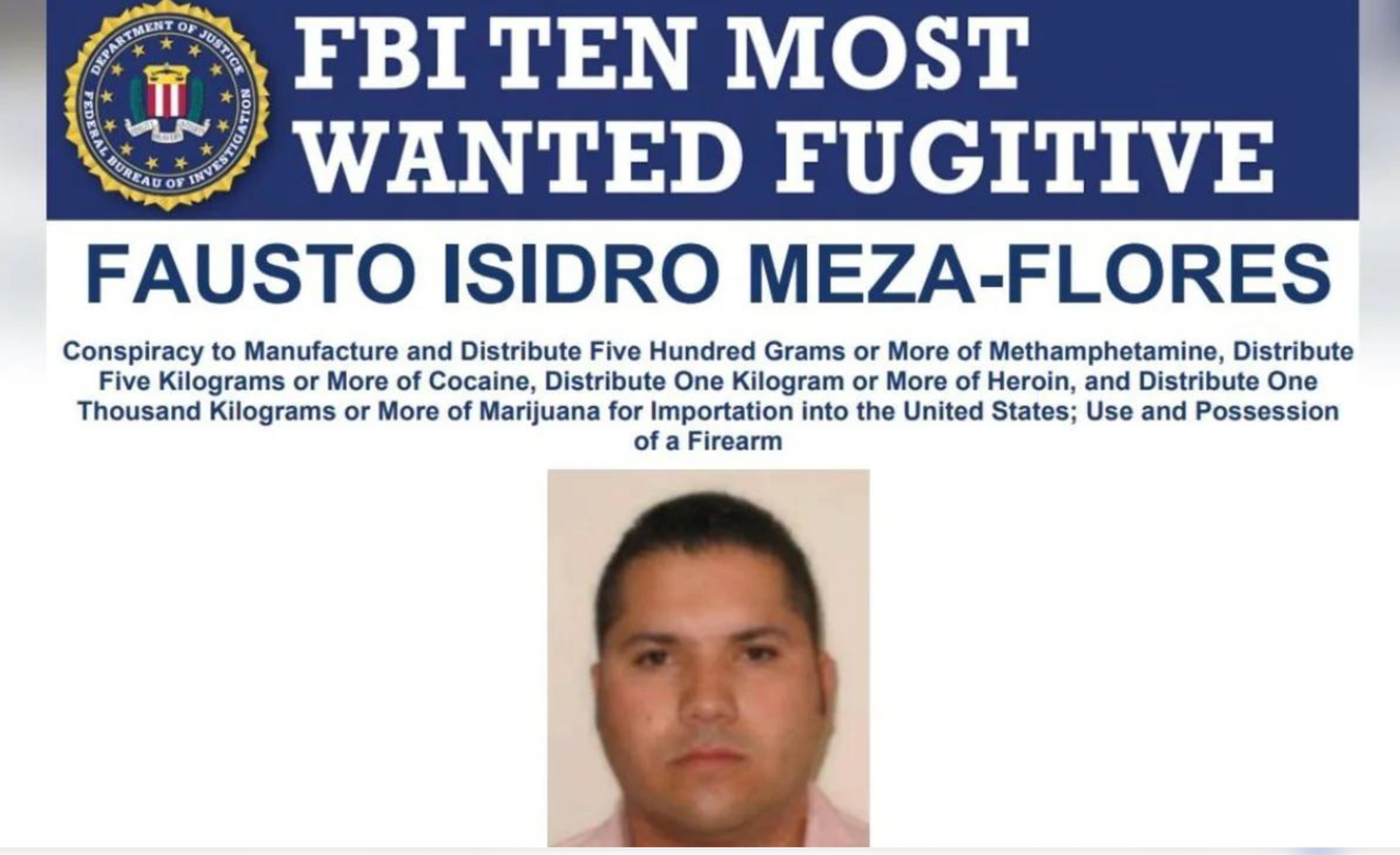
The FBI's reward offer helped make Meza Flores a prominent international fugitive.
The advertised amount was up to $5 million.
Such rewards are generally tied to information that contributes to locating or arresting a wanted person.
The public reporting did not establish whether anyone would receive a payment following the Guasave operation.
Nor did it identify an individual informant responsible for the arrest.
Mexican authorities said intelligence provided by U.S. agencies helped locate the suspect.
That cooperation was part of the official account.
A reward announcement does not establish that the government paid the full amount.
Any decision concerning a payment would require separate confirmation from the responsible authorities.
The operation took place amid continuing disagreements over how to combat cross-border drug trafficking.
President Trump has called for stronger action against Mexican cartels.
President Sheinbaum has emphasized Mexico's sovereignty while supporting security cooperation.
The arrest demonstrated one form of that cooperation.
U.S. intelligence assisted Mexican authorities, while Mexican forces conducted the operation.
Both governments have an interest in disrupting organizations involved in trafficking drugs into the United States.
But they have differed over proposals for direct U.S. military involvement inside Mexico.
The Guasave operation showed that cooperation can occur without an announced unilateral American military mission.
It also highlighted the danger Mexican forces face when attempting to arrest heavily armed suspects.
Four Mexican soldiers died during the confrontation.
Their deaths were among the most significant confirmed consequences of the operation.
Military personnel involved in arrests of heavily armed suspects face risks from gunfire, explosives and rapidly changing conditions.
The loss of four soldiers demonstrates that the operation was not a routine detention.
It involved sustained armed resistance.
The government also reported seven deaths among alleged attackers.
Those figures establish the immediate human cost of the fighting.
The identities of the deceased soldiers had not all been publicly released in the initial reporting.
For their families, the operation's consequences extend beyond the immediate security response.
For authorities, the deaths raise questions about planning, intelligence and the effectiveness of protective measures.
For Guasave residents, the immediate consequences were visible across the city.
A baseball game was suspended.
Businesses closed early.
Roads were blocked, vehicles burned and families remained indoors.
Emergency services had to operate amid continuing security concerns.
These disruptions affected people who had no involvement in the criminal organization or the arrest.
Restoring normal movement was therefore an important part of the government's response.
Security forces remained deployed after the main confrontation.
The authorities' challenge was to prevent further violence while maintaining access to roads, businesses and public services.
The arrest removed a prominent fugitive from the region.
Several issues remain important to understanding the operation.
Authorities must establish the full sequence of the fighting and the circumstances of the 11 deaths.
They must also assess the attacks on federal personnel, the roadblocks and the destruction of property.
Reports concerning armed men at medical facilities require clarification.
Investigators may examine whether the incidents were coordinated and who directed them.
The verified helicopter footage may help establish where military aircraft operated and when shots were fired.
But it cannot answer every question about the confrontation.
The most important unresolved issues concern the organization of the armed response and the potential for additional violence.
Those findings will help determine whether the arrest significantly weakened the network.
Meza Flores faces criminal allegations in Mexico and has been sought by U.S. authorities.
The United States has pursued him over alleged drug-trafficking and firearms offenses.
Mexican authorities will need to address the applicable legal proceedings and any extradition arrangements.
The existence of a U.S. warrant does not automatically determine when or whether a suspect will be transferred.
That process depends on legal and governmental decisions.
Meanwhile, Mexican security forces must monitor the situation in Sinaloa.
The arrest of a major leader could affect alliances and rivalries among armed groups.
Whether it leads to reduced criminal activity or further competition remains to be seen.
The video that drew international attention captured a real military confrontation.
Helicopters fired toward the ground during an operation involving armed suspects.
Civilians fled as gunfire spread through Guasave.
Vehicles were burned, roads were blocked and a baseball game was interrupted.
Mexican authorities confirmed the capture of Fausto Isidro Meza Flores and reported 11 deaths.
The footage illustrates the intensity of the operation and the danger faced by residents.
The central confirmed story is the capture of a major cartel fugitive, followed by deadly armed resistance and widespread disruption across Sinaloa.
The next test for Mexican authorities is whether they can prevent the organization from regrouping and restore lasting security to the communities affected.
Comments (0)
Loading comments...
May You Like

TRUMP CALLED FOR KIMMEL’S FIRING—THE FCC ACTED THE VERY NEXT DAY

ELON MUSK'S MILLION-SATELLITE MEGAPROJECT — THE NEXT FRONTIER OF AMERICAN SPACE POWER?

PENTAGON'S PATRIOT MISSILE DELAY — A MAJOR SETBACK FOR UKRAINE'S AIR DEFENSE?












