
Trump Accuses Democrats of Cheating ‘Like Hell’ as Election Fraud Claims Intensify Ahead of Midterms
October 24, 2026 | Washington, D.C. | U.S. Politics
President Donald Trump has renewed his accusations that Democrats engage in widespread election cheating, intensifying his rhetoric as Republicans prepare for the November 3 congressional midterm elections.
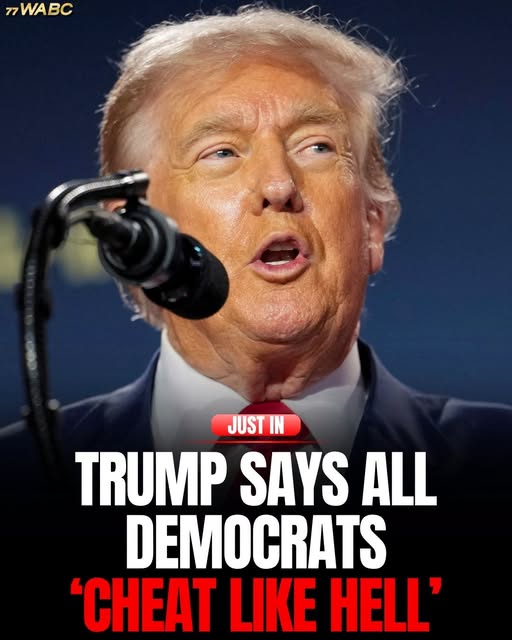
The president's comments, highlighted in a circulating news graphic, reflect his continuing insistence that Democratic electoral victories are frequently associated with dishonest voting practices.
Trump has repeatedly made similar accusations during campaign appearances, arguing that stronger voter identification requirements and citizenship verification measures are necessary to protect American elections.
However, his sweeping allegations should be distinguished from established evidence. The claim that Democrats systematically manipulate elections has not been substantiated by credible nationwide findings.
Verification note: Trump's use of the phrase “cheat like hell” is documented. The image should not, however, be interpreted as proof that every Democratic voter or candidate engages in election fraud.
Trump Repeats Election Fraud Allegations
During the Republican midterm convention in Dallas on September 10, Trump urged supporters to participate in the upcoming elections while accusing Democrats of exploiting weaknesses in voting procedures.
He criticized Democratic opposition to proposed federal election requirements, suggesting that resistance to stricter voter identification and proof-of-citizenship rules reflected an intention to manipulate election outcomes.
The president subsequently led convention attendees through an unusual voting pledge, incorporating accusations about Democratic cheating while encouraging supporters to mobilize friends and family.
His remarks drew laughter from the audience, but also attracted criticism because they appeared to encourage supporters to disregard registration requirements while discussing alleged misconduct.
The complete transcript establishes that the statement occurred during a political appeal for Republican turnout, rather than as part of an announcement identifying proven electoral crimes.
Midterm Elections Become a Central Political Battleground
The controversy comes as Republicans fight to maintain congressional control, with Democrats hoping to regain enough seats to challenge the administration's legislative priorities and oversight decisions.
Trump has warned supporters that Democratic victories could threaten his policy agenda, encouraging Republican voters to approach November's elections as a referendum on his presidency.
His election-integrity message has become an important campaign theme, particularly among supporters who remain concerned about voting procedures, mail ballots, and federal oversight.
What the Evidence Says About Election Fraud
Election fraud can occur, and authorities investigate documented violations. However, isolated cases do not establish that an entire political party systematically manipulates election results.
Previous investigations into Trump's allegations surrounding the 2020 presidential election failed to establish widespread fraud sufficient to overturn the outcome of that contest.
Election officials have repeatedly emphasized that allegations require specific evidence, including authenticated records, witness testimony, or documented violations, rather than generalized accusations against political opponents.
The distinction is particularly important when political leaders make sweeping statements that could undermine public confidence in legitimate electoral outcomes without presenting independently verifiable supporting evidence.
Growing Concerns About Election Administration

An October 14 Reuters investigation examined potential ways federal authorities could influence the upcoming midterms, drawing on interviews with more than 50 election officials, legal specialists, and voting experts.
The investigation highlighted concerns about federal intervention, election certification disputes, restrictions on voting procedures, and the increasingly contentious relationship between Washington and state election administrators.
Trump's latest accusations add to that atmosphere of uncertainty, placing additional attention on whether political leaders will accept certified results if their candidates lose competitive races.
What Happens Next?
With Election Day approaching, Republicans and Democrats are intensifying efforts to mobilize supporters while debating election security, economic conditions, immigration, and the administration's broader political record.
Trump's statements are likely to remain central to Republican campaign messaging, but accusations of widespread cheating require evidence before they can responsibly be presented as established facts.
The November 3 elections will determine congressional representation through legally administered voting procedures, regardless of the increasingly confrontational rhetoric surrounding the final days of campaigning.
Comments (0)
Loading comments...
May You Like

EAST COAST STORM CRISIS—5 MILLION AT RISK OF BLACKOUTS, WATER, AND HEATING FAILURES!

WWE BRONSON REED—STAR COLLAPSES AT COMPANY EVENT, FATAL DRUG REACTION SUSPECTEDs!!









Popular Posts




