
China Pressures Trump Over Taiwan Arms Ahead of Xi Summit
Washington, D.C. — September 13, 2026
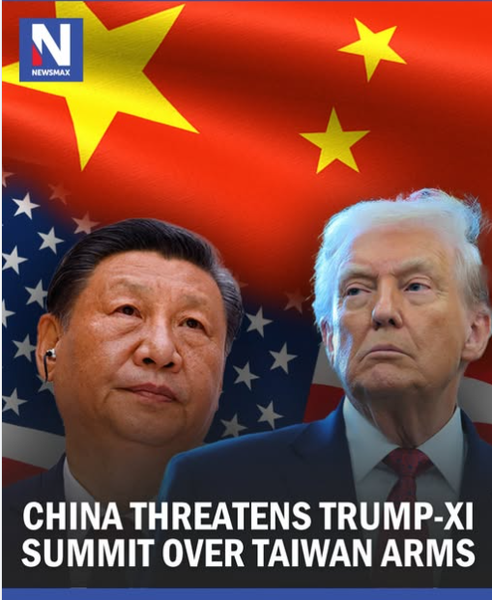
China’s opposition to U.S. arms sales to Taiwan is emerging as a sensitive issue ahead of President Donald Trump’s planned September 24 summit with Chinese President Xi Jinping in Washington.
Beijing has repeatedly urged Washington to stop or limit weapons transfers to Taiwan, arguing that American arms sales interfere with China’s sovereignty claims and increase tensions across the Taiwan Strait.
The issue has become particularly important because the Trump administration is weighing a proposed $14 billion weapons package for Taiwan that has remained on hold amid broader U.S.-China negotiations.
Trump previously acknowledged discussing Taiwan arms sales directly with Xi during their May meeting in Beijing, an unusual departure from Washington’s longstanding approach to handling defense assistance to Taipei.


During the May summit, Trump said Xi had raised Taiwan extensively and indicated that the pending weapons package could become part of broader negotiations between Washington and Beijing.
The proposed package has attracted attention in Congress, where lawmakers and security officials have argued that strengthening Taiwan’s defenses is important for deterring potential Chinese military action against the island.
China, meanwhile, considers Taiwan part of its territory and has repeatedly warned that continued American military support could damage already fragile relations between the world’s two largest economies.
Chinese officials have particularly objected to Washington providing advanced missiles, air-defense systems and other military capabilities that could strengthen Taiwan’s ability to resist a potential blockade or attack.


The dispute comes as Washington and Beijing attempt to maintain a fragile period of diplomatic stability following Trump’s May visit to China and preparations for Xi’s upcoming American trip.
The September 24 summit is expected to address trade, tariffs, investment, technology and broader strategic issues, with Taiwan likely remaining one of the most difficult subjects between the two governments.
Analysts say Beijing could view a new American weapons announcement before the summit as a serious diplomatic setback, potentially complicating efforts to stabilize relations between Trump and Xi.
The South China Morning Post previously reported that Chinese officials had pressed Washington to reduce the size and pace of Taiwan arms approvals, reflecting Beijing’s desire to prevent further expansion of U.S. military support.
Washington has also faced pressure from Taiwan, which argues that American weapons are essential to maintaining deterrence and preserving stability in the Taiwan Strait.
Taiwanese officials have emphasized that defense cooperation with the United States is based on American law and serves as a mechanism for discouraging military conflict rather than provoking it.
The uncertainty has created concerns in Taipei about whether geopolitical negotiations between Washington and Beijing could delay equipment that Taiwan considers necessary for its defense preparations.


The stakes extend beyond Taiwan itself. A senior U.S. diplomat in Taipei recently warned that any conflict across the Taiwan Strait could have devastating consequences for the global economy and emphasized the importance of preventing miscalculations.
That warning comes as Taiwan increases its own defense spending and continues military preparations designed to respond to potential Chinese pressure, including exercises involving blockade and territorial-defense scenarios.
For Trump, the Taiwan arms decision presents a difficult balancing act between maintaining U.S. security commitments, protecting Taiwan’s defensive capabilities and preserving improved relations with Beijing.
For Xi, the issue remains closely tied to China’s sovereignty claims and represents one of the most sensitive areas in the broader U.S.-China relationship.


As the September summit approaches, the fate of the proposed Taiwan weapons package could become an important signal of how far Trump and Xi are willing to compromise while attempting to prevent tensions from escalating.
Any decision to approve, delay or modify the arms package could have consequences not only for Taiwan’s defense planning, but also for the broader direction of U.S.-China relations in the months ahead.
Comments (0)
Loading comments...
May You Like
OBAMA STEPS BACK INTO THE POLITICAL SPOTLIGHT
Jack Smith Defends His Integrity as Trump Investigations Face Renewed Political Firestorm

Shocking news from Ohio: an unexpected development ahead of Trump's rally














