
Claims that the SAVE America Act could cause 70 million Americans to lose
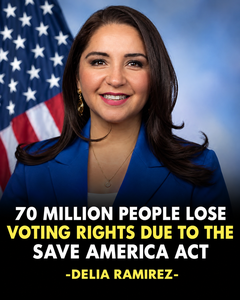
WASHINGTON — A claim that the SAVE America Act could cost 70 million Americans their voting rights has circulated widely, but the figure requires important context about citizenship documents and married women.
The 70 Million Figure
The claim comes from Rep. Delia Ramirez, an Illinois Democrat, who argued that roughly 70 million women could face difficulties proving citizenship because their current legal names differ from birth certificates.
Ramirez made the argument during congressional testimony about an earlier version of the SAVE Act, warning that documentation requirements could create barriers for citizens seeking to register or update records.
The legislation has since evolved into the SAVE America Act, a broader 2026 proposal that combines documentary proof of citizenship with federal photo-identification requirements for voting.
Under the bill, people registering to vote in federal elections would generally have to present documentary evidence of U.S. citizenship, such as a passport, birth certificate, or qualifying records.
What Documents Would Matter?
Most standard driver’s licenses do not establish citizenship, according to an Associated Press fact check, although enhanced driver’s licenses issued in several states can provide both identity and citizenship information.
That distinction matters because REAL ID and ordinary driver’s licenses are primarily designed to establish identity, not citizenship, meaning some voters could need additional documents when registering or updating registrations.
Ramirez’s 70 million figure focuses particularly on women who changed their surnames after marriage, potentially creating mismatches between birth certificates and current identification documents.
In congressional testimony, Ramirez cited estimates that about 70 million American women had changed their names through marriage, arguing that mismatched documents could complicate citizenship verification.
Does the Bill Automatically Remove 70 Million Voters?
The bill does not, however, automatically remove 70 million people from voter rolls or require every currently registered voter to register again, according to congressional text and independent fact checking.
PolitiFact reported that voters who move, change names, or update registration information could encounter new documentation requirements, depending partly on how election officials interpret and implement the legislation.
The legislation also includes photo-identification rules for voting, with accepted documents including certain state-issued identification, U.S. passports, military identification, and qualifying tribal government identification.
Why Is the Bill Controversial?
Supporters of the measure argue that stronger verification would help prevent noncitizens from participating in federal elections, although noncitizen voting is already illegal and documented instances are relatively rare.
FactCheck.org reviewed state investigations and found that verified cases of noncitizens voting in federal elections have generally been very small compared with the number of ballots cast.
Opponents, meanwhile, argue that documentary requirements could burden eligible citizens who lack passports, have outdated records, or encounter difficulties obtaining documents needed to demonstrate citizenship.
The dispute has intensified ahead of the 2026 midterm elections, with lawmakers debating whether the proposed requirements would improve election administration or create additional obstacles for eligible voters.
Where Does the Legislation Stand?
The House advanced the SAVE America Act in July by incorporating its provisions into broader legislation, while Senate efforts to move related voter-identification measures have repeatedly encountered procedural obstacles.
On September 21, Reuters reported that social-media posts falsely claimed the Senate had approved the SAVE America Act by a 51-48 vote; the circulated video actually showed an earlier procedural vote.
As of September 23, the Senate had not enacted the measure, while lawmakers continued debating narrower voter-identification provisions and the broader proposal remained a subject of intense partisan disagreement.
What Happens Next?
What happens next will depend on congressional negotiations and procedural votes, while the central question remains unresolved: how should federal elections verify eligibility without creating unnecessary barriers for eligible citizens?
Key takeaway: The “70 million” figure refers specifically to women Ramirez said could face documentation problems because of surname changes, not evidence that 70 million Americans would automatically lose their voting rights if the bill became law.
Comments (0)
Loading comments...
May You Like


Russian Drone Strikes Kyiv Bridge as German Chancellor Arrives in Ukraine

Obama Steps Back Into the Political Spotlight as Democrats Target Trump’s












