
CNN vs. the White House: A Courtroom Dispute Over Presidential Press Access Puts Media Freedom Back in Focus
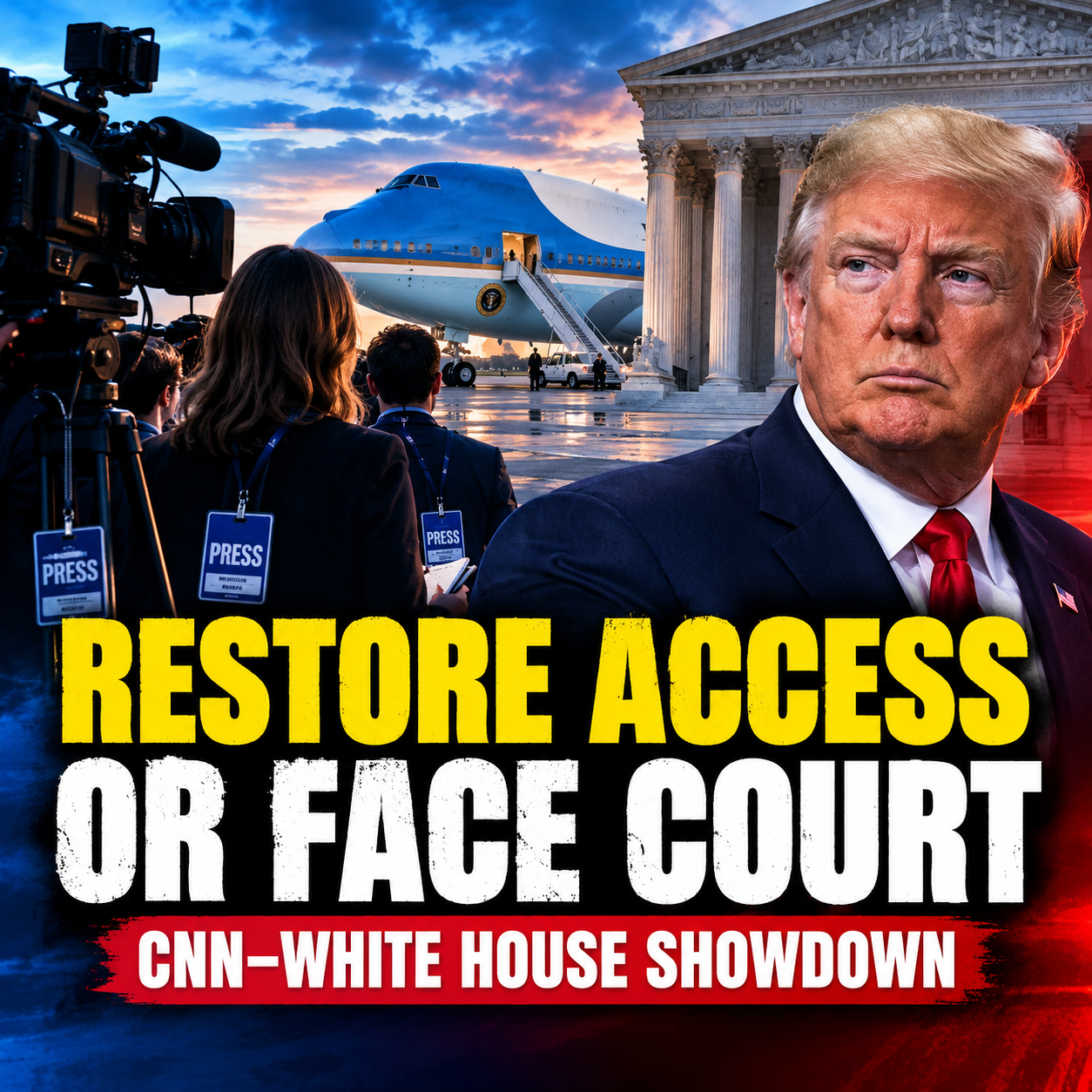
The dispute over CNN’s access to presidential events raises important questions about how the White House manages its press pool, whether news organizations are being treated fairly, and where the constitutional boundaries lie when government officials control access to limited spaces used to cover the president.
Updated October 21, 2026 · Washington, D.C.
CNN has warned the Trump administration that it may return to federal court if the network’s journalists continue to be excluded from presidential travel aboard Air Force One, escalating a dispute that has already produced a significant preliminary ruling on press access. In a letter sent to the Justice Department, CNN’s attorney, Theodore J. Boutrous Jr., demanded written confirmation that the restrictions would end by 5 p.m. Eastern time on Thursday, October 22. The deadline was reported by The Associated Press and The Washington Post on October 20.
The central issue is no longer simply whether a president can criticize journalists or challenge their reporting. It is whether the government can exclude particular news organizations from important reporting opportunities after a court has intervened against a broader effort to revoke their White House access. CNN argues that the continuing restrictions prevent it from carrying out its assigned responsibilities in the rotating television press pool, which provides coverage of presidential movements and events for a wider audience.
The administration’s position, as described in earlier court proceedings, is that access to the White House and presidential facilities is subject to government rules and that the president has authority to manage those spaces. The legal question is how far that authority extends when access decisions may be connected to the content or viewpoint of a news organization’s reporting.
How the dispute escalated from a press-access ban to a new legal threat
The current confrontation intensified in September, when President Donald Trump announced that CNN, MS NOW and Politico would be barred from the White House grounds. The affected organizations challenged the decision, arguing that they had been targeted because of their journalism and that the restrictions violated constitutional protections.
According to reporting by Reuters and The Associated Press, journalists from the three outlets were denied entry after their access credentials were revoked. The administration publicly criticized their reporting, including describing it as “fake news,” while the news organizations maintained that editorial disagreement did not justify exclusion from government facilities.
The case quickly became a test of the distinction between a government’s authority to administer access and its obligation to avoid impermissible discrimination against journalists based on their reporting.
On September 24, U.S. District Judge Timothy Kelly ordered the administration to restore access to the affected journalists through an emergency order. The court found that the news organizations had met the applicable threshold for temporary relief, including showing that they were likely to succeed on aspects of their claims concerning due process and press freedom.
That initial order did not settle every issue in the litigation. It provided temporary relief while the case continued, leaving the court to examine the legal arguments in greater detail.
The administration subsequently continued to contest the outlets’ claims. In a written decision dated October 13, Kelly issued a preliminary injunction extending protections for the journalists while the lawsuit proceeds, unless a higher court intervenes. The decision was reported by Reuters on October 14.
Yet the dispute did not end with the restoration of access to the White House grounds. CNN says its journalists have continued to be excluded from the television press pool aboard Air Force One, creating a new point of conflict over the practical scope of the court’s intervention.
Air Force One becomes the focal point of the confrontation


The latest disagreement centers on the role of the presidential press pool, an arrangement under which a limited number of journalists and camera crews cover events that cannot accommodate every news organization. Their reporting, photographs and video are then shared with other outlets, allowing a much broader public to follow presidential activities.
CNN says it has traditionally participated in this system for decades. In his letter to the Justice Department, Boutrous said the network had been excluded from at least four presidential trips on which it was scheduled to provide television pool coverage. The reported exclusions included travel connected to the United Nations General Assembly, a college football game in Tennessee, a trip to Texas and Oklahoma, and a later journey to Georgia and Florida.
The significance of those exclusions extends beyond whether an individual reporter can board a particular aircraft. When a news organization is assigned to the pool, its crew may be responsible for supplying footage to other broadcasters as well. Excluding that crew can therefore affect the wider system of shared coverage, not just the network involved in the dispute.
CNN argues that denying it access to presidential travel prevents the organization from performing its assigned role. The network also contends that the continued restrictions undermine the practical effect of the court's decision to restore its White House access.
However, the scope of the existing injunction is central to the disagreement. The court's orders addressed the challenged restrictions on White House access, while CNN's latest demand concerns continued exclusion from Air Force One and associated pool assignments. Whether the existing order covers every aspect of those arrangements, or whether additional judicial action is required, is a legal question that cannot be settled merely by either side's public statements.
The First Amendment question: Can the government choose which journalists get access?
The First Amendment to the U.S. Constitution protects freedom of speech and freedom of the press. Those protections are particularly significant when journalists report on government decisions, executive power and matters of public concern.
But the constitutional issue is not as simple as declaring that every journalist has an unconditional right to enter every government facility. The White House contains secure and restricted spaces, and officials have legitimate responsibilities involving security, logistics and the management of presidential events.
The difficult question is how those responsibilities are exercised.
The Trump administration has argued that journalists do not possess an automatic constitutional right to enter restricted presidential facilities. Its position reflects a distinction between protecting access to government information and requiring officials to admit every reporter to every location.
CNN's argument focuses on a different concern: whether access restrictions are being applied in a way that penalizes particular news organizations because of their reporting. The network says its continued exclusion from presidential travel is retaliatory and discriminatory. Those are allegations advanced by CNN, rather than a final judicial determination about the latest Air Force One dispute.
Judge Kelly's preliminary injunction is important because it indicates that the plaintiffs' underlying legal claims met the threshold for interim protection. It does not mean that every disputed action by the administration has already been ruled unconstitutional. Nor does it automatically resolve any question about access rules that were not expressly addressed by the court.
That distinction matters as the case proceeds. Preliminary injunctions are designed to preserve legal protections while litigation continues; they are not necessarily the final word on every factual or constitutional issue raised by the parties.
Why the press-pool system matters to the public
The dispute also highlights a less visible part of presidential coverage: the practical arrangements that allow news organizations to report from places where space, security and transportation are limited.
A president's schedule may include travel, meetings with foreign leaders, brief exchanges with reporters and appearances away from the White House. In many situations, it is impractical to accommodate every journalist who wants to attend. A rotating pool helps solve that problem by assigning coverage responsibilities and distributing the resulting material.
When a network is excluded from its scheduled assignment, the consequences may extend to other newsrooms that rely on the pool's shared video. The public may still receive extensive reporting from other journalists, but the question of whether all participating outlets are being treated according to clear and consistent rules remains significant.
The dispute is therefore about more than CNN's access to one aircraft. It concerns the rules governing a shared reporting arrangement and the degree to which the executive branch can alter participation in that arrangement.
The issue also raises questions about transparency. CNN's lawyer said the administration had not provided the network with a direct explanation for the repeated denials of access to Air Force One. The White House, meanwhile, has defended its authority over restricted presidential facilities. A clearer account of the rules being applied, the reasons for individual decisions and their relationship to the existing court order could help establish the precise nature of the disagreement.
The wider context: A recurring conflict between Trump and news organizations
The latest confrontation is part of a longer history of disputes between Trump and news organizations whose reporting he has criticized.
During Trump's first administration, his White House sought to suspend or revoke the credentials of certain journalists, including CNN correspondent Jim Acosta. That dispute resulted in a federal court order restoring Acosta's access. More recently, the administration's restrictions involving The Associated Press have raised related questions about the government's authority to determine which journalists may participate in presidential coverage.
These cases do not necessarily produce identical legal outcomes. The locations involved, the specific access rules, the reasons given for restrictions and the procedural posture of each lawsuit can differ. Nevertheless, they illustrate a recurring challenge: how to balance legitimate security and administrative requirements with constitutional limits on government treatment of the press.
The current case also involves three news organizations—CNN, MS NOW and Politico—that challenged the September ban on their White House access. Their joint legal action has already resulted in preliminary relief, but the continuing disagreement over presidential travel shows why restoring building access may not resolve every practical barrier to reporting.
For journalists, the case raises concerns about whether access decisions can be used to reward favorable coverage or penalize unfavorable reporting. For the administration, the dispute involves its authority to manage facilities that serve both public functions and sensitive security needs. The court must evaluate those competing considerations through the applicable law and the specific evidence before it.
What happens after Thursday's deadline?
CNN's latest letter establishes a clear next step: the network wants written confirmation by 5 p.m. Eastern time on Thursday, October 22, that the disputed restrictions will end. If the administration does not provide the requested confirmation and the exclusions continue, CNN says it is prepared to return to federal court.
Several developments could follow.
First, the administration could agree to restore CNN's participation in the relevant press-pool assignments, potentially reducing the immediate dispute without another emergency hearing.
Second, officials could maintain that their access decisions are lawful. If that happens and CNN continues to be excluded, the network could seek further judicial intervention. The court would then have to consider the scope of the existing orders, the evidence surrounding the travel exclusions and the legal basis for any additional relief.
Third, the parties could continue litigating the broader case while disagreeing over how the preliminary injunction should operate in practice. Such a path could leave the underlying constitutional questions unresolved for longer.
As of the latest reports available on October 21, the Justice Department had not publicly provided a substantive response to CNN's demand letter. The administration's position on restricted presidential facilities has been reported, but a final resolution of the new Air Force One dispute has not been established.
The Thursday deadline is therefore a point to watch, not a guarantee that a new lawsuit will be filed or that the court will immediately issue another order.
The stakes extend beyond one network
The broader significance of this confrontation lies in the relationship between executive power, independent reporting and public access to information about government activity.
A president must be able to protect secure facilities and organize official events. Journalists, in turn, play a central role in scrutinizing executive decisions, questioning public officials and communicating information to citizens. The constitutional challenge arises when the administration's control over access intersects with allegations that a news organization is being singled out because of its coverage.
The court's earlier intervention has already established that the September ban cannot simply be treated as an uncontested administrative decision. But the latest dispute demonstrates that the practical boundaries of press access remain contested, particularly where presidential travel and limited-capacity reporting arrangements are concerned.
The coming days may reveal whether the White House and CNN can resolve the issue through administrative action or whether the federal court will be asked to address it again. Any further ruling could clarify how existing protections apply to presidential travel, how access decisions must be justified and what remedies may be available when a news organization alleges that restrictions continue despite judicial intervention.
For now, the essential facts are clear: CNN has threatened further legal action, the administration's broader press-access ban has already faced significant judicial resistance, and the specific dispute over Air Force One remains unresolved in the latest reporting.
The outcome will matter not only to CNN and the White House but also to the broader debate over how a democratic government manages access for journalists while respecting constitutional protections and maintaining legitimate security safeguards.
Comments (0)
Loading comments...
May You Like

EAST COAST DISASTER—179 THOUSANDS OF HOMES AT RISK, CAUSING $50 BILLION IN DAMAGE!

WEYMOUTH HORROR—80-MPH WIND GUSTS, FIRE TRUCK FLIPS, 3 FIREFIGHTERS CRITICAL!

EAST COAST CATASTROPHE — $20 BILLION AT STAKE, 5 MILLION AT RISK OF LOSING POWER, WATER AND HEAT!









Popular Posts





