
CONGRESSIONAL PROBE — NO ESCAPE!
Randy Fine Calls Ilhan Omar Case a Potential Political Scandal as Citizenship Investigation Intensifies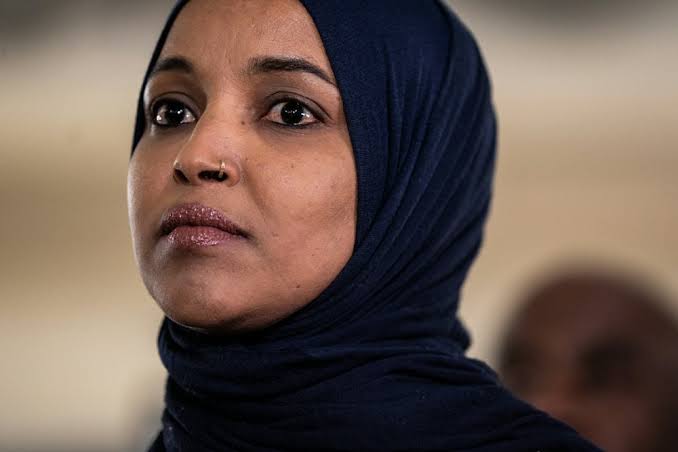
A growing political storm in Washington is raising a difficult question about immigration, citizenship, and accountability in American public life. Republican Representative Randy Fine of Florida has intensified his criticism of Democratic Representative Ilhan Omar of Minnesota amid a federal investigation into her immigration history. The controversy has attracted national attention, with lawmakers and political commentators debating what the allegations could mean for Omar's future in Congress.
Fine has suggested that, if the allegations prove true, the case could represent one of the most serious political scandals in American history. His remarks reflect the increasingly confrontational atmosphere surrounding Omar, a prominent Democratic lawmaker who has frequently clashed with Republican leaders over immigration policy, national security, and the Trump administration's agenda.
At the center of the controversy are questions about historical immigration documents and the circumstances under which Omar obtained American citizenship. Federal investigators are reportedly examining whether information concerning her age or family immigration records was misrepresented during the process. However, the existence of an investigation does not establish that a crime occurred, and the allegations have not been proven in court.
Omar was born in Somalia and arrived in the United States as a refugee with her family in the 1990s. She became a naturalized American citizen in 2000 and later entered politics, eventually winning election to the U.S. House of Representatives in 2018. Her personal history has long been part of her public identity, making the current investigation particularly consequential for both her political career and the wider immigration debate.
The investigation escalated in October 2026, when federal agents searched Omar's Washington residence as part of an inquiry into possible immigration-related misconduct. Reports indicated that investigators were reviewing historical paperwork and examining whether information submitted decades ago affected her eligibility for citizenship. Authorities have disclosed limited details, leaving significant questions unanswered.
Omar has rejected allegations that she obtained citizenship improperly. Her representatives have characterized the scrutiny as politically motivated, arguing that the investigation risks turning federal law enforcement into a weapon against a prominent political opponent. The congresswoman has continued to contest the accusations, while her supporters have urged the public to distinguish between investigative activity and established wrongdoing.
For Fine and other Republicans critical of Omar, however, the investigation raises questions they believe deserve serious examination. They argue that citizenship requirements should be enforced consistently, regardless of whether the individual involved is an ordinary immigrant, a wealthy public figure, or an elected member of Congress.
The controversy also touches on a fundamental principle of American government: elected officials are expected to comply with the laws governing their eligibility to hold office. Members of the House must meet constitutional requirements, including being citizens of the United States. Yet determining whether someone legally acquired citizenship is a separate question that requires evidence and appropriate legal procedures.
That distinction is central to the current debate. Allegations about immigration paperwork do not automatically invalidate citizenship, and an investigation alone cannot establish that a sitting representative is legally disqualified from serving. Any attempt to revoke naturalized citizenship would have to proceed through the applicable legal system, with the government required to establish grounds for such action.
The potential consequences nevertheless extend well beyond a single congressional seat. If investigators were to establish that citizenship had been obtained through deliberate and material misrepresentation, the case could raise serious legal questions. Depending on the findings and subsequent court proceedings, the government could seek denaturalization, although such cases face substantial legal requirements.
For Omar, the political stakes are equally significant. She represents a Minnesota district and has become one of the most recognizable progressive voices in the House. Her positions on immigration enforcement, American foreign policy, and the treatment of minority communities have made her a frequent target of Republican criticism. The investigation now threatens to intensify those existing political divisions.
Republicans may see the case as an opportunity to argue that immigration laws must apply equally to everyone, including politicians who advocate for more expansive immigration protections. Fine's criticism fits into a broader Republican message emphasizing border enforcement, citizenship verification, and accountability for alleged violations of federal law.
Democrats, meanwhile, are likely to focus on the importance of due process and the danger of treating unproven allegations as established facts. They may also question the timing and scope of the investigation, particularly given the broader political conflict between the Trump administration and its critics ahead of the November midterm elections.
The controversy has also renewed discussion about whether citizenship investigations should be applied consistently across political lines. If the government examines the immigration histories of public officials, critics may ask whether comparable standards should apply to other naturalized citizens, including prominent business leaders and individuals connected to the administration.
That question became more prominent after Fine expressed support for reviewing the naturalization records of a broader group of people who became American citizens in recent decades. Such a proposal could have far-reaching implications, potentially affecting individuals across different political affiliations and professional backgrounds. Any review, however, would still need to respect applicable laws and individual legal protections.
The broader legal framework is considerably more complicated than political rhetoric sometimes suggests. Naturalized citizenship cannot simply be revoked by a presidential announcement or a congressional accusation. The government generally must establish a legally recognized basis for denaturalization through formal proceedings, and the person facing such action has the opportunity to challenge the government's case.
There is also a significant difference between investigating historical records and proving intentional fraud. Old documents may contain inconsistencies for numerous reasons, and investigators must determine whether any discrepancy was deliberate, material, and legally consequential. The relevant evidence, rather than political pressure or public speculation, will ultimately determine whether the allegations can be sustained.
For voters, the dispute raises competing concerns about the integrity of immigration procedures and the protection of constitutional rights. Some Americans may believe that any credible allegation involving citizenship deserves a thorough investigation. Others may worry that high-profile investigations involving political opponents risk undermining public confidence in the impartial administration of justice.
The case could become an important issue in the final days before the November 3 midterm elections. Republicans may use it to reinforce arguments about immigration enforcement and political accountability, while Democrats may portray the investigation as an example of partisan escalation. Its ultimate electoral impact will depend partly on whether additional evidence becomes public and how voters interpret the government's actions.
For now, the central questions remain unresolved. Investigators must determine what the historical records show, whether any relevant information was intentionally misrepresented, and whether the evidence supports legal action. Omar continues to deny wrongdoing, and the allegations should not be treated as proven merely because federal authorities are investigating them.
Fine's warning captures the intensity of a controversy that has moved beyond ordinary political disagreement. But whether the matter becomes a major political scandal, a legally substantiated case, or an investigation that fails to establish wrongdoing will depend on facts that have yet to be fully demonstrated. In a constitutional system, even the most serious accusations must ultimately be tested against evidence and law.
As Washington watches the investigation unfold, one question remains at the heart of the debate: If evidence establishes that an elected official obtained citizenship through deliberate fraud, what consequences should follow? And equally important, how can the government pursue accountability without allowing political rivalry to replace due process? The answers could shape not only Omar's future, but also the national debate over citizenship, fairness, and the rule of law.
Comments (0)
Loading comments...
May You Like

WWE BRONSON REED DEAD AT 38, STIMULANTS DETECTED, $10M INSURANCE PAYOUT FROZEN!

WWE BRONSON REED—STAR COLLAPSES AT COMPANY EVENT, FATAL DRUG REACTION SUSPECTED!

STAR DIED AT 38, $10M LIFE INSURANCE INCREASED JUST 30 DAYS BEFORE WWE BRONSON REED'S DEATH!











Popular Posts

