Danica Patrick Accuses Democrats
Danica Patrick Accuses Democrats of Trying to Mislead Voters — Her Election Warning Raises a Bigger Question
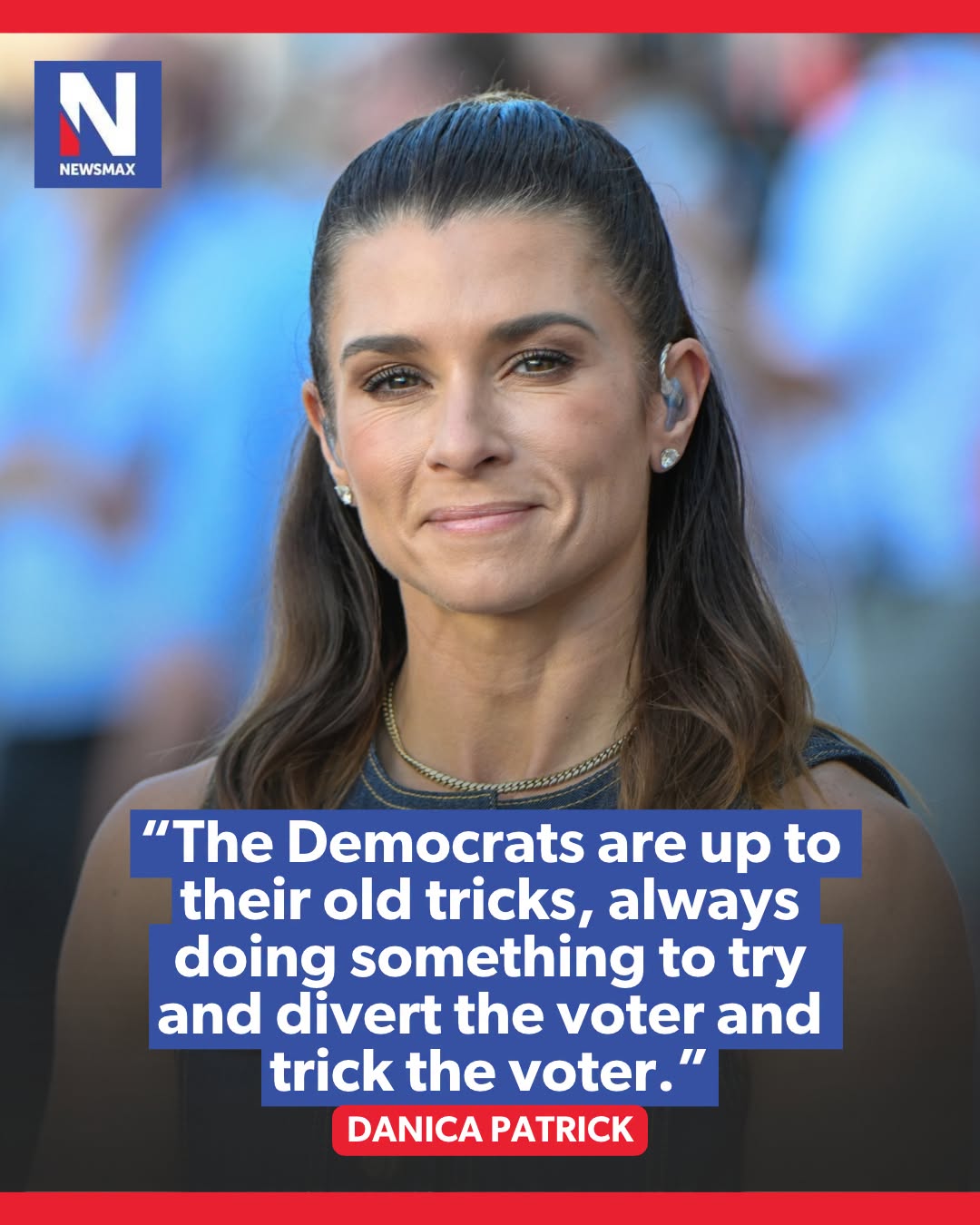
Former professional racing driver Danica Patrick has drawn attention with a sharply worded criticism of the Democratic Party as Americans prepare for the November 3 midterm elections. A Newsmax graphic attributes to Patrick the statement, “The Democrats are up to their old tricks, always doing something to try and divert the voter and trick the voter.” Her words reflect the growing intensity of political debate during the final days before voters determine the next balance of power in Congress.
The statement presents a serious accusation about political communication and voter manipulation. However, the graphic does not identify the interview, speech or full conversation in which Patrick allegedly made the remark. Without that context, it is not possible to determine exactly which Democratic actions she was referring to or whether she offered evidence supporting the accusation.
Patrick's criticism is significant partly because of her unusual path into national politics. Unlike elected officials who have spent years developing careers in government, she became famous through professional motorsports. Her transition from racing celebrity to outspoken political commentator has attracted interest from audiences who previously knew her primarily for her achievements on the track.
As one of the most recognizable women in American motorsports history, Patrick competed in both IndyCar and NASCAR. She became the first woman to win an IndyCar Series race with her victory at the 2008 Indy Japan 300. She also earned the pole position for the 2013 Daytona 500, becoming the first woman to achieve that distinction in the event's history.
Patrick's achievements gave her a national profile extending beyond sports. Her racing career made her a familiar figure in television coverage, advertising and popular culture, while her later media appearances allowed her to discuss subjects ranging from personal development to politics. As she became more politically outspoken, her comments began attracting attention from audiences interested in the relationship between celebrity influence and public affairs.
During the 2024 presidential campaign, Patrick publicly supported Donald Trump and appeared at Republican political events. Her endorsement represented a notable departure from the political neutrality often maintained by high-profile sports personalities. She subsequently became associated with conservative political discussions and criticism of Democratic leadership.
Her latest reported comments fit within that broader political orientation. By accusing Democrats of attempting to distract and mislead voters, Patrick is challenging the party's campaign tactics rather than identifying a specific legislative proposal. The statement is designed to raise doubts about the information voters receive during an election campaign.
That distinction is important because an accusation of misleading voters can refer to several different types of behavior. A political advertisement might omit relevant information, exaggerate an opponent's position or emphasize an issue that critics consider a distraction. Such tactics can be controversial without necessarily constituting illegal election interference.
Claims involving actual voter deception require more specific evidence. False information about polling locations, voting dates, eligibility requirements or ballot procedures can have serious consequences because it may prevent citizens from exercising their rights. By contrast, disagreements over campaign messaging or political priorities are generally part of ordinary electoral competition.
The United States has a long history of aggressive political advertising and partisan criticism. Candidates frequently accuse opponents of avoiding difficult questions, misrepresenting policy proposals or attempting to change the subject when public opinion turns against them. These arguments can influence campaign narratives, but their accuracy must be evaluated individually.

The timing of Patrick's reported statement adds to its political significance. With the November 3 midterm elections approaching, both Republicans and Democrats are working to persuade undecided voters and encourage their supporters to participate. Congressional control is at stake, making even relatively small shifts in turnout potentially consequential in closely contested districts.
All 435 voting seats in the House of Representatives are scheduled for election in 2026, along with the Senate seats contested during this cycle. Voters will also select governors, state legislators and local officials in numerous jurisdictions. These elections will influence decisions involving federal spending, taxation, healthcare, immigration and government oversight.
Republicans have emphasized the Trump administration's approach to immigration enforcement, energy development, national security and economic policy. Democratic candidates have highlighted concerns about affordability, healthcare, government accountability and the consequences of administration decisions. Each party is seeking to persuade Americans that its priorities offer a better path forward.
In that environment, public figures such as Patrick can help amplify political messages to audiences that may not closely follow traditional campaign coverage. Celebrities often have substantial social media followings and can attract attention to political discussions through interviews, podcasts and public appearances.
However, fame does not automatically establish expertise in election administration or the accuracy of a political allegation. Patrick is entitled to express her political opinions, just as other public figures are, but her claims should be assessed according to the same evidentiary standards applied to statements from candidates and elected officials.
The phrase “trick the voter” is particularly consequential because it suggests that voters are being deliberately manipulated. If a political organization knowingly distributes false voting instructions or engages in unlawful interference, those actions may warrant investigation. But a broad accusation against an entire political party does not establish that such conduct has occurred.

Political misinformation has become an important concern in modern elections. Social media allows misleading claims, edited video clips and inaccurate graphics to spread rapidly. These materials can influence public understanding even when the original statements lack context or reliable supporting evidence.
The Newsmax graphic itself illustrates why context matters. It provides a quotation and identifies Patrick as the speaker, but it does not explain the particular incident she was discussing. Readers cannot determine from the image alone whether she was referring to an advertisement, a campaign controversy, a policy announcement or another political development.
A complete evaluation would require identifying the original remarks, reviewing the surrounding conversation and examining any examples Patrick provided. Without those details, the quotation should be treated as her reported political criticism rather than proof of coordinated deception.
Voters can also distinguish between legitimate persuasion and factual misrepresentation. Political campaigns are permitted to advocate for candidates, emphasize favorable information and criticize opponents. Citizens may find those messages persuasive or unconvincing depending on their values and understanding of the issues.
The more serious problem arises when political messaging makes objectively false claims about matters that can be independently verified. Accurate election dates, voting requirements and official procedures are especially important because mistakes involving these details can directly affect participation.
In the closing days of a campaign, citizens may encounter a large volume of political content from television networks, social media platforms, candidates and commentators. Comparing claims with original recordings, official election information and reliable reporting can help distinguish factual assertions from opinion and rhetorical exaggeration.

Patrick's involvement in political commentary also reflects a broader trend in which athletes, entertainers and other public figures increasingly participate in partisan debates. Their visibility can bring new audiences into political discussions, but it can also blur the distinction between personal endorsement and independent analysis.
For supporters of Trump, Patrick's criticism may reinforce existing concerns about Democratic campaign messaging. For Democratic voters, the accusation may appear overly broad or unsupported. Undecided voters may be more interested in the specific evidence behind the statement than in the political affiliation of the person delivering it.
The wider issue extends beyond Patrick and the Democratic Party. Republican campaigns have also faced criticism over disputed claims and misleading political messages. A consistent approach to election integrity requires examining the conduct of all parties rather than assuming that only one side can spread inaccurate information.
American elections depend on voters having access to reliable information and the ability to make independent choices. Political disagreement is inevitable, but allegations of deliberate deception carry greater weight when supported by identifiable facts, documents or official findings.
As November 3 approaches, Patrick's reported remarks illustrate how strongly worded accusations can become part of the national political conversation. Whether her criticism reflects a specific documented incident remains unclear from the image alone, but the questions it raises about campaign tactics and voter trust are relevant to the broader election debate.
The immediate political significance of Patrick's statement lies in its potential to reinforce skepticism toward campaign messaging. Yet the image does not establish that Democratic officials engaged in voter deception, nor does it identify a particular incident that can be independently assessed.
The distinction between political criticism and verified misconduct remains essential. Americans can evaluate candidates' proposals, compare public records and consult official voting information without accepting unsupported allegations from either political party.
Ultimately, Patrick's comments highlight a central challenge facing voters in the final days of the 2026 midterms: separating emotionally charged political arguments from evidence. The most consequential question is not which public figure makes the strongest accusation, but whether the facts behind that accusation withstand scrutiny.
Comments (0)
Loading comments...
May You Like

BIDEN'S BORDER RECORD SPARKS A DEMOCRATIC CIVIL WAR AS MIDTERMS APPROACH
Trump’s Bold Iran War Statement

TRUMP'S TEAM IS PREPARING FOR A POLITICAL SCENARIO NOBODY WANTS TO TALK ABOUT


Popular Posts

Treasury Flags $8 Billion
Nov 2, 2026
Trump Backs Bukele’s
Nov 2, 2026