
DEFIANT RESPONSE — WON'T BACK DOWN!
Ilhan Omar Defies Intimidation After Shocking Town Hall Attack: “I Don’t Let Bullies Win”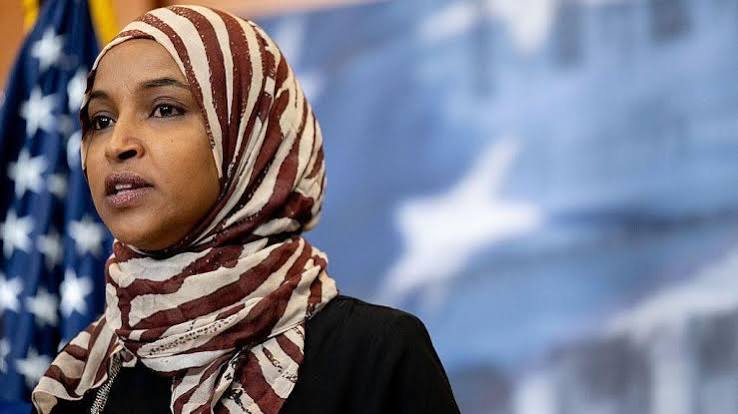
U.S. Representative Ilhan Omar delivered a powerful message of defiance after a disturbing incident at a Minneapolis town hall left attendees shaken and reignited concerns about political violence in America. The Minnesota Democrat insisted that she would continue serving her constituents despite the attack, declaring that intimidation would not stop her from doing her work.
The incident occurred on January 27, 2026, during a public meeting in north Minneapolis. Omar was addressing residents about immigration enforcement and the future of federal agencies when a man approached her podium and sprayed an unidentified liquid toward her using a syringe. Security personnel and Minneapolis police officers quickly intervened and restrained the suspect.
The confrontation unfolded in front of a crowd gathered to hear the congresswoman discuss some of the most divisive issues in American politics. Witnesses described a sudden disruption that transformed an ordinary public meeting into a frightening moment. Video footage subsequently circulated online, bringing national attention to the incident.
Omar appeared startled but did not allow the confrontation to end the event. After security removed the suspect, she continued speaking to the audience, demonstrating a determination to maintain the meeting rather than allow the disruption to dominate the evening.
Following the incident, Omar reassured supporters that she was safe. In a statement shared on social media, she described herself as a survivor and said the attacker would not intimidate her into abandoning her responsibilities. She also thanked constituents who had supported her and emphasized the resilience of the Minneapolis community.
Her response quickly resonated with supporters, many of whom praised her decision to continue addressing the crowd. For them, the moment represented more than a personal confrontation; it illustrated the challenges elected officials face when political disagreements spill over into threats or physical aggression.
Authorities identified the suspect as Anthony Kazmierczak, a 55-year-old man who was arrested after the incident. Police said he had used a syringe to spray an unknown substance toward Omar. He was subsequently charged with third-degree assault, according to reports published after the attack.
The substance itself became an immediate concern. Witnesses reported a strong odor resembling vinegar, and the liquid appeared light brown in photographs of the device. Investigators examined the incident, but the initial reports did not establish the precise composition of the substance. No one in the room was reported to have suffered an obvious physical reaction.
Omar said she felt shaken but had not been injured. She indicated that she would undergo medical screening as a precaution. The fact that she appeared unharmed did not diminish the seriousness of the incident, particularly because the substance had been deliberately directed at an elected representative during a public event.
The attack occurred moments after Omar criticized federal immigration enforcement and called for the abolition of Immigration and Customs Enforcement, commonly known as ICE. She also demanded that Homeland Security Secretary Kristi Noem resign or face impeachment. Those remarks formed part of a broader dispute over the administration's immigration policies and federal operations in Minnesota.
Minneapolis had become a focal point of national attention amid heightened immigration enforcement and public anger following fatal shootings involving federal immigration officers. The deaths of two American citizens, Renee Good and Alex Pretti, had intensified scrutiny of federal operations and prompted calls for investigations and changes in enforcement practices.
Omar's criticism reflected concerns shared by many local residents who questioned the conduct of federal agents and the impact of immigration operations on their communities. Supporters argued that elected officials had a responsibility to challenge policies they considered harmful, while critics of Omar's position maintained that federal immigration laws must be enforced.
The confrontation also occurred against a backdrop of increasingly hostile political rhetoric. Omar has been a frequent target of criticism from President Donald Trump, who has repeatedly attacked her publicly. The relationship between the two has become a symbol of the wider divide over immigration, national identity, and the treatment of political opponents.
Trump responded to questions about the incident by dismissing Omar and suggesting, without presenting evidence, that she might have arranged for the substance to be sprayed on her. His comments generated further controversy, with critics arguing that such speculation risked undermining the seriousness of an attack before the facts had been established.
The president's remarks also highlighted how quickly incidents involving public officials can become entangled in partisan conflict. Rather than focusing exclusively on the investigation, political figures and commentators debated the congresswoman's credibility, the attacker's motives, and the wider political environment surrounding the event.
The episode raised renewed concerns about threats against members of Congress. Federal authorities have reported a substantial increase in concerning communications and behavior directed toward lawmakers, their families, and staff. The figures have strengthened calls for better security arrangements at public meetings while preserving the ability of elected officials to interact directly with constituents.
Town halls are an important part of representative government because they allow citizens to question lawmakers, express frustration, and participate in political debate. However, events that bring elected officials and members of the public into close contact can also create security challenges. Officials must balance accessibility with reasonable precautions against potential violence.
Omar's decision to continue speaking after the suspect was removed became a defining moment of the evening. It sent a clear message to those in attendance that the meeting would not be abandoned simply because someone had attempted to disrupt it. At the same time, the incident served as a reminder that public officials should not have to accept physical intimidation as an ordinary consequence of political service.
The case also illustrates why investigations must proceed carefully. Authorities must establish what happened, examine the evidence, and determine the appropriate legal consequences. The suspect's arrest and reported charge are significant developments, but claims about his precise motivation should be distinguished from facts established through evidence and legal proceedings.
For Omar, the immediate priority was making clear that she intended to continue representing her district. Her response emphasized perseverance rather than retreat, and her supporters viewed that determination as a rejection of the idea that threats should silence political participation.
Ultimately, the Minneapolis incident became part of a larger national conversation about political hostility and the safety of public officials. Americans can strongly disagree about immigration, federal authority, and the future of ICE without resorting to violence. The right to challenge a politician's views does not extend to physically attacking that person.
Omar's message remains straightforward: she will not allow intimidation to determine whether she continues her work. Whether Americans agree with her political positions or oppose them, the incident raises a question that reaches beyond party lines: How can a democracy preserve vigorous political debate while ensuring that elected officials and ordinary citizens can participate without fear of physical attacks?
Comments (0)
Loading comments...
May You Like

EAST COAST DISASTER—179 THOUSANDS OF HOMES AT RISK, CAUSING $50 BILLION IN DAMAGE!

WEYMOUTH HORROR—80-MPH WIND GUSTS, FIRE TRUCK FLIPS, 3 FIREFIGHTERS CRITICAL!

1,000+ MILITARY FAMILY RECORDS BREACHED, 200+ MILITARY SITES AT RISK!








Popular Posts





