Did an Online Attack on a Trump Aide Just Backfire?
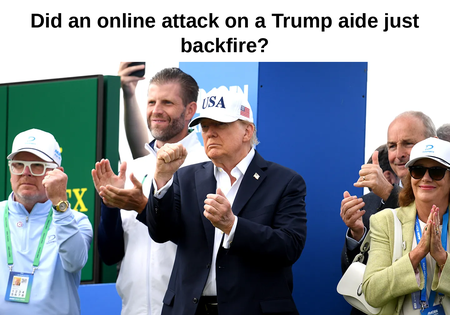
DUBLIN — September 15, 2026 — A brief confrontation between White House staff and photographers during President Donald Trump’s visit to Ireland has erupted into a larger online dispute after independent journalist Aaron Rupar criticized a White House press aide — and the White House responded with an unusually personal attack.
The controversy began after Rupar posted a short video on September 13 showing a female White House press wrangler directing photographers away from Trump and his family near Air Force One in Ireland. Rupar described the staffer as a “blonde Trump flunkie” and accused her of “literally shoving photographers away from Trump.”
The post quickly spread across social media, but the response from the White House transformed what might have been a routine dispute over press access into a much broader political fight.
The White House Fires Back
The White House's Rapid Response 47 account defended the staffer and argued that she was simply performing the normal duties of a presidential press wrangler.
“This is a press wrangler doing her job — and doing it well,” the account said before launching a personal attack against Rupar.
Rupar subsequently accused the administration's account of encouraging harassment against him. He said that similar attacks from the White House had been followed by what he described as a flood of threatening and harassing messages.
That allegation has become a second point of contention in the dispute. While Rupar says the White House's public criticism contributes to the harassment he receives, the administration has not accepted that characterization.
What Does a White House Press Wrangler Actually Do?
The role at the center of the controversy is less dramatic than the online debate suggests.
Press wranglers help organize members of the White House press corps during presidential events. Their responsibilities can include directing journalists to designated locations, maintaining movement around the president and helping keep the schedule on track.
That means physically or verbally directing photographers away from a particular location can be part of the job, particularly during moments involving the president's family or movement around Air Force One. Fox News and other reports noted that press wranglers have performed similar functions under both Republican and Democratic administrations.
The disagreement therefore centers less on whether the staffer was supposed to manage the press and more on whether her conduct in this particular incident crossed a line.
Why the Dispute Became Bigger
The confrontation also landed in the middle of an already heated online fight involving Trump aide Natalie Harp.
Rupar has recently drawn attention for posts tracking Harp's appearances alongside Trump, including during the Ireland trip. The White House had already criticized him over those posts before the dispute involving the press wrangler erupted.
That history helps explain why the latest exchange escalated so quickly.
Instead of remaining a debate about photographers and press access, the argument became a confrontation between a prominent online critic of the administration and the White House's own rapid-response operation.
Critics on Both Sides Questioned the Post
Interestingly, criticism of Rupar's post was not limited to Trump supporters.
Former Obama administration aide Stefanie Feldman criticized the attack, arguing that social-media commentary of this kind could undermine legitimate criticism of the Trump administration. Other commentators similarly argued that describing a staffer primarily by her hair color and political affiliation distracted from more consequential issues surrounding the administration.
That criticism is significant because it suggests the backlash was not simply a predictable partisan response.
The underlying argument is straightforward: if the goal is to scrutinize presidential policy or misconduct, attacking a staff member for performing a routine logistical function can weaken the broader criticism by shifting attention away from substantive issues.
Did the Attack Actually “Backfire”?
That depends on how success is measured.
If the objective was to draw attention to the behavior of the White House press operation, the post clearly succeeded in generating attention. But it also produced a much larger debate about Rupar himself, his treatment of female Trump staffers and the White House's decision to respond directly.
The White House, meanwhile, succeeded in turning the controversy into a defense of its employee while putting Rupar under an even brighter spotlight.
At the same time, Rupar's allegation about harassment introduces a different concern: when government officials or official political accounts publicly target individual journalists, the resulting online reaction can become considerably more intense.
There is no evidence from the episode itself that the White House deliberately intended to generate threats against Rupar. His claim remains his characterization of what followed the posts.
A Small Airport-Side Confrontation, a Much Larger Media Fight
What began as a few seconds of video from an airport tarmac has become another example of the increasingly combative relationship between the Trump White House and its online critics.
The incident also illustrates how quickly political disputes can move beyond the original event. A staffer directing photographers became a debate over press freedom, gender, online harassment, presidential media strategy and the boundaries of political criticism.
Whether the episode ultimately “backfired” on Rupar is subjective. But one thing is clear: the online attack generated far more attention than the original interaction between the press and the White House staffer ever would have received on its own.
Comments (0)
Loading comments...
May You Like
TRUMP HIT WITH 26 ARTICLES OF IMPEACHMENT