disbelief as Trump's Iran war talk with Army boss derails into ballroom gripes: 'Doomed'
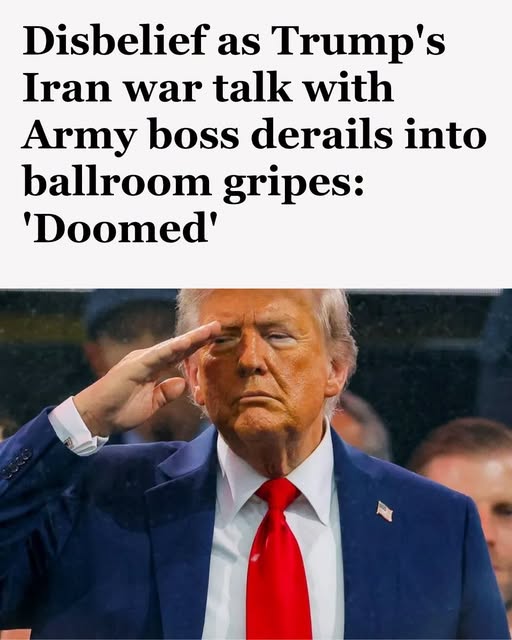
A bombshell report reveals that Army Secretary Dan Driscoll resigned after a meeting with President Trump devolved into a monologue about the president's pet project — a White House ballroom — while the military warns the war with Iran is unsustainable and the administration is "doomed."
WASHINGTON – In what critics are calling a portrait of an administration in disarray, U.S. Army Secretary Dan Driscoll resigned on August 31, 2026, after a meeting with President Donald Trump went spectacularly off the rails . According to multiple reports, Driscoll had come to brief the president on the deteriorating situation in the war with Iran — only to have the conversation hijacked by Trump's fixation on his White House ballroom project .
The meeting, described by sources as a tipping point in months of mounting tension, ended with Driscoll concluding the administration was "doomed" and submitting his resignation . The stunning development leaves the U.S. Army — the military's largest service branch — without a confirmed secretary, chief of staff, or commander of Army forces in Europe . Deputy Under Secretary Dave Fitzgerald is also expected to resign this week .
A War and a Ballroom: The Unraveling
The clash between Trump and Driscoll was years in the making but reached its breaking point as the president escalated military action against Iran. On July 14, Trump convened a high-stakes meeting in the White House Situation Room to discuss a "devastating strike" plan against Iranian strategic targets, a significant expansion of the ongoing campaign around the Strait of Hormuz . Attending were Vice President Vance, Secretary of State Rubio, and Defense Secretary Pete Hegseth .
Trump had publicly vowed that U.S. military strikes would continue "until I say enough" and threatened to target Iran's bridges and power plants unless Tehran returned to negotiations . He did not rule out sending ground troops .
But while the war cabinet plotted escalation, the president's public and private focus appeared increasingly consumed by a different priority: his $400 million ballroom and a 250-foot "Independence Arch" . A Reuters review found Trump mentioned the ballroom at least 40 times in 2026, including nine times in May alone . He has pitched the project to reporters, foreign dignitaries, and even, reportedly, to his Army secretary while being briefed on a war .
For Driscoll, the moment crystallized a deeper dysfunction. The 38-year-old former tech investor and Yale classmate of Vice President Vance had long clashed with Defense Secretary Hegseth over personnel and military priorities . Hegseth had repeatedly bypassed Driscoll, firing senior generals Driscoll supported, including Army Chief of Staff Gen. Randy George . Hegseth's moves — described by some as a purge of officers deemed insufficiently loyal — left the Army leadership structure in tatters .
Military Leaders Say War Is Unsustainable
Driscoll's resignation is the most visible symptom of a military establishment buckling under the strain of the Iran conflict. The Pentagon's top leadership is warning that the war is unsustainable .
The Chief of Naval Operations has stated the Navy cannot maintain its current level of support for the Iran war . The Pentagon's ammunition stockpiles are running dangerously low, with some types of munitions in particularly tight supply . The U.S. has been forced to pull Patriot missile systems from South Korea and redirect equipment from other theaters to sustain operations .
The human cost is mounting. As of early August, 18 U.S. service members had been killed and 687 injured in the conflict . The toll on readiness is severe: with the USS Washington redeployed to the Middle East, the U.S. Navy has no aircraft carrier in the Western Pacific, creating a strategic vacuum . Morale is plummeting — crews on the USS Lincoln were reportedly suffering from poor food, extended deployments, and even suicides, while the crew of the USS Ford staged a "laundry room fire" to force a return to port .
Even Chairman of the Joint Chiefs of Staff Gen. Dan Caine has privately told advisers that the U.S. needs an "off-ramp" from the war, warning that escalating further could backfire and that airstrikes alone are unlikely to achieve Trump's objectives .
A 'Quagmire' and a Public Backlash
The war has become a political liability. A Washington Post-Ipsos poll found that 68% of Americans believe the conflict is not "worth fighting" . A separate Reuters/Ipsos poll showed that only one in three Americans support the war effort . One commentator described it as a "quagmire" — with no clear end in sight .
Amid this chaos, Trump has continued to downplay the economic pain of the war, counseling patience while Americans struggle with soaring gas prices . He has dismissed economic concerns, at one point saying: "I don't think about Americans' financial situation" .
Republican lawmakers are growing nervous. Sen. Cynthia Lummis (R-Wyo.) said the attention given to the ballroom is "absolutely" sucking up more time than it should . A Republican strategist told Reuters: "Trump continues to talk about things that no one cares about" .
An Army Without a Leader
Driscoll's departure leaves the Army in unprecedented disarray. The service now has:
-
No confirmed Secretary (Driscoll resigned)
No confirmed Chief of Staff (Gen. George was fired)
No confirmed Army general in charge of operations
No confirmed commander of Army forces in Europe
The leadership vacuum comes at a perilous moment. Military planners are scrambling to adapt to lessons learned from the Ukraine war, particularly the critical role of drones — yet the officer Driscoll had championed to lead that modernization effort was ousted .
What the Viral Graphic Captures
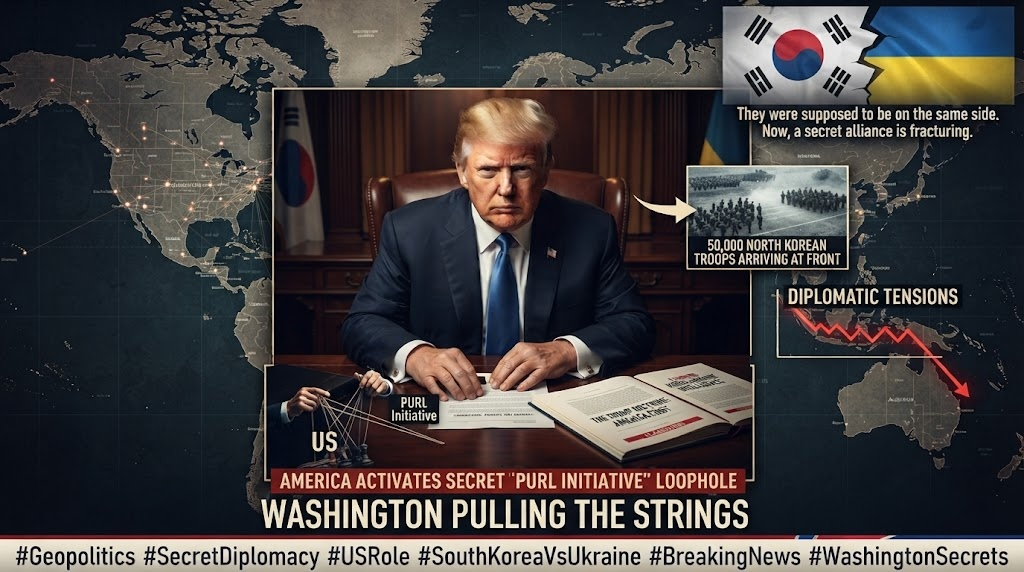
The image of Trump and Driscoll — with the president allegedly talking about a ballroom while the Army secretary warned of a failing war — perfectly encapsulates a moment of dysfunction. It aligns with a broader pattern: a president obsessed with legacy-building projects, a defense secretary purging the military's top ranks, and a uniformed leadership warning that the nation's defense is being hollowed out .
The headline "Doomed" may be hyperbolic. But for an Army without leadership, a war without an exit, and an administration at war with its own generals, the word captures a sentiment that is becoming increasingly difficult to dismiss.
For the president, the war in Iran is a test of resolve. For his military commanders, it is a test of endurance. And for the American public, it is becoming a test of faith.
The 62-30 vote that once confirmed John Phelan to lead the Navy now seems like a distant memory. This is a different kind of Washington drama — one playing out not in the Senate chamber, but in the Situation Room, the Pentagon, and the heart of an army that is, for the moment, leaderless.
Comments (0)
Loading comments...
May You Like
Barack Obama Draws Attention With New Literary Podcast