Do Mr. Trump's new H-1B visa regulations change the way...
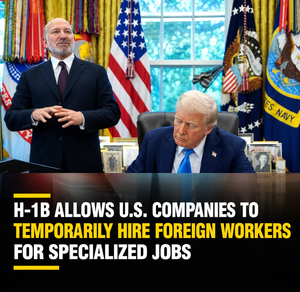
WASHINGTON — The Trump administration has extended restrictions on the H-1B visa program, renewing a major debate over how American companies recruit specialized foreign workers and protect domestic employment.
A Program Built for Specialized Jobs
The H-1B program allows U.S. employers to temporarily hire foreign workers in specialty occupations requiring specialized knowledge and, generally, a bachelor’s degree or equivalent qualifications.
The program is widely used in technology, engineering, research, education and other fields where employers seek workers with particular technical or professional expertise.
Congress created the H-1B program in 1990, establishing annual limits of 65,000 visas, plus another 20,000 available to qualifying workers with advanced U.S. degrees.


Trump Extends the Restrictions
On September 18, President Donald Trump extended his administration’s 2025 H-1B entry restrictions for another year, with the renewed proclamation scheduled to remain in effect until September 21, 2027.
The proclamation restricts entry for certain H-1B workers outside the United States unless the associated petition includes a $100,000 payment, subject to limited national-interest exceptions.
The administration argues that the measure is intended to prevent companies from using lower-paid foreign labor to replace American workers and to address alleged abuses.
The White House says the policy has already changed H-1B filing patterns, including a reported 92% decline in registrations from the largest information-technology outsourcing companies.
A Major Legal Dispute
However, the $100,000 requirement has faced significant legal challenges, creating uncertainty over how the renewed restriction will ultimately operate while litigation continues through the federal courts.
In June, a federal judge in Massachusetts ruled that the administration lacked authority to impose the $100,000 requirement and vacated the policy’s implementation.
The Trump administration appealed, but in July the U.S. Court of Appeals for the First Circuit declined to pause the lower court’s ruling while the appeal proceeds.
As a result, the legal status of the renewed presidential restriction remains closely watched, particularly because separate lawsuits have produced conflicting arguments over executive authority.
Companies Face Higher Hiring Costs
Before Trump’s original restriction, typical H-1B-related government fees were generally measured in thousands of dollars rather than six figures, according to Reuters reporting on the program.
In August, the administration separately proposed a regulation that would make a $103,265 payment permanent for certain new H-1B visas, potentially creating another major change.
The administration has also increased scrutiny of employers with recent or planned layoffs involving U.S. workers in comparable positions when evaluating H-1B applications.
That approach could particularly affect companies that rely heavily on international recruitment while simultaneously restructuring their American workforce, although the practical impact will depend on implementation.
Technology Industry Watches Closely
Technology companies have historically been among the most significant users of H-1B visas, making immigration policy an important factor in corporate recruitment and workforce planning.
Business groups have argued that H-1B workers can help companies fill positions when qualified domestic candidates are difficult to find, particularly in highly specialized fields.
Critics of the program, including the Trump administration, argue that some employers have used foreign workers to reduce labor costs or replace American employees.


Fewer Applications Have Already Been Recorded
USCIS data cited by Reuters showed employers registered for approximately 344,000 H-1B visas in the relevant registration period, substantially below the 759,000 registrations recorded in 2023.
That decline occurred alongside broader immigration restrictions, enhanced vetting and changes to the selection process, making it difficult to attribute the entire reduction to one policy alone.
The administration has also pursued a weighted selection system designed to give greater consideration to higher-skilled and higher-paid applicants, changing the traditional lottery-based approach.
For employers, the combined changes could affect recruitment strategies, compensation decisions and choices about whether specialized positions should be filled inside the United States or abroad.
What Happens Next?
The renewed restrictions do not eliminate the H-1B program itself. Instead, they add new conditions and costs to certain categories of workers seeking entry into the United States.
Current H-1B holders and some foreign graduates already inside the United States are treated differently from new workers seeking entry from abroad under the administration’s restrictions.
Meanwhile, the administration is defending its broader policy in court, while employers, states, unions and business organizations continue challenging different aspects of the restrictions.
The dispute therefore extends beyond immigration policy, touching questions about executive authority, workforce competition, corporate hiring costs and the future supply of specialized talent in America.
For now, the H-1B program remains available, but companies seeking specialized foreign workers face a significantly more uncertain regulatory environment than before Trump’s latest restrictions.
The next major developments are likely to come from federal litigation and proposed regulations, which could determine whether the administration’s higher-cost H-1B framework survives beyond the current legal challenges.
Comments (0)
Loading comments...
May You Like
OBAMA STUNS ON INSTAGRAM: MESSAGE MARKING 34-YEAR MILESTONE SPARKS A BUZZ

South Korea–Ukraine Rift Deepens Over North Korean POW Transfer as PURL Draws New Scrutiny
Barack Obama Draws Attention With New Literary Podcast