-DONALD TRUMP - EVERY SINGLE PROMISE I MADE TO YOU AS A CANDIDATE I HAVE DELIVERED ON
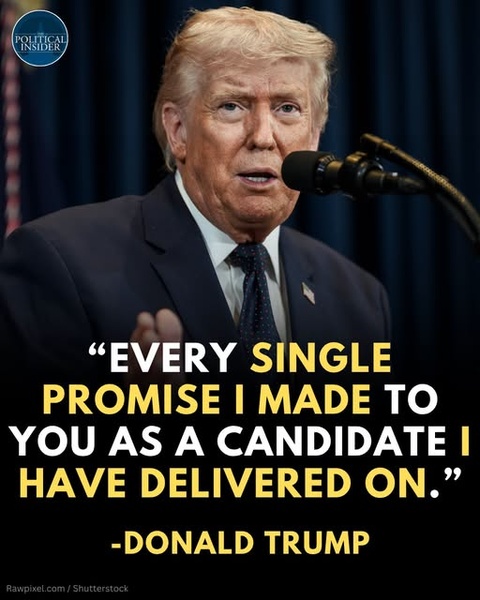
DALLAS — President Donald Trump declared at the Republican Party’s first-ever midterm convention that he had fulfilled every promise made during his campaign, but independent fact-checking shows several major pledges remain incomplete.


Trump’s Sweeping Claim
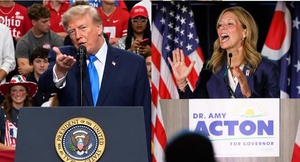
Speaking in Dallas, Trump told supporters that the American people had given his administration a mandate and that, after 19 months, he had delivered on every campaign promise.
“Every single promise I made to you as a candidate, I’ve delivered on,” Trump said, adding that his administration had accomplished even more than he originally discussed.
The statement echoed a central White House message throughout Trump’s second term: that his administration has moved rapidly to implement the agenda he presented during the 2024 presidential campaign.
The White House has portrayed Trump’s first year back in office as an unprecedented period of policy change, highlighting immigration enforcement, deregulation, energy policy and government restructuring.
But fulfilling individual policies is different from fulfilling every campaign promise, particularly when some pledges involved measurable outcomes, deadlines or results that have not yet materialized.
Ukraine Promise Remains Unfulfilled
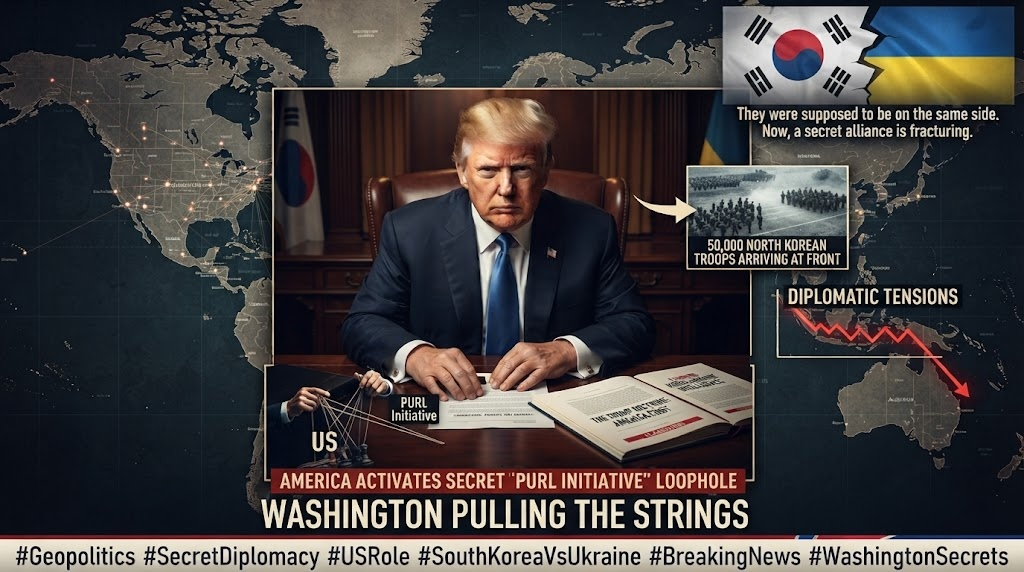
One of Trump’s most prominent 2024 promises was to end the Russia-Ukraine war rapidly, including his repeated suggestion that he could resolve the conflict extremely quickly after returning to office.
That war has continued well beyond Trump’s return to the White House, making the claim that every major campaign promise has been fulfilled particularly difficult to reconcile with the record.
Reuters previously reported that Trump’s administration had struggled to deliver several major campaign commitments, including ending wars, reaching trade agreements and achieving some of his economic objectives.
The continuing conflict does not necessarily mean Trump has abandoned the objective, but it does mean the specific promise of quickly ending the war remains unfulfilled.
Energy Prices Provide Another Test
Trump also campaigned on dramatically lowering energy costs, including a pledge to cut electricity and energy prices substantially within his first year or eighteen months.
Fact-checkers noted that gasoline and diesel prices have instead remained elevated, with diesel reaching particularly high levels amid the continuing Iran conflict and disruption to global energy markets.
Trump has argued that his energy policies are expanding American production and strengthening the country’s position as an energy superpower, but those achievements do not automatically establish that promised consumer-price reductions have occurred.


Some Promises Have Clearly Moved Forward
Trump’s record is not entirely composed of broken or incomplete pledges. His administration has aggressively pursued immigration enforcement, federal workforce reductions, deregulation and restrictions on electric-vehicle incentives.
PolitiFact’s tracking of Trump’s second-term promises has found a mixture of promises that were kept, partially fulfilled, stalled or broken rather than a uniformly unsuccessful record.
Immigration is one of the clearest examples of Trump pursuing the direction he promised voters, although independently measuring the precise scale of deportations remains difficult because comprehensive government data has not always been available.
His administration has also dramatically reshaped federal agencies and reduced the civilian workforce, actions consistent with his campaign promise to shrink and restructure government.
The Economy Is More Complicated
Trump has repeatedly pointed to the economy, stock market and falling prices for selected goods as evidence that his policies are working.
However, independent assessments have found a more mixed picture, including slower job growth, persistent affordability concerns and continuing inflationary pressure in important parts of the economy.
The Associated Press recently fact-checked several economic claims made at the Republican convention, concluding that some statements were technically based on real figures but lacked important context or substantially overstated the administration’s achievements.
That distinction is important because an administration can point to genuine improvements while still falling short of specific promises made during an election campaign.
The $5,000 “Trump Dividend”
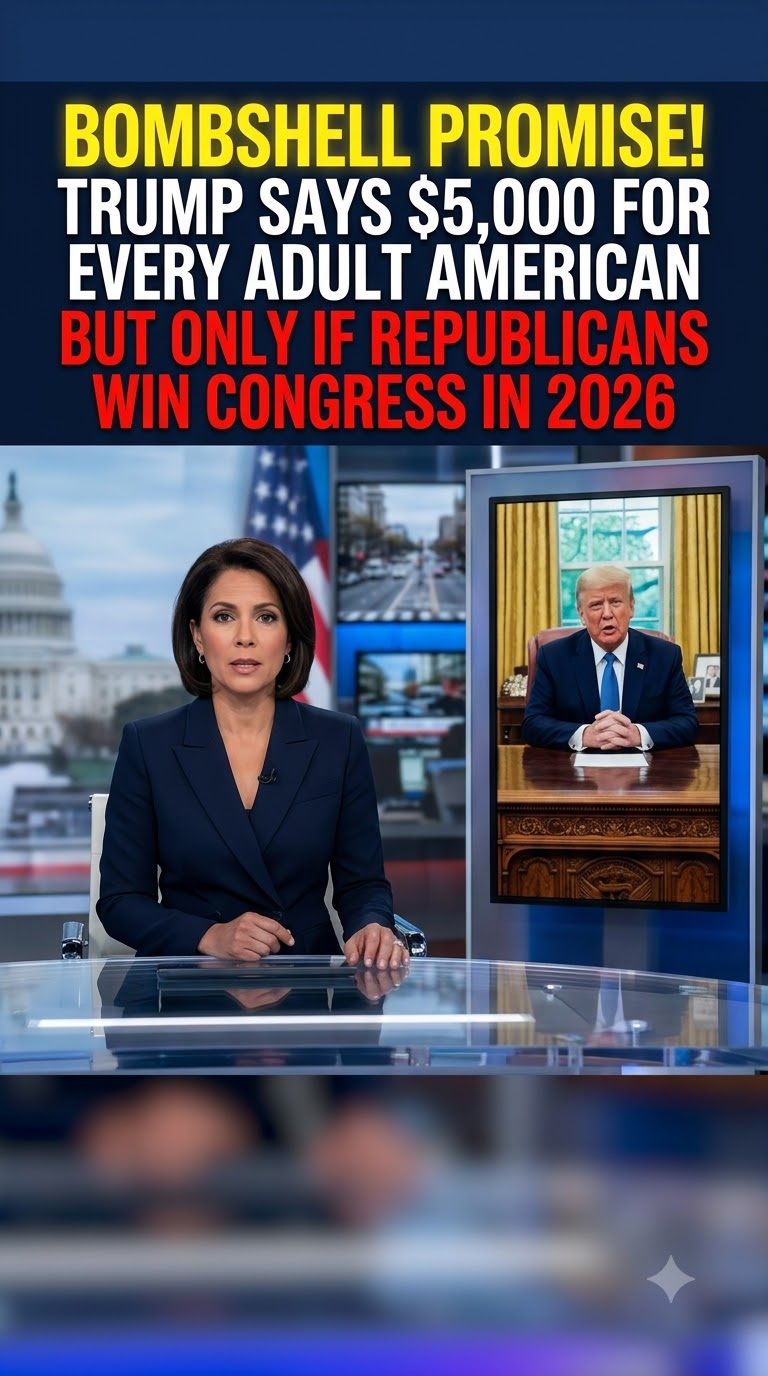
Ironically, Trump’s convention speech also introduced another major promise: a proposed $5,000 payment to every adult American if Republicans retain control of Congress in November.
The proposed “Trump Dividend” would require congressional approval and could cost more than $1 trillion, according to assessments cited by the Associated Press.
Vice President JD Vance subsequently suggested the proposal might be targeted toward Americans who are not wealthy, raising further questions about who would qualify and how the program would operate.
House Speaker Mike Johnson later said congressional authorization would be necessary, contradicting any suggestion that the president could simply distribute the payments without legislative action.
A Campaign Promise Becomes a Political Argument
The $5,000 proposal has therefore become part of a broader political argument about whether Trump’s promises represent achievable policy commitments or campaign rhetoric designed to motivate voters.
Trump has argued that tariff revenues and economic strength could provide the resources necessary, while critics point to the federal deficit and the enormous potential cost of the proposal.
The proposal also resembles earlier Trump suggestions involving direct payments to Americans, several of which have not resulted in actual checks being distributed.
The Wall Street Journal reported that previous proposals for cash payments, including ideas involving DOGE savings and tariff revenues, had not been incorporated into legislation and had not produced payments.
Fact-Checking Trump’s Record
Fact-checking organizations have been tracking Trump’s campaign promises since his return to office, producing a substantially more nuanced picture than the president’s blanket declaration.
PolitiFact’s MAGA-Meter, for example, tracks dozens of second-term promises and categorizes them according to whether they have been kept, compromised, stalled or broken.
An earlier 2026 analysis found that only a minority of the tracked promises had been fully fulfilled, while many others remained incomplete or had encountered legal, political or practical obstacles.
Reuters likewise reported that several major pledges remained unresolved as Trump approached the midpoint of his second-term political agenda.
Why the Claim Matters
Trump’s statement is politically significant because the 2026 midterm elections will effectively serve as a referendum on his second-term record.
Republicans are defending narrow congressional majorities, while Democrats are seeking to capitalize on concerns about inflation, energy costs, immigration policy and the continuing conflict with Iran.
Trump has openly encouraged Republican voters to treat him as though he were personally on the ballot, despite not being eligible to seek another presidential term in 2028 under the Twenty-Second Amendment.
That strategy places Trump’s personal popularity and record at the center of races involving candidates whose names, policies and local political circumstances can differ considerably.
A Message Designed for the Base
The convention itself was unusually centered on Trump, with speeches and presentations emphasizing his accomplishments and warning that Democratic victories could reverse his agenda.
Rather than functioning like a traditional midterm party gathering, the event closely resembled a large Trump rally, with Trump dominating the political message and repeatedly urging supporters to turn out in November.
His promise of a $5,000 dividend, attacks on Democrats and repeated references to his own achievements were all designed to reinforce the argument that Republican control of Congress is essential.
But the central fact remains: Trump’s assertion that he has fulfilled every promise is broader than the available evidence supports.
The Bottom Line
Trump has unquestionably implemented many policies he promised, particularly on immigration, executive power, energy regulation and federal government restructuring.
Yet several major promises remain unfinished, including rapidly ending the Ukraine war and delivering dramatic reductions in energy costs promised during the 2024 campaign.
His administration can therefore credibly claim substantial policy activity while simultaneously facing legitimate criticism over promises that have not produced their promised results.
The distinction between “I pursued the policy” and “I delivered exactly what I promised” is at the heart of the current political dispute.
As the November 3 midterm elections approach, Trump is betting that voters will judge his presidency primarily by the changes his administration has enacted rather than by the campaign promises that remain incomplete.
The Republican Party, meanwhile, is attempting to turn that record into an electoral advantage while Democrats argue that the president’s sweeping claims should be measured against economic data and independently verifiable outcomes.
For Trump, the message is unmistakable: he wants voters to believe the promises have been kept and that another Republican victory is necessary to protect those achievements.
For fact-checkers, however, the record is considerably more complicated — and the evidence does not support the literal claim that every single campaign promise has been delivered.
Comments (0)
Loading comments...
May You Like
gfnhgmnghnmfgnbvvvvvvvvv

Russian Drone Strikes Kyiv Bridge as German Chancellor Arrives in Ukraine