
"DON'T CALL ANYMORE"... ★ TRUMP BLASTS BILL MAHER!
“DON’T CALL ANYMORE!” — TRUMP EXPLODES AT BILL MAHER AFTER WHITE HOUSE DINNER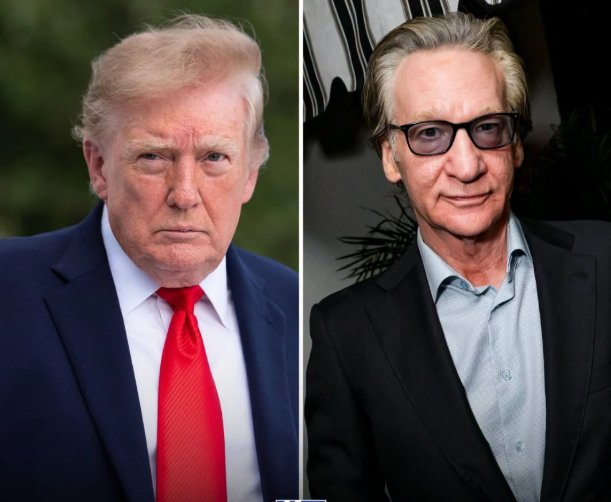
President Donald Trump has launched an extraordinary public attack on comedian and television host Bill Maher, telling him to stop calling after a meeting that initially appeared to leave both men on friendly terms.
The confrontation erupted on October 25, when Trump published a lengthy Truth Social post describing Maher as a “complete and total loser.” The message reportedly contained more than 1,300 words, making it the longest post of his social media history.
The outburst followed Maher’s October 23 episode of HBO’s “Real Time,” where the comedian discussed his recent White House dinner with Trump and made jokes about the president’s political standing ahead of the midterm elections.
Just days earlier, Trump had publicly described the October 15 dinner as a positive experience. He said Maher liked him more than people realized and suggested that he liked Maher as well.
That apparent goodwill quickly disappeared after Trump watched the comedian’s latest broadcast. The president accused Maher of misrepresenting him, spreading falsehoods and criticizing his administration while privately presenting himself as friendly.
Trump’s message opened with a direct insult and continued with complaints about Maher’s television ratings, political opinions, jokes and audience. He also questioned whether the comedian’s laughter-filled studio relied on what he called a “Laughter Machine.”
The president’s criticism was not limited to Maher’s professional work. Trump made personal allegations about the comedian’s behavior during their dinner, claiming he had been drinking and accusing him of using marijuana. Those allegations were Trump’s claims, not independently established facts.
At the center of the dispute was a question that has followed Maher’s relationship with Trump: can a comedian meet privately with a president, acknowledge positive aspects of the encounter and still criticize him publicly?
Maher has defended his decision to attend the dinners, arguing that direct conversations with political leaders can be worthwhile even when the participants strongly disagree.
On his program, Maher said Trump listened during their meeting and did not lose his temper. He also maintained that he challenged the president on important issues, including Trump’s false claims that he won the 2020 presidential election.
The two men’s accounts differed over the length of the October 15 dinner. Maher described the gathering as lasting approximately four hours, while Trump insisted that it lasted about two hours or less.
The dinner also included musician Kid Rock and ESPN personality Stephen A. Smith. Smith separately described an extended gathering, adding another account to the disagreement over the evening’s duration.
Trump blamed Maher’s associate Chuck LaBella for helping arrange the meetings and suggested that Maher had been eager to return to the White House. He also rejected the idea that he would appear on Maher’s HBO program.
The president’s post took another turn when he criticized Maher’s discussion of his approval ratings. Trump dismissed the comedian’s interpretation of polling and cited figures that he said demonstrated his continued influence among Republicans.
However, polling claims must be assessed individually. Trump’s assertions about his popularity do not, by themselves, establish that his approval ratings are higher than independent surveys indicate.
Trump also attacked Maher’s treatment of the Iran conflict, arguing that the comedian did not adequately appreciate the threat posed by Iran’s nuclear ambitions. This disagreement highlighted how their political differences remained substantial despite their private conversations.
The president further accused Maher of catering to a small audience and failing to acknowledge what Trump considers the successes of his administration. Maher’s show, however, is built around political satire and commentary rather than agreement with the president.
The most memorable line came near the end of Trump’s post: “Bill: Don’t call anymore.” The sentence turned a disagreement between two prominent public figures into a headline-grabbing rupture.
Trump also said he would no longer watch Maher’s program and suggested Republicans should stop appearing on or promoting the comedian’s show. The precise scope of that suggestion was unclear.
The episode revived memories of their first White House dinner in March 2025. After that meeting, Maher described Trump as gracious and measured, but the president later criticized him again, demonstrating how quickly their public relationship could deteriorate.
The dispute is unfolding during the final stretch of the 2026 midterm campaign, when political tensions are already high over the economy, the Iran war and the direction of the Trump administration.
For Maher, the confrontation reinforces his position as a comedian willing to criticize both political parties while continuing to engage with influential figures. For Trump, it provides another example of his willingness to confront media personalities he believes have treated him unfairly.
Yet the most striking feature of the episode may be the contrast between the private dinner and the public fallout. A meeting Trump initially praised was followed by a message that appeared to close the door on further contact.
Whether the two men will speak again remains uncertain. For now, Trump’s blunt instruction has turned an unlikely political relationship into a national talking point—and raised fresh questions about how much criticism the president is willing to tolerate from someone he recently welcomed to the White House.
Comments (0)
Loading comments...
May You Like

EAST COAST MEGASTORM—2 MILLION HOUSES DAMAGED, 5 MILLION AT RISK OF BLACKOUTS, WATER FAILURES!

WWE BRONSON REED—INSPIRED—SUDDEN COLLAPSE, MYSTERIOUS STIMULANTS, DEAD AT 38!

STAR DIED AT 38, $10M LIFE INSURANCE INCREASED JUST 30 DAYS BEFORE WWE BRONSON REED'S DEATH!
MINNESOTA EMERGENCY — HOUSE EXPLOSION PUTS 2 HUNDRED FAMILIES AT RISK OF FIRE AND WINTER EVACUATION!










Popular Posts



