
“DON’T KILL MY DAD!” AFTER “DADDY, PLEASE DON’T KILL MOM, DON’T SHOOT ME!” FULL 911 AUDIO!
“DON’T KILL MY DAD!” AFTER “DADDY, PLEASE DON’T KILL MOM, DON’T SHOOT ME!” FULL 911 AUDIO!
PLANT CITY, Florida — November 21, 2026 — A father is believed to have fatally shot his wife and their three young children before taking his own life at a home in Plant City, Florida, on Thursday, November 19, authorities said. A 911 dispatcher heard a child's desperate pleas and apparent gunshots during an open emergency call before deputies reached the residence.
The Hillsborough County Sheriff's Office is investigating the deaths as an apparent murder-suicide. The five victims included the father, his wife and children ages 5, 3 and 1.
Sheriff Chad Chronister described the call during a news conference, saying a male voice could be heard apologizing to a child before a loud bang, followed by a child's repeated pleas not to be shot.
Deputies arrived approximately 10 minutes after the call and forced their way into the home. All five family members were found dead from gunshot wounds.
The sheriff's account was reported by NBC, Local 10, The Washington Post and other news organizations. The investigation remains open, and authorities have not established a motive.
The emergency call came at approximately 3:29 p.m. Thursday.
According to Chronister, the dispatcher received an open line from a home in the 1700 block of Sparkman Road.
No one initially provided a conventional explanation of the emergency.
Instead, the dispatcher heard sounds coming from inside the residence.
The sheriff said a male voice was heard saying, "Sorry, buddy."
A loud bang followed.
Then, from farther away, the dispatcher heard a small child pleading with his father.
The child repeatedly asked not to be shot or killed.
Another loud bang was heard after the pleas.
The dispatcher remained connected to the emergency call while authorities responded.
Investigators have not established who placed the call or how it was initiated.
That question remains one of the unresolved details of the case.
Chronister described the child's words during a public briefing.
According to the sheriff, the child pleaded, "Daddy, please don't shoot me," and "Daddy, please don't kill me."
The sheriff said the child repeated the pleas several times.
Those statements were part of the sheriff's account of what the dispatcher heard.
The public reporting does not establish that the child said, "Don't kill my daddy."
Nor does it establish that the child said, "Don't kill Mom."
Those distinctions matter because the reported words help explain what authorities believe happened inside the home.
The sheriff's account identifies a child pleading for his own life.
Some video segments feature footage of his news conference.
Those clips should not automatically be described as the complete original 911 recording.
A press conference can accurately convey what a dispatcher heard without making the underlying emergency recording publicly available.
The distinction is especially important in a case involving young children.
The verified public account establishes that the dispatcher heard a man's apology, apparent gunshots and a child's pleas.
It does not establish every sound or conversation that occurred during the call.
Investigators may possess additional audio or records.
However, the available reporting does not provide a verified, uninterrupted transcript of the entire emergency call.
The Sheriff's Office dispatched deputies to the residence after the emergency call.
Chronister said deputies arrived roughly 10 minutes later, around 3:40 p.m.
The responding officers approached the home without knowing exactly what had happened inside.
They observed a young child lying motionless.
The circumstances prompted them to force entry.
Deputies kicked in the front door and entered the residence.
Inside, they found the father, mother and three children dead.
Authorities said all five had suffered gunshot wounds.
There was no reported surviving family member inside the home.
The officers' response and the condition of the scene formed the basis for the initial investigation.
The sheriff described the scene as an apparent murder-suicide.
Investigators believe the father shot his three children and wife before fatally shooting himself.
The children were 5, 3 and 1 years old.
Their ages underscored the vulnerability of the victims and the scale of the family loss.
Authorities have not described an intruder or an unidentified attacker.
The sheriff's initial account attributed responsibility to the father.
That conclusion is based on the scene and the information gathered during the emergency response.
Because the suspected perpetrator also died, the case will not proceed as an ordinary homicide prosecution against a living defendant.
Investigators must still establish the circumstances and complete the necessary forensic work.
The deaths involved all five members of the immediate household.
The mother and three children were victims of the suspected killings.
The father was found dead in what authorities believe was a self-inflicted shooting.
This distinction is important when describing the death toll.
Five people died, but investigators believe four were homicide victims and the fifth was the person responsible.
The available reporting does not identify additional casualties at neighboring properties.
Nor does it describe an ongoing threat to the surrounding community.
Authorities focused their investigation on the family home.
The sheriff's findings indicate that the violence occurred within the household rather than during a broader attack in the neighborhood.
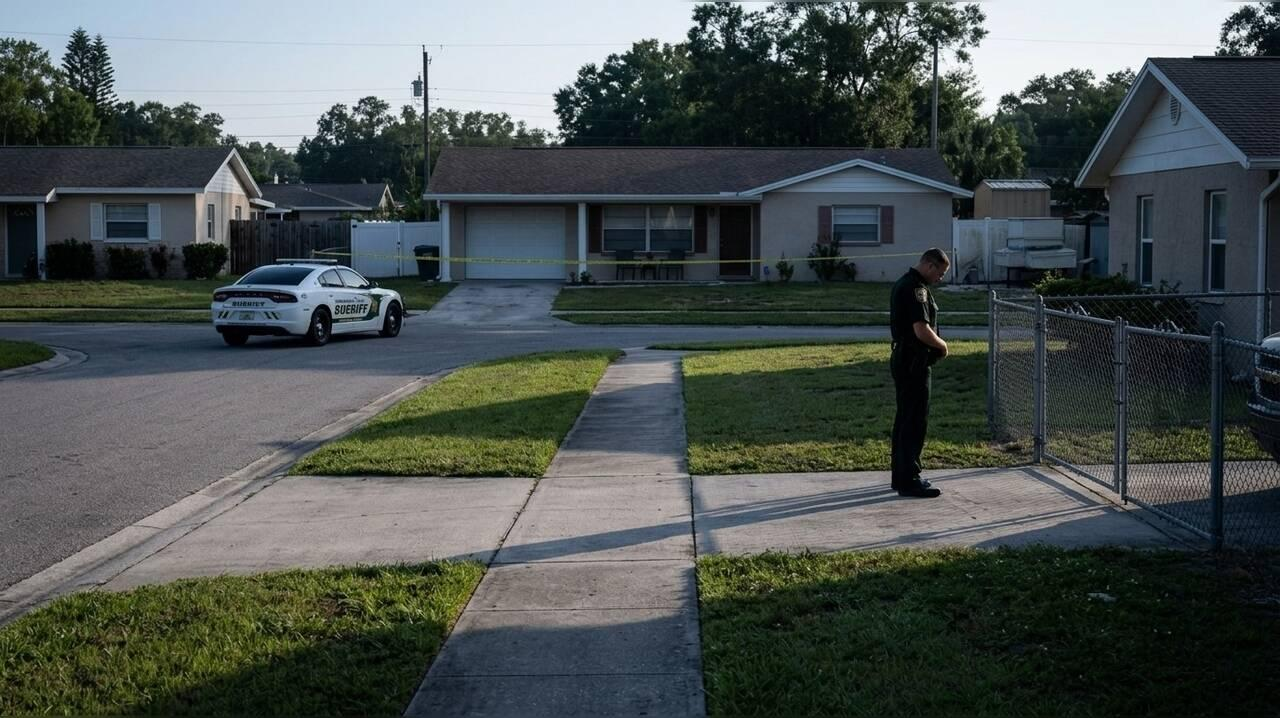
The incident occurred in the 1700 block of Sparkman Road.
Plant City is located in Hillsborough County, east of Tampa.
The surrounding area includes residential properties and rural landscapes.
Local television coverage showed law enforcement activity near the home after the emergency response.
By Friday, the large police presence had largely disappeared.
A Tampa Bay 28 reporter described a quiet neighborhood where children's toys remained visible outside the property.
The contrast between the ordinary residential setting and the deaths drew attention from local residents.
The property had been the family's home for approximately one year.
Chronister said neither parent had a criminal history known to investigators.
The Sheriff's Office also reported no previous calls for service to the residence during the family's time there.
Those facts became significant because investigators were trying to understand what preceded the killings.
However, the absence of a criminal record does not establish what occurred privately within a household.
It also cannot explain a person's motives.
The sheriff did not announce evidence of a prior domestic violence complaint involving the family.
Nor did he identify a documented dispute immediately before the shootings.
Investigators therefore faced a major unanswered question.
What circumstances led to the violence on November 19?
That question remained unresolved as of November 21.
Subsequent media reports identified the father as Isaac Luechtefeld, 34.
His wife was identified as Raquel Luechtefeld, also 34.
Their children were identified in later reporting as Enoch, 5, Hannah, 3, and Job, 1.
The names emerged through family accounts and news coverage after the sheriff's initial briefing.
The family members' identities added personal context to the case.
However, identity alone does not establish motive.
The available reports describe a family whose relatives were struggling to reconcile the killings with their previous understanding of the household.
The investigation remains focused on the events inside the residence and the circumstances preceding the shootings.
The sheriff described hearing a young child repeatedly pleading not to be killed.
Later reports associated the pleas with the family's oldest child.
The initial official account did not provide a detailed forensic identification of the voice.
The child's words were described by the sheriff rather than presented as a complete authenticated public transcript.
That distinction limits what can be concluded about the exact sequence of events.
The audio indicates that a child was alive and speaking during part of the emergency call.
It also indicates that apparent gunshots were heard.
But the publicly described recording does not independently establish the order in which every family member died.
The Sheriff's Office has attributed the killings to the father while continuing its investigation
The public record provides limited information about the minutes before 3:29 p.m.
They have not established who dialed 911.
They have not announced whether the call was made intentionally by an adult, initiated by a child or connected through another mechanism.
The dispatcher reportedly heard an open line.
That means the call provided sounds from the residence rather than a conventional conversation with someone requesting help.
The lack of an identified caller leaves a gap in the timeline.
A dispatcher receiving an open 911 call must assess whatever information is available.
In some emergencies, callers are unable to speak.
The operator may hear voices, background sounds or indications of danger.
In this case, the sheriff said the dispatcher heard a man's voice, loud bangs and a child's pleas.
Those sounds were sufficiently concerning to prompt an emergency response.
The dispatcher did not have a complete account of what was occurring.
Officers therefore approached the residence without knowing the full situation.
The call became an important source of information for investigators.
It also illustrates the limitations of emergency communications when the person placing the call cannot explain what is happening.
Chronister said responding deputies forced their way into the residence.
They did so after observing circumstances suggesting an immediate emergency.
The sheriff praised the officers for acting despite not knowing whether an armed threat remained inside.
The officers discovered that the violence had already ended.
They found the five family members dead.
The Sheriff's Office did not report an exchange of gunfire between deputies and the father.
Nor did it describe a confrontation with another suspect.
The forced entry was part of the emergency response, not evidence that police had identified an outside attacker.
The investigation subsequently focused on the suspected murder-suicide.
The sheriff acknowledged the emotional impact on deputies and the dispatcher.
Officers had entered a home containing three very young children who had been fatally shot.
The dispatcher had heard the child's pleas during the emergency call.
Chronister said the experience deeply affected those involved.
Local reporting indicated that support was made available to personnel who responded.
Such incidents can expose emergency workers to severe psychological stress.
The Sheriff's Office's response reflected the circumstances encountered at the residence.
The impact on responders was separate from the criminal investigation but became part of the sheriff's public remarks.
The agency continued working to establish the sequence of events and the reasons behind the killings.
Residents along Sparkman Road were left trying to understand the deaths.
The neighborhood is generally quiet, according to local reporting.
A Tampa Bay 28 report described a rural setting with homes, fields and animals.
By Friday, only limited signs of the emergency response remained visible outside the property.
Children's toys were still present.
Neighbors described a sense of shared loss.
The deaths involved three children whose lives had been centered on the family home.
The community response focused on the victims and their relatives.
There was no indication from authorities that other residents were being sought in connection with the shootings.
The case remained an investigation into violence within one household.
Later reporting included statements from relatives who described the killings as unexpected.
Raquel's sister recalled that the couple had recently spent time together and celebrated family occasions.
Family members described Raquel as a devoted mother.
They also recalled her involvement in church activities and music.
Isaac worked in a mobile mechanic business, according to relatives quoted by news organizations.
Those accounts offered a picture of the family's everyday life before November 19. A relative's recollection of a family relationship cannot establish what happened privately or what the father was thinking.
Relatives said Isaac and Raquel had recently gone on a date night.
They also described a birthday celebration shortly before the killings.
According to family accounts, the couple had been together for many years.
They had moved to Florida several years earlier.
The children were reportedly homeschooled.
These details became part of news coverage because they illustrated how little warning relatives believed they had received.
However, such accounts do not establish that there were no problems within the household.
They also do not support speculation about a hidden dispute or an undisclosed medical condition.
The known facts remain the deaths, the 911 call and the sheriff's conclusion that the father was responsible.
Chronister said investigators were searching for an explanation.
The Sheriff's Office had not announced a motive.
There was no confirmed public finding involving a financial dispute, custody conflict or other specific trigger.
The investigation may involve interviews, digital records and forensic findings.
But the public record does not yet provide a documented chain of events explaining the father's actions.
The absence of a known motive is one of the case's central unresolved issues.
It does not change the sheriff's preliminary conclusion about who committed the killings.
The sheriff's statement that deputies had not previously been called to the home attracted attention.
Prior calls can sometimes provide investigators with records of disputes or threats.
In this case, authorities reported no such history at the address.
That means investigators cannot rely on a documented sequence of earlier police responses to explain the shootings.
However, a lack of police calls is not proof that a household was free of conflict.
Some problems may never be reported.
Others may develop without a long history.
The available information supports only a narrow conclusion: authorities had no previously reported calls for service involving this residence during the family's approximately one-year stay.
The call provides a direct link between the emergency response and events inside the home.
According to the sheriff, the dispatcher heard a male voice apologizing.
A loud bang followed.
The dispatcher then heard a child pleading with his father not to shoot.
Another loud bang was heard afterward.
Those details are significant because they were reported by the official responsible for the investigation.
Investigators must consider the audio alongside physical and forensic evidence.
In a shooting investigation, forensic evidence can help establish the sequence of events.
Investigators may examine the locations of victims, firearms, cartridge cases and other material recovered at the scene.
Medical examiners may assess injuries and determine causes of death.
Those findings can help authorities distinguish homicide from suicide.
The Sheriff's Office has already described the incident as an apparent murder-suicide.
However, the detailed forensic record has not been publicly released in the reports reviewed.
It would therefore be premature to describe the exact position of every victim or the number of shots fired.
The public record establishes that all five family members were found dead from gunshot wounds.
Chronister attributed the deaths of the mother and children to the father.
He said the father then took his own life.
Authorities did not announce a search for another suspect.
The information presented at the news conference therefore points to a suspected murder-suicide rather than a home invasion or an attack by an unidentified person.
That distinction directly addresses the central question raised by the case.
The sheriff's conclusion is based on the investigation as it stood at the time of the briefing.
The case quickly spread beyond local Florida news.
National outlets reported the child's pleas and the sheriff's account of the emergency call.
The ages of the children and the fact that the violence occurred inside the family home made the incident particularly significant.
The reporting also highlighted the absence of a previously documented criminal history for either parent.
The story's central evidence was not a viral video showing the shootings.
It was the sheriff's description of what a 911 dispatcher heard.
That difference matters when evaluating clips circulating online.
A video of the news conference should not be mislabeled as an authenticated full recording of the emergency call.
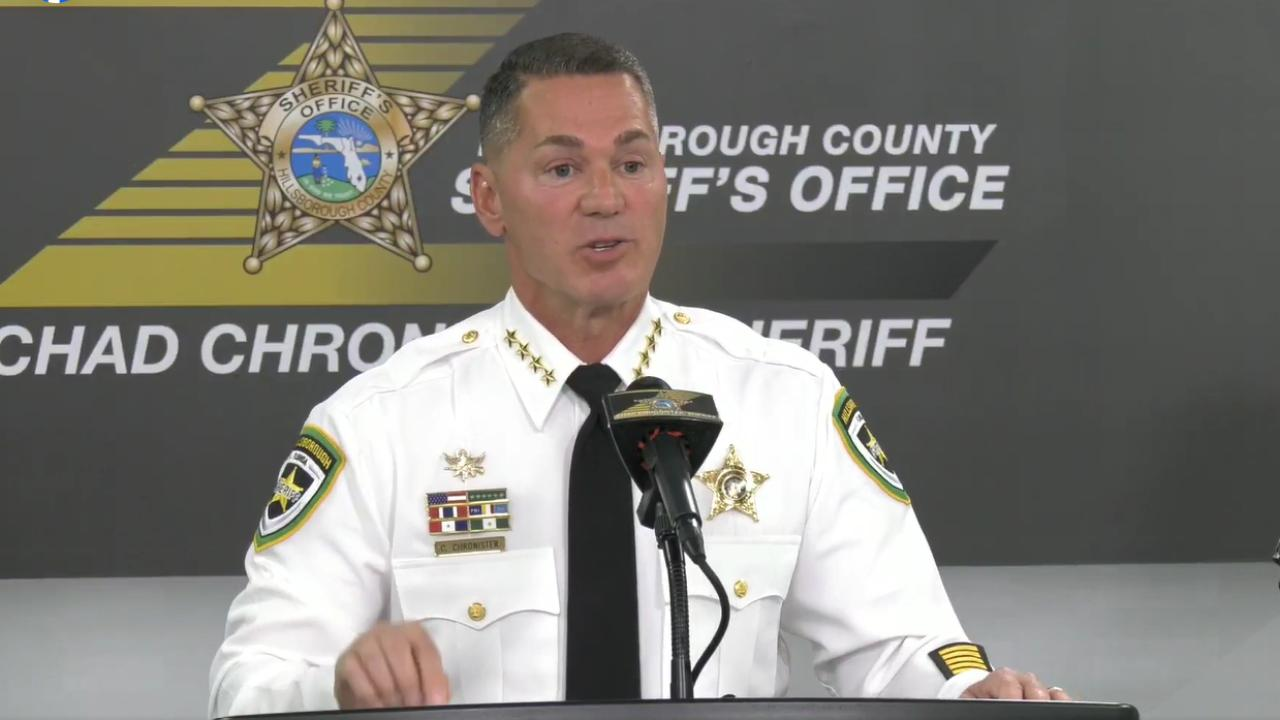
The Hillsborough County Sheriff's Office continues investigating the deaths.
Detectives must establish the full sequence of events and determine whether additional evidence explains what preceded the shootings.
The emergency call is an important part of that work.
So are the observations of responding deputies and the physical evidence recovered from the residence.
Authorities have not announced that anyone else participated.
The sheriff's initial conclusion was that the father killed his family before taking his own life.
The unresolved questions concern how the incident began, who placed the emergency call and what motivated the violence.
Those questions may require further investigative work even though the suspected perpetrator is dead.
The medical examiner's findings can provide additional evidence in a case involving multiple gunshot deaths.
Autopsies can help establish causes and manners of death.
They may also contribute to the reconstruction of the sequence of events.
However, the reports reviewed do not provide a complete autopsy account for each family member.
The Sheriff's Office has already identified gunshot wounds as the cause of the deaths.
Further forensic findings may clarify details not available during the initial news conference.
Such findings are particularly important when investigators are trying to establish what happened inside a home without surviving witnesses.
The public should distinguish those future findings from assumptions based solely on the audio description.
The deaths left relatives mourning Raquel and the three children.
Family members described a household that had appeared stable to them.
They recalled recent celebrations and ordinary activities.
The three children were ages 5, 3 and 1.
The youngest had only recently begun life, while the oldest was still in early childhood.
The family's relatives now face the loss of an entire household.
The case also affected neighbors, deputies and the emergency dispatcher.
Their accounts illustrate the consequences of the killings beyond the five deaths.
The investigation remains necessary both to document what happened and to provide the family with as complete an explanation as the evidence permits.
The central facts are established by the Sheriff's Office.
A 911 call was received around 3:29 p.m. on November 19.
The dispatcher heard a man's voice, apparent gunshots and a child pleading not to be killed.
Deputies arrived approximately 10 minutes later.
They forced entry and found five family members dead.
The victims included the mother, three children and their father.
Authorities believe the father shot the other four family members before taking his own life.
The sheriff said neither parent had a known criminal history and the residence had no previous calls for service during the family's time there.
The motive remains unknown.
Investigators have not publicly established who placed the 911 call.
They have not released a complete verified transcript of the recording.
They have not announced the circumstances that triggered the violence.
Nor have they identified evidence that another person participated.
The Sheriff's Office has attributed the killings to the father, but the broader explanation remains incomplete.
Those unanswered questions are significant.
They concern the sequence of events and the circumstances leading to the deaths, rather than the existence of an unidentified attacker.
The evidence available to the public supports the sheriff's account of a suspected murder-suicide.
It does not support adding new dialogue or an alternative perpetrator to the story.
The question raised by the emergency call is whether the father really killed his own family.
According to Hillsborough County Sheriff Chad Chronister, the evidence indicates that he did.
Authorities believe Isaac Luechtefeld fatally shot his wife, Raquel, and their three children before killing himself.
The emergency call captured sounds that the sheriff said were consistent with the violence occurring inside the home.
Deputies arrived minutes later and discovered all five family members dead.
The investigation remains open because the motive and some details of the timeline have not been established.
The central finding, however, is clear in the sheriff's account: the deaths are being investigated as a murder-suicide involving the father as the suspected perpetrator.
Comments (0)
Loading comments...
May You Like

ELON MUSK'S MILLION-SATELLITE MEGAPROJECT — THE NEXT FRONTIER OF AMERICAN SPACE POWER?

PUTIN RAISES LUKOIL DEAL WITH TRUMP’S ENVOYS AS UKRAINE PEACE TALKS CONTINUE

FIVE-STAR LUXURY RESORT FOR SENIORS — UPSCALE RETIREMENT LIVING WITHOUT THE PRICE TAG?













