Europe and Canada go beyond the framework of trade relations
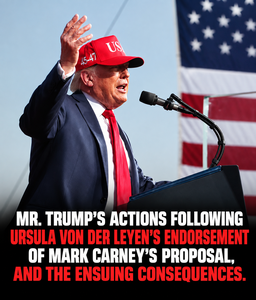
Trump Threatens New Tariffs After EU Backs Canada Partnership Proposal
BRUSSELS — President Donald Trump has threatened severe tariffs against the European Union after European Commission President Ursula von der Leyen proposed making Canada the bloc’s first associate member.
Von der Leyen unveiled the proposal during her annual State of the European Union address on September 16, with Canadian Prime Minister Mark Carney attending the European Parliament session.
She said Europe and Canada should move beyond their existing trade relationship toward an Alliance for the Future covering technology, defense, energy, critical minerals and economic security.
The proposed associate membership would be unprecedented for the European Union. Existing relationships with countries such as Norway and Switzerland differ legally from the status envisioned for Canada.
Von der Leyen described the initiative as voluntary cooperation and explicitly said the partnership was intended to strengthen Europe and Canada, rather than target another country.


Trump responded sharply, calling the proposal “laughable” and saying he could impose “very serious tariffs” or potentially stop trading with Europe if he considered the move hostile.
The president also distinguished between what he viewed as good or bad intentions, saying a hostile interpretation could lead to substantially heavier trade measures against European countries.
Trump’s comments came as relations with Canada have already deteriorated over tariffs, trade disputes and his repeated public references to Canada becoming the 51st U.S. state.
Washington has recently imposed or maintained additional duties affecting Canadian goods, including measures involving alcohol, dairy and motor vehicles, according to White House proclamations.
On September 16, the White House also directed officials to identify steps toward removing or restricting Canadian-origin goods from federal civil-government procurement.


For Canada, deeper European ties offer another avenue for trade, investment and security cooperation as Ottawa seeks to reduce its dependence on the United States.
Carney has described Canada’s objective as developing a “unique security and economic alliance” with Europe, reflecting broader efforts to diversify the country’s international partnerships.
Canada and the European Union already have the Comprehensive Economic and Trade Agreement, known as CETA, which provides an established framework for bilateral commerce.
Von der Leyen proposed building on that foundation by expanding cooperation across defense industries, artificial intelligence, cybersecurity, batteries, critical minerals, Arctic initiatives and energy.
The proposal still faces important uncertainties. The European Union has never previously used an associate-member category, and member states would need to support whatever formal arrangement emerges.
European diplomats have expressed differing views about the idea, with some questioning its meaning and feasibility because the proposed status has not previously existed within the EU.
Trump’s response therefore creates another potential source of friction between Washington and Brussels, although his threatened measures were conditional on whether he ultimately considers the proposal hostile.
European Commission spokesman Olof Gill said the proposed partnership was not directed against the United States, emphasizing that closer cooperation with Canada was intended to increase common strength.
France’s Europe minister Benjamin Haddad likewise said the United States does not have the authority to determine the European Union’s political or geopolitical direction.
The next steps will depend on negotiations among Canada and EU institutions and member states, while Trump’s administration could determine whether additional trade measures follow his latest warning.
Comments (0)
Loading comments...
May You Like

Obama Steps Back Into the Political Spotlight as Democrats Target Trump’s Senate Majority

South Korea–Ukraine Rift Deepens Over North Korean POW Transfer as PURL Draws New Scrutiny

Obama Steps Back Into the Political Spotlight as Democrats Target Trump’s