Europe’s New Security Council Reshape Its Defense Strategy
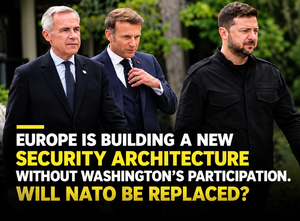
STRASBOURG — European Commission President Ursula von der Leyen has proposed creating a European Security Council involving EU members and partners including Britain, Canada, Norway and Ukraine.
A New Security Format for Europe
The proposal was presented during von der Leyen’s State of the Union address on September 16, as European governments confront growing concerns about military, cyber and hybrid security threats.
Von der Leyen said Europe needs to reconsider how its institutions respond to threats, arguing that existing decision-making structures were designed for a different security environment.
Her proposed council would create a leaders-level format focused specifically on European security, with non-EU partners potentially participating alongside European Union countries.
The proposal does not mean that such a council has already been established. Von der Leyen said the European Commission would present ideas for making the initiative a reality.
Britain, Canada, Norway and Ukraine
Von der Leyen specifically mentioned Canada, Norway, Ukraine and the United Kingdom as potential partners in the proposed leaders’ security format.
That combination is significant because Britain and Norway are NATO members, Canada is a major transatlantic partner, while Ukraine remains directly involved in the war with Russia.
The proposal therefore extends beyond the European Union’s existing membership and reflects an effort to coordinate security policy among countries facing overlapping strategic concerns.
However, the precise membership, voting arrangements and decision-making powers of the proposed European Security Council have not yet been established.
Responding to Hybrid Threats
Von der Leyen also proposed a separate “counter-hybrid playbook” and an Emergency Security Protocol designed to coordinate responses to incidents that fall below the threshold of conventional armed attacks.
The mechanism would resemble NATO’s Article 4, under which members can request consultations when they believe their territorial integrity, political independence or security is threatened.
It would not automatically create a military intervention obligation equivalent to NATO’s Article 5 collective-defense provision.
Instead, the proposed European mechanism would allow member states to coordinate their responses, attempt to deter further escalation and mitigate the consequences of an incident.


Russia and Ukraine Drive the Debate
The proposal comes as Russia’s war against Ukraine continues and European governments report concerns about drone incursions, sabotage, cyberattacks and other activities they describe as hybrid threats.
Von der Leyen cited recent incidents in Denmark, Lithuania, Poland and Germany while arguing that European security institutions need faster and more coordinated responses.
European officials have attributed several recent incidents to Russia, although Moscow has rejected some of those accusations and accused Western governments of escalating tensions.
The European Council had already called in June for stronger defenses against hybrid attacks, including greater protection of European land, air and maritime borders.
NATO Would Remain Important
The proposal is not presented by the European Commission as a replacement for NATO. Von der Leyen explicitly said Europe is strengthening cooperation with the alliance while developing additional European security mechanisms.
EU leaders have previously emphasized that stronger European defense capabilities should complement NATO, which remains the foundation of collective defense for its European member states.
That distinction matters because Britain, Norway and Canada are NATO members, while the European Union itself has no equivalent to NATO’s Article 5 defense guarantee.
Some European officials have therefore stressed that new EU security initiatives should strengthen existing transatlantic structures rather than create competing institutions.
Canada’s Role Is Expanding
The announcement came as Canadian Prime Minister Mark Carney visited Strasbourg and addressed the European Parliament about closer strategic cooperation between Canada and the European Union.
Carney proposed deeper collaboration in critical minerals, artificial intelligence, defense, energy, digital trade and other strategic sectors.
Von der Leyen separately proposed opening the door for Canada to become the European Union’s first “associate member,” although that status currently has no established legal precedent within the bloc.


Why the Trump Administration Matters
The security proposal comes amid uncertainty surrounding the future of U.S. involvement in European security under President Donald Trump.
Reuters reported that von der Leyen’s initiative reflects growing European interest in taking greater responsibility for the continent’s defense while questions remain about Washington’s future role.
However, the proposal cannot simply be described as a response to Trump alone, because European governments have been increasing defense cooperation since Russia’s full-scale invasion of Ukraine in 2022.
The European Council has already set a goal of significantly increasing European defense readiness by 2030 and reducing strategic dependencies.
A Broader European Defense Push
European governments have increased defense spending and expanded joint procurement efforts as they seek stronger capabilities in areas including air defense, drones, cyber operations and military mobility.
Von der Leyen also announced a proposed European Instrument for Strategic Enablers covering capabilities such as air and missile defense, strategic transport, air-to-air refueling, space and cyber systems.
The European Commission argues that cooperation could help European countries achieve greater scale and interoperability while reducing dependence on external suppliers.
Critics, however, have questioned whether another security forum would add practical capabilities or duplicate structures already operating through NATO and other organizations.
The Challenge of Turning the Idea Into Policy
The European Security Council proposal currently remains a political initiative rather than an operational institution.
Important questions remain unanswered, including who would participate permanently, how decisions would be made, whether meetings could produce binding commitments and how the body would interact with NATO.
Defense experts cited by Reuters have also questioned whether a new council would have meaningful deterrent value without corresponding investments in defense production, joint training and military capabilities.
For Ukraine, the proposal could provide another framework for discussing European security guarantees, but the initiative does not itself establish new military guarantees for Kyiv.
The EU has already committed to supporting Ukraine and has discussed longer-term security guarantees in cooperation with European partners and the United States.
What Happens Next?
Von der Leyen said the European Commission would develop its ideas for the European Security Council and a broader European security strategy following her September address.
European governments would then need to discuss the proposal, determine how it fits within existing institutions and decide whether sufficient political support exists to establish the mechanism.
The initiative arrives alongside broader EU efforts involving defense spending, critical infrastructure, energy security, cyber resilience and protection against hybrid threats.
Rather than representing a completed new alliance, the proposal signals an effort to create another framework through which European countries and selected partners could coordinate responses to emerging security challenges.
For now, Europe is considering a new security structure — involving the EU alongside Britain, Canada, Norway, Ukraine and other partners — while NATO remains central to the continent’s existing defense architecture.
Comments (0)
Loading comments...
May You Like
OBAMA STUNS ON INSTAGRAM: MESSAGE MARKING 34-YEAR MILESTONE SPARKS A BUZZ
Russian Drone Strikes Kyiv Bridge as German Chancellor Arrives in Ukraine