
FACEBOOK ACCUSED OF MAKING $14.3 MILLION FROM FRAUDULENT MEDICARE ADS TARGETING THE ELDERLY
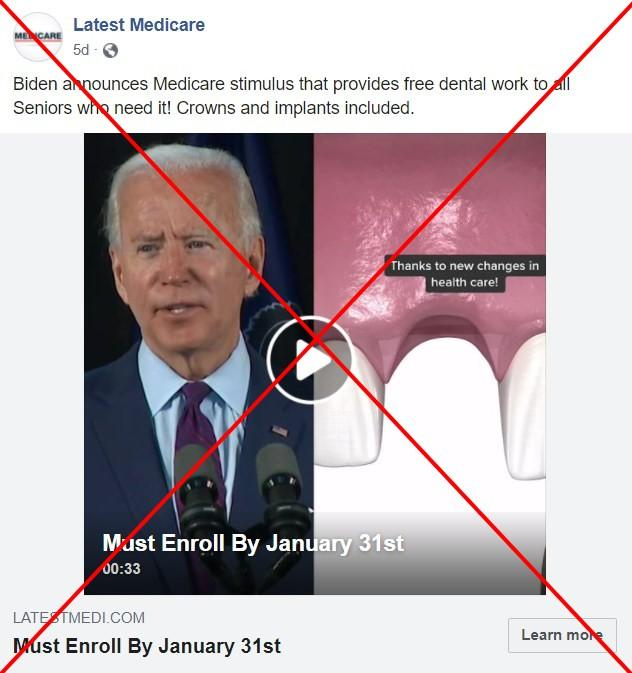
WASHINGTON — NOV 19, 2026 — A Facebook advertisement promising older Americans a valuable Medicare spending card can lead viewers into a choice with consequences far beyond the benefit shown on screen.
A research report has brought fresh attention to advertisements that use familiar public figures and claims of extra benefits to reach people navigating complicated health coverage decisions.
For families helping an older relative compare insurance options, the central question is whether a promised card reflects the actual terms of the coverage being offered.
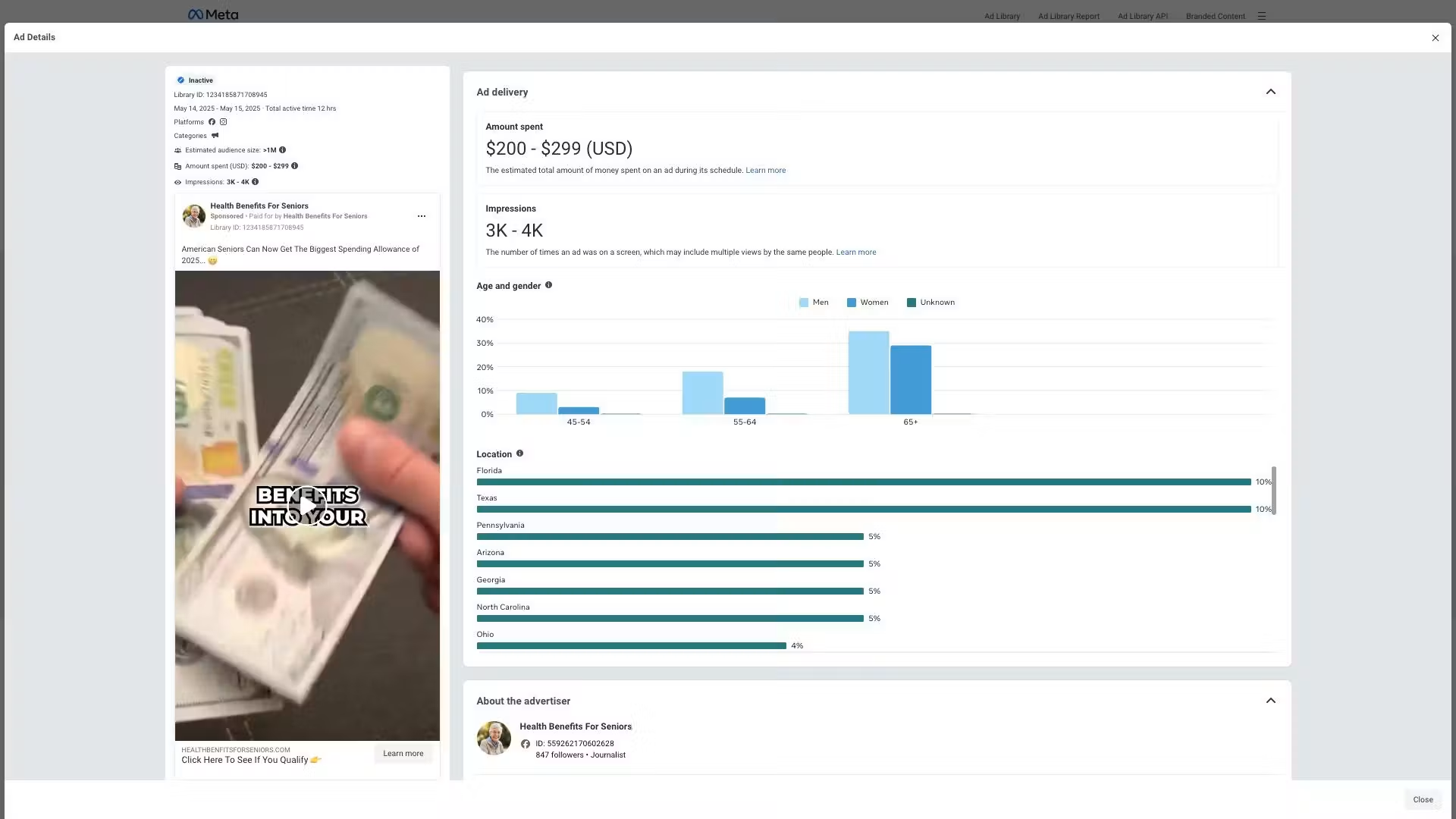
The Center for Countering Digital Hate, an advocacy group that studies online platforms, examined advertisements associated with 30 major Medicare scam advertisers using Meta’s public ad library.
In its May 2026 report, the group estimated that those advertisers generated about 215 million impressions during the year examined, with 73% of impressions reaching users over age 65.
An impression counts an ad being displayed, not a unique person, so the figure does not establish that 215 million different users saw the promotions.
The researchers estimated that Meta collected $14.3 million from the identified advertisers overall, including about $12.4 million in advertising spending during the year studied, according to NBC News.
Those amounts are estimates of advertising revenue associated with the advertisers, not a calculation of the money Medicare beneficiaries personally lost or proof that every advertisement purchased was fraudulent.
Some promotions used fabricated images or videos of Donald Trump, Oprah Winfrey and other public figures to suggest endorsements that the individuals had not given, the researchers found.
One fake Trump video promoted grocery allowance cards and was removed after generating an estimated 200,000 to 250,000 impressions, according to records reviewed by NBC News.
The researchers said a click or phone call could lead to personal information being collected or a beneficiary being steered toward a different Medicare plan.
Meta spokesperson Andy Stone said scammers use increasingly sophisticated tactics to evade detection, and the company said it removed more than 159 million scam ads in the previous year.
The Federal Trade Commission separately reported $2.1 billion in consumer losses from scams that began on social media in 2025, across many kinds of fraud and multiple platforms.
That national figure is based on reported losses and does not measure losses from these particular Medicare advertisements or establish how much any one family paid.
A promise of a $2,800 flex card fits a broader pattern of promotions examined by consumer advocates, but it does not establish that every Medicare beneficiary qualifies for that amount.
Some private Medicare Advantage plans offer legitimate prepaid cards for specified expenses, with eligibility, spending categories and available amounts depending on the particular plan and the enrollee.
An allowance for groceries or other nonmedical expenses may be restricted to people who meet specific requirements, such as qualifying for a special needs plan or having certain chronic conditions.
Changing plans can also change access to doctors, hospitals and prescription drugs, because some plans require patients to use participating providers for nonemergency care.
The answer is that an ad can hide the conditions behind the promised money: the card is not a universal government payment, and the advertised amount may not apply to the viewer.
Before switching, beneficiaries can check the plan’s written benefits and provider network with the insurer and Medicare, while enrollment periods and individual coverage rules determine when a change is possible.
Comments (0)
Loading comments...
May You Like

PENTAGON'S DECLASSIFIED UFO FILES — THE MYSTERY OF AN UNDERGROUND STORAGE PROJECT!

IOWA EMERGENCY: TOXIC AIR, POLLUTED WATER, 3,000 FAMILIES FORCED OUT AFTER 5-TON WASTE BLAST!

IRAN WARNS WASHINGTON — HOW SERIOUS IS THE THREAT TO U.S. MILITARY BASES?








Popular Posts




