
FBI NCIC HACK: EPSTEIN FILES LEAK WITH NEARLY 100 FAMOUS NAMES!
FBI Database Intrusion and Missing Epstein Records Raise Separate Questions About Federal Information Security
WASHINGTON — November 22, 2026 — An apparent cyber intrusion involving the FBI's national criminal-justice database has renewed scrutiny of federal information security as separate questions persist over the completeness of publicly released Jeffrey Epstein records. The developments involve sensitive government information, but investigators have not established a connection between them.
The FBI is investigating suspected unauthorized access to the National Crime Information Center, a system used by law-enforcement agencies nationwide. Meanwhile, a Justice Department report has identified numerous public figures mentioned in Epstein-related material, and a separate review has highlighted gaps in the released archive.
The two developments raise different questions: whether criminal-justice records were compromised, and whether the government has fully accounted for documents relating to Epstein.
Neither investigation has produced evidence that hackers stole a secret list of prominent individuals from Epstein files.
The NCIC investigation became public on November 21, when CNN reported that federal authorities were examining a suspected breach.
The Associated Press subsequently confirmed the investigation through a person familiar with the matter.
Reuters also reported the development, citing people briefed on the investigation.
The FBI declined to comment publicly.
The suspected intrusion immediately drew attention because NCIC is one of the country's most important law-enforcement information systems.
It contains records that police and federal investigators use during investigations and routine encounters.
The scope of the apparent compromise remains unknown.
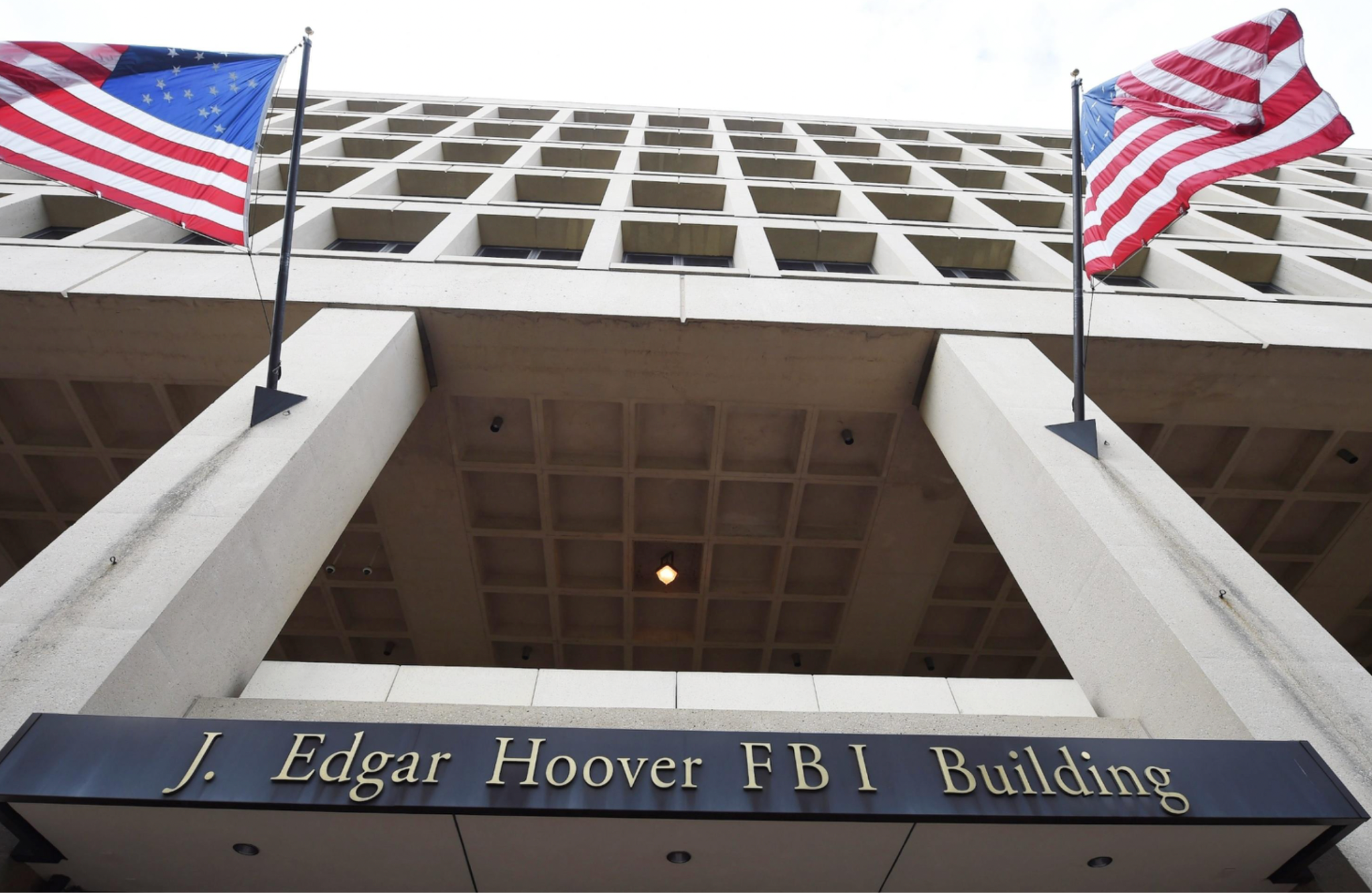
NCIC is a computerized system that allows authorized law-enforcement agencies to share criminal-justice information.
It supports searches involving fugitives, missing persons, stolen vehicles, stolen property and other records.
The database is important because police frequently need information maintained outside their own jurisdiction.
An officer in one state may encounter someone wanted by authorities in another.
A vehicle reported stolen hundreds of miles away may be recovered during a routine traffic stop.
NCIC helps connect those records.
Its value depends on both availability and accuracy.
Unauthorized access could raise questions about confidentiality, while unauthorized modification could affect the reliability of information used in police operations.
NCIC contains information about more than convicted criminals.
Its records include missing people, including children, and individuals associated with warrants or other law-enforcement matters.
Some entries concern people who have never been charged with a crime.
Others relate to stolen property or court orders.
The range of information explains why the reported incident is significant.
A breach affecting such a system could have different consequences depending on the records involved.
However, the public reporting does not identify any individual whose NCIC information was exposed.
A cybersecurity investigation must distinguish attempted access from a successful compromise.
Investigators may examine authentication records, unusual system activity and evidence of unauthorized transfers.
They must establish what resources an attacker reached and what permissions were available.
Another question is whether any information was changed.
For a law-enforcement database, the integrity of records can be as important as their confidentiality.
Incorrect information could interfere with investigations or affect decisions made by officers.
The technical cause of the suspected intrusion also remains unknown.
Those findings will determine whether the incident represents a limited security problem or a wider compromise.
The November investigation follows other reported security problems involving FBI systems.
In September, the hacking group ShinyHunters claimed to have stolen information associated with the bureau's recruitment website.
That incident concerned employment-related data.
In March, the FBI disclosed suspicious activity involving an internal system containing sensitive investigative and surveillance information.
Those systems serve different purposes from NCIC.
The existence of multiple incidents does not establish that the same attackers were responsible.
Nor does it prove that one intrusion provided access to another system.
The reports nevertheless illustrate the cybersecurity challenges facing an agency that maintains both operational information and administrative records.
The NCIC investigation emerged while questions about the federal government's handling of Epstein records remained unresolved.
Epstein, a financier and convicted sex offender, died in federal custody in 2019.
His criminal cases and relationships with prominent individuals have generated years of public scrutiny.
Congress subsequently enacted legislation requiring the Justice Department to release categories of Epstein-related records.
The department published large volumes of material, including documents containing references to public figures.
But publication did not end the debate.
Journalists and lawmakers have questioned whether the released archive accounts for all relevant documents.
Those concerns concern disclosure, redaction and completeness.
They are distinct from the newly reported NCIC intrusion.
A Justice Department report submitted to Congress included a list of government officials and politically exposed people named or referenced in reviewed Epstein-related materials.
The report was published in the Federal Register on August 27, 2026.
The list contains numerous prominent names from politics, business, entertainment and public life.
The report itself explains an important limitation.
Some individuals were mentioned only in portions of documents, including news reports, that were unrelated to the underlying Epstein and Maxwell matters.
A name's appearance therefore does not establish personal involvement with Epstein or participation in criminal activity.
The report was a disclosure document, not a list of convicted offenders.
Its purpose was to account for references in the reviewed records.
The presence of recognizable names makes the Epstein archive unusually sensitive.
The released materials contain references to individuals from different industries, political parties and countries.
Some references concern direct communications or social relationships.
Others may appear in news articles, contact information or unrelated documents collected during investigations.
Those categories are not equivalent.
A person mentioned in a newspaper article is not necessarily someone who met Epstein.
A person who communicated with Epstein is not automatically implicated in his crimes.
And a person's presence in investigative records does not establish wrongdoing.
Understanding those distinctions is essential when examining a large archive.
Without the surrounding documents, a list of names can create impressions that the underlying evidence does not support.
The Justice Department's August report was prepared under the Epstein Files Transparency Act.
It described categories of records released and withheld, as well as the legal basis for redactions.
The report also provided the list of officials and politically exposed individuals appearing in the reviewed materials.
That list is part of an official government disclosure.
It was not presented as a newly discovered database extracted by hackers.
Nor was it described as an NCIC record.
The report acknowledged that some omissions could result from the volume of material and the speed of the review.
It also explained that certain names redacted for law-enforcement-sensitive purposes were excluded.
Those qualifications matter when evaluating claims about missing names.
An official publication and a stolen database are fundamentally different sources.
A government report is released through a documented process.
Its publication date, issuing agency and stated purpose can be established.
A purported leak requires additional authentication.
Investigators or journalists would need to determine where the material originated, whether it had been altered and whether it was obtained without authorization.
The Epstein-related list published by the Justice Department has an identifiable official source.
The reported NCIC intrusion has no publicly identified dataset of stolen Epstein records.
No evidence reviewed establishes that the two sources overlap.
Treating the official list as the product of the NCIC intrusion would create a connection that the available records do not demonstrate.
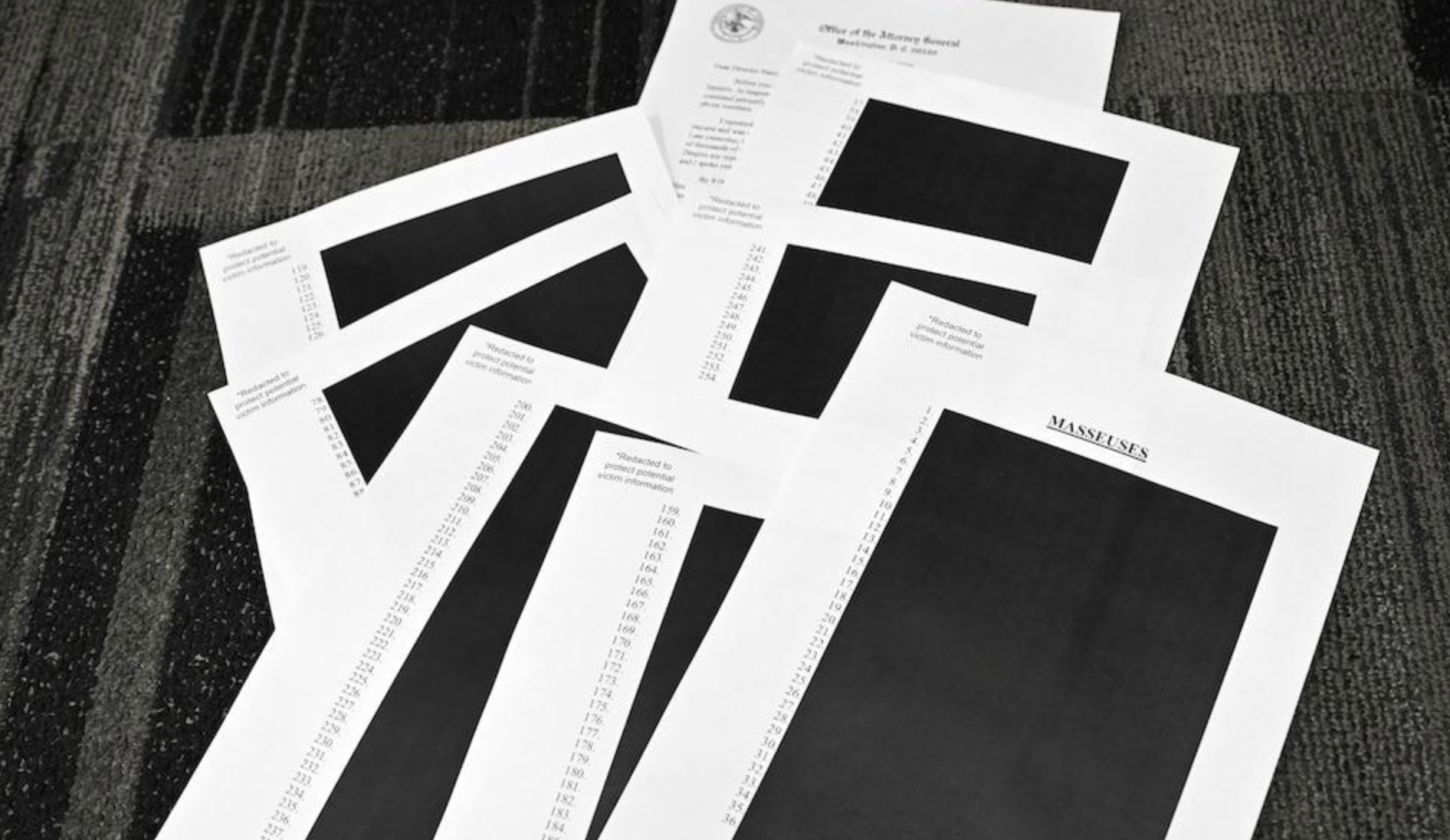
A CBS News investigation examined the publicly released Epstein archive and identified several categories of material that appeared incomplete.
The review raised questions about older email accounts, missing attachments and communications records.
It also examined gaps involving surveillance material and documents from certain government investigations.
The findings added to concerns about whether the released collection fully represented the available federal records.
However, a missing document in a public archive does not automatically establish that it was stolen.
The material might have been withheld, excluded from the applicable disclosure requirement, incorrectly processed or not located during the review.
Determining the reason requires examination of the underlying records and the government's handling of them.
One issue identified by CBS News concerned email attachments.
An archive may contain a message referring to an attachment without including the corresponding file.
That can prevent readers from understanding the full communication.
The missing attachment might contain relevant information, but its contents cannot be established merely from its absence.
Investigators would need to examine the original email account, available backups or other copies.
They would also need to determine whether the attachment was collected during the original investigation.
The issue is significant for assessing the completeness of the released Epstein materials.
It does not establish that an NCIC attacker removed the attachments.
CBS News also examined apparent gaps in records from older Epstein email accounts.
Those gaps matter because communications can help establish timelines, relationships and decisions.
A complete correspondence record may provide context that isolated messages cannot.
However, older digital records can be difficult to reconstruct.
Accounts may have changed, messages may have been deleted before investigators collected them, and different agencies may hold different copies.
The public archive does not necessarily contain every record ever created.
The question for investigators and lawmakers is whether the government has accounted for the records it possesses and the reasons particular materials were not released.
That is a disclosure question, separate from the FBI's NCIC cybersecurity investigation.
Another category examined by CBS News involved missing surveillance material.
Video evidence has attracted particular attention because Epstein died while in federal custody.
The handling and preservation of footage can affect public confidence in the completeness of an investigation.
But an absent recording cannot establish what it would have shown.
Nor does a missing surveillance file demonstrate that a hacker removed it.
Those conclusions would require evidence about the recording's existence, custody, storage and subsequent handling.
The public debate concerns whether relevant material has been preserved and properly accounted for.
The NCIC investigation has not produced evidence linking unauthorized database access to missing Epstein-related video.
The claim that an appendix disappeared during the NCIC incident requires identification of a specific document.
An appendix should have an identifiable parent report, title, publication history or document reference.
Investigators would need to establish that the appendix existed, was available before the alleged intrusion and subsequently disappeared.
They would also need evidence connecting that disappearance to unauthorized access.
The official Justice Department report published in August 2026 contains an appendix associated with the disclosure of Epstein-related records.
That document is available through the Federal Register.
The existence of an official appendix is different from proof that another appendix was removed by hackers.
Missing records can still be important even without evidence of cyber theft.
A public archive is most useful when readers can understand how it was assembled.
That requires clear explanations of what was reviewed, what was withheld and why.
If a released email references an unavailable attachment, the omission may prevent a complete understanding of the exchange.
If records from an investigative agency are absent, researchers may have difficulty reconstructing decisions.
Those problems can justify further review.
But their significance depends on the underlying evidence.
The absence of a document is not proof of deliberate destruction.
And an unexplained redaction does not establish that the concealed material contains evidence of criminal wrongdoing.
The completeness of the Epstein archive has also become a matter of congressional oversight.
CBS News reported that the Government Accountability Office had announced a review concerning redactions in the released documents.
The review followed requests from lawmakers seeking greater clarity about the government's handling of the material.
Congressional oversight can examine whether agencies complied with statutory disclosure requirements.
It can also seek explanations for withheld records and processing decisions.
That work is different from a criminal investigation into unauthorized access to NCIC.
The two issues involve federal accountability, but they operate through separate processes.
A finding about improper redaction would not automatically establish a cyber intrusion.
Likewise, a confirmed NCIC breach would not prove misconduct in the Epstein document release.
The Epstein Files Transparency Act established disclosure obligations for the Justice Department.
The law addressed categories of investigative materials and required explanations for certain withheld or redacted information.
The August Federal Register notice described the department's report to congressional committees.
Its purpose was to account for records released and withheld under the statute.
The existence of a statutory disclosure process matters because the Epstein archive did not emerge solely through anonymous leaks.
Government agencies were required to publish and account for records.
Disputes about compliance can therefore be evaluated against legal obligations.
The NCIC investigation, by contrast, concerns suspected unauthorized access to a law-enforcement information system.
The legal questions are substantially different.
A connection between the NCIC intrusion and Epstein records would require evidence of shared systems, files or access.
Investigators would need to establish that the suspected intruder reached material related to Epstein.
They would also need to show that the material was present in the affected environment.
NCIC's principal functions concern criminal-justice information sharing.
The Justice Department's Epstein disclosure process involves investigative and archival records.
The fact that both relate broadly to federal law enforcement does not establish that they use the same storage systems.
No verified report identifies Epstein documents among records accessed through NCIC.
Without that connection, the incidents should be examined independently.
Attribution is another unanswered question.
The FBI has not publicly identified the person or group responsible for the suspected NCIC intrusion.
That makes it impossible to establish the attacker's motive from the available reporting.
A cybercriminal seeking financial information would have different objectives from someone attempting espionage or disruption.
But those possibilities do not identify the actual attacker.
The FBI has experienced previous security incidents, including claims involving the ShinyHunters group.
There is no confirmed evidence that the same group conducted the NCIC intrusion.
Investigators would need technical evidence connecting the activity to a particular actor.
Speculation based on earlier incidents cannot replace that evidence.
President Donald Trump was asked about the reported FBI database incident on November 21.
In a Fox News interview, he said he had just learned about it and described the development as troubling.
His remarks did not identify a perpetrator.
They also did not disclose the scope of any data compromise.
The response showed that the incident had become a matter of national political attention.
It did not establish a connection to Epstein-related records.
The White House response and the FBI's investigation remain separate from the Justice Department's published Epstein disclosures.
The available reporting provides no presidential statement confirming a missing appendix or a new leak of prominent names.
NCIC is used in operational law enforcement.
Officers rely on its information when checking warrants, identifying missing people and investigating stolen property.
That creates immediate concerns about confidentiality and accuracy.
If an attacker gained unauthorized access, investigators would need to establish whether records were viewed, copied or modified.
For the Epstein archive, the central public question is different.
It concerns whether the government has released the records required by law and adequately explained omissions.
Both issues involve public trust in federal information systems.
But the consequences, legal requirements and investigative methods differ.
The distinction is essential to understanding the two developments without combining them into an unsupported narrative.
A list of prominent names can spread rapidly online, particularly when it is presented without context.
Readers may assume that everyone named participated in the same activities.
That assumption is not supported by the Justice Department's description of its report.
The department expressly noted that some people appeared in documents unrelated to the Epstein and Maxwell matters.
Others may be mentioned in materials for reasons that do not suggest wrongdoing.
A reliable examination requires reviewing the underlying document associated with each name.
It also requires distinguishing allegations from findings.
The number of recognizable names does not establish the existence of a coordinated criminal network.
Nor does it establish that the names were stolen during a cyberattack.
A genuine data leak can be examined through several kinds of evidence.
Investigators may compare allegedly stolen records with authenticated originals.
They may examine file metadata, document identifiers and evidence of unauthorized transfers.
A publication claiming to possess a government database may be asked to demonstrate the origin and integrity of the material.
The existence of names already available in public documents would not establish a new breach.
Nor would the publication of a document without a verifiable source prove that it came from NCIC.
The available reporting identifies no authenticated Epstein dataset obtained through the suspected intrusion.
That absence limits what can be concluded about claims of a new leak.
The Associated Press and Reuters have reported the apparent NCIC intrusion.
Their reporting establishes that the FBI is investigating the matter.
CBS News has separately examined gaps in the Epstein archive.
The Justice Department has published official records explaining categories of released and withheld material.
Those sources establish different parts of the broader information-security story.
They do not establish a single event combining the NCIC investigation with the disappearance of Epstein documents.
The distinction matters because reporting can confirm the existence of an investigation without confirming every allegation associated with it.
An official inquiry may take time to determine what actually occurred.
Until then, the available evidence supports a narrower account.
If investigators establish that sensitive NCIC records were accessed, authorities would need to assess the scope and consequences.
That could include determining whether affected agencies require additional security measures.
It might also involve checking the accuracy of records and reviewing access permissions.
If personal information was exposed, notification questions could arise.
The appropriate response would depend on the information involved and the applicable legal requirements.
None of those measures has been publicly announced as a confirmed consequence of the November incident.
The FBI has not released a detailed technical assessment.
The public therefore cannot determine how many people, if any, were affected.
The investigation remains the decisive source for establishing those facts.
The Epstein disclosure debate also has unresolved questions.
CBS News identified categories of missing or incomplete material.
Lawmakers have sought further scrutiny of redactions and withholding decisions.
The Justice Department's published report provides explanations for its disclosure process, but those explanations have not ended public concern.
The central issue is whether the government has fully accounted for the records covered by the law.
That question can be examined through official inventories, document histories and oversight findings.
It does not depend on proving that NCIC was hacked.
The two issues may remain prominent in public debate even if investigators ultimately find no connection between them.
The NCIC investigation could produce new information about how the apparent intrusion occurred.
An official assessment might identify affected systems, compromised accounts or stolen data.
The Justice Department could also face further questions about the completeness of Epstein-related disclosures.
Congressional review may clarify whether additional records should be released or whether existing redactions require explanation.
Neither outcome can be assumed.
The immediate priority is establishing what the available evidence actually shows.
For NCIC, that means determining the scope of unauthorized access.
For Epstein records, it means accounting for the released archive and the documented gaps.
The available evidence does not establish that an Epstein appendix was stolen during the NCIC incident.
The Justice Department's August 2026 report includes an officially published appendix listing numerous individuals referenced in reviewed materials.
CBS News has identified separate gaps in the broader Epstein archive.
The FBI is investigating an apparent intrusion into NCIC.
Those are the documented developments.
The FBI investigation may clarify whether criminal-justice records were compromised. Separate oversight of the Epstein archive may clarify why particular documents are missing or withheld.
For now, the strongest conclusion is that two significant federal information questions remain unresolved, without evidence that they are part of the same operation.
Comments (0)
Loading comments...
May You Like

PACIFICA PIER IN CALIFORNIA COLLAPSE REVEALS MASSIVE CRACK BENEATH THE OCEANs!

TRUMP'S NVIDIA STOCK DEALINGS — IS THERE ANY TRUTH TO THE $14 MILLION PROFIT CLAIM?

IOWA MILITARY DISASTER: 5 TONS OF SUSPECTED BIOWEAPON WASTE LEAK—301+ HOSPITALIZED, 20 CRITICAL!












