
FBI NCIC HACKER IDENTIFIED—THEN EPSTEIN FILES VANISH!
FBI NCIC HACKER IDENTIFIED—THEN EPSTEIN FILES VANISH!
WASHINGTON — November 22, 2026 — A reported cyberattack targeting the FBI's national criminal-justice database has intensified questions about federal information security, just as a separate investigation into the government's Jeffrey Epstein archive continues to identify missing documents and unexplained gaps in publicly released records.
The National Crime Information Center, known as NCIC, is used by police departments and federal agencies across the United States. A law-enforcement source confirmed to ABC News on November 21 that the database had been hacked, while the FBI declined to comment publicly.
Meanwhile, CBS News has documented substantial gaps in Epstein-related materials published by the Justice Department, including missing email records, financial documents and attachments.
The two developments have attracted attention because they concern sensitive federal information.
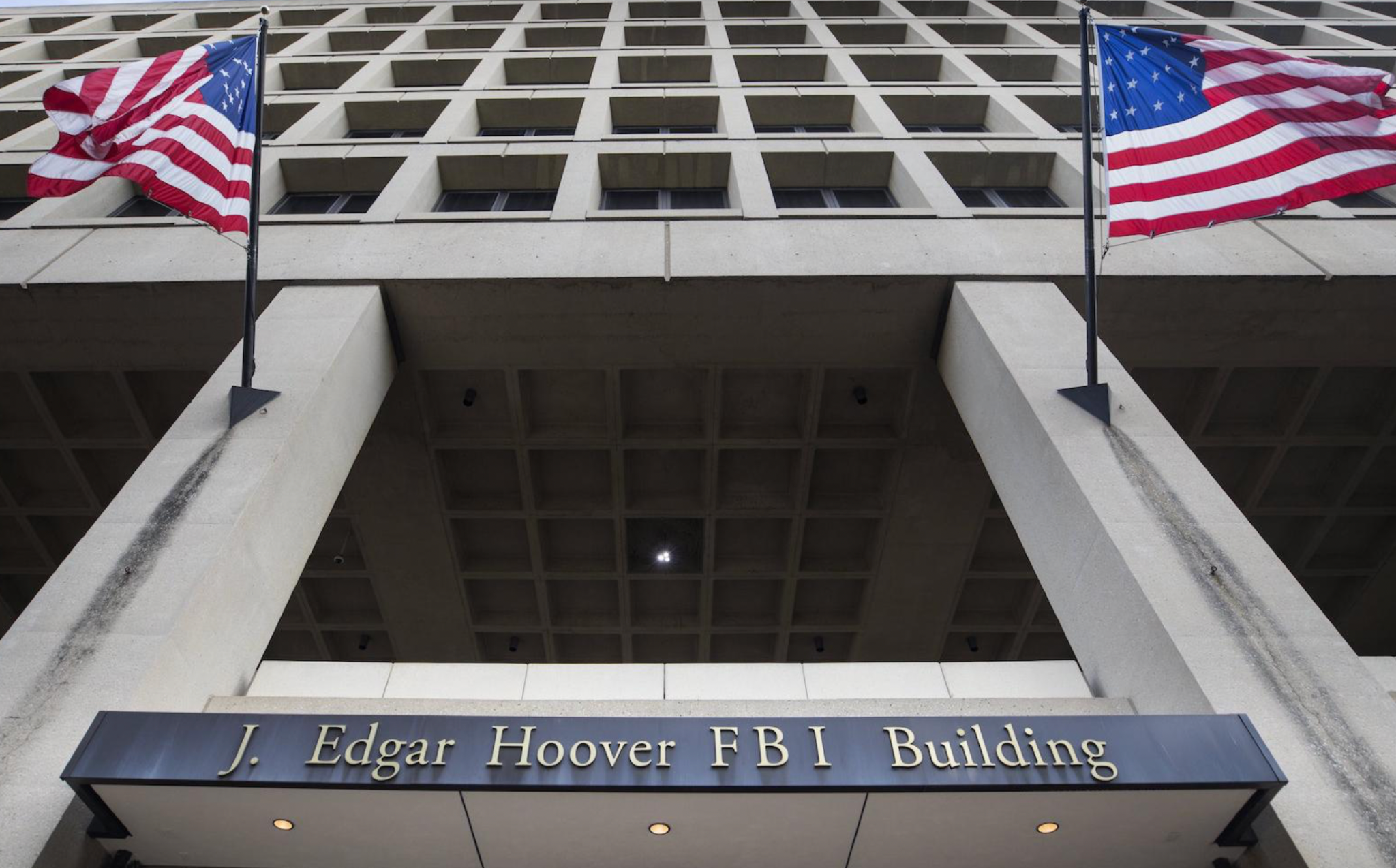
NCIC is one of the most important information systems used in American law enforcement.
It allows authorized agencies to access criminal-justice records across state and local boundaries.
The database includes information about wanted individuals, missing people, stolen vehicles, stolen property and other matters.
An officer in one state may use NCIC to check whether another jurisdiction has issued a warrant.
Investigators can also use the system to help identify missing persons or recover stolen property.
That nationwide reach makes the database valuable.
It also creates serious concerns when unauthorized access is reported.
The consequences of a breach depend on what the attacker actually reached and whether information was copied, changed or deleted.
The suspected breach became public on Saturday, November 21.
CNN first reported the investigation, citing people briefed on the matter.
Reuters and the Associated Press subsequently reported that the FBI was examining an apparent intrusion.
ABC News said a law-enforcement source confirmed the database had been hacked.
The FBI declined requests for comment.
That left the public without an official technical account of the incident.
No agency announcement identified the intruder, described the entry point or provided a confirmed number of affected records.
The initial reporting established that a serious cybersecurity investigation was underway.
The question of identity has become central to the story.
As of November 22, the available reporting does not identify a named suspect in the NCIC incident.
Authorities have not announced an arrest or publicly attributed the intrusion to a particular individual or hacking group.
Identifying a cyber intruder requires technical evidence.
Investigators may examine account activity, network connections, malicious software and other digital traces.
They may also seek information from service providers or agencies that share relevant infrastructure.
A claim posted online is not equivalent to an official attribution.
The FBI's earlier experience with cybercriminal groups provides context, but it does not identify who was responsible for the latest incident.
The database is not limited to records of people convicted of crimes.
It also contains information about missing individuals, including children.
Other records may involve people protected by court orders, stolen property or active law-enforcement matters.
Some individuals appearing in the system may never have been charged with a crime.
This distinction is important because the potential privacy consequences extend beyond criminal suspects.
If unauthorized users obtained sensitive records, investigators would need to determine which categories were involved.
They would also need to assess whether the information could be misused.
No verified list of affected people has been released.
The presence of information in NCIC does not establish that it was accessed during this incident.
Cybersecurity specialists distinguish between several possible outcomes of an intrusion.
An attacker might gain access to a limited account.
They might reach a connected service without obtaining the central database.
In a more serious case, they could copy sensitive records or interfere with the accuracy of information.
Each outcome would require a different response.
For a law-enforcement system, the integrity of records is especially important.
An inaccurate warrant or missing-person entry could affect decisions made by officers.
But no official finding has established that NCIC warrants were altered or records deleted.
The investigation must determine what actually happened before those consequences can be assessed.
The FBI has faced other cybersecurity incidents during 2026.
In September, a group known as ShinyHunters claimed responsibility for a breach involving the bureau's jobs portal.
The incident raised concerns about information associated with FBI employees and applicants.
That system serves a different purpose from NCIC.
A recruitment website handles employment-related information.
NCIC supports criminal-justice operations across the country.
The existence of both incidents does not establish a common attacker.
No confirmed evidence connects ShinyHunters to the November NCIC intrusion.
Investigators would need technical findings to establish such a connection rather than relying on the group's involvement in an earlier incident.
President Donald Trump was asked about the reported NCIC incident during a Fox News interview on November 21.
He said he had only recently learned about it and expressed concern.
His comments did not identify the attackers.
They also did not provide details about which systems or records had been affected.
The response showed that the incident had reached the White House.
It did not resolve the central cybersecurity questions.
The FBI continued to withhold public comment on the investigation.
That meant the available evidence remained limited to reporting from people familiar with the matter.
The next significant development would be a technical finding or official disclosure identifying the scope of the compromise.
At the same time, the Justice Department's handling of Jeffrey Epstein records has remained under scrutiny.
Epstein was a financier and convicted sex offender who died in federal custody in 2019.
The federal government subsequently released millions of pages of investigative material under the Epstein Files Transparency Act.
The archive includes documents concerning Epstein's activities, relationships, communications and criminal investigations.
The scale of the release has made it difficult to assess whether every relevant record is represented.
Journalists, lawmakers and survivors have questioned the completeness of the material.
Those concerns began well before the reported NCIC intrusion.
The Epstein archive is a separate collection of investigative records, not the NCIC database itself.
The Justice Department said it collected more than 6 million pages during its review of Epstein-related records.
It ultimately released more than 3 million pages.
That difference attracted public attention.
The department told CBS News that the unreleased material included duplicates, records unrelated to Epstein and documents protected by legal privilege.
It maintained that it had released everything required by the transparency law.
Critics questioned whether that explanation adequately accounted for the missing material.
The numerical difference alone does not establish that millions of pages were improperly withheld.
A document collection may contain multiple copies of the same material.
But the discrepancy created a reason to examine how the archive was processed.
On October 28, CBS News published a detailed investigation into the numbering systems used to organize Epstein-related documents.
The report examined identification numbers attached to pages during earlier stages of legal proceedings and document processing.
Such identifiers, often called Bates numbers, help lawyers and investigators track large collections.
CBS compared those identifiers with the numbering used in the publicly released archive.
The analysis revealed substantial gaps.
Some sequences indicated that documents present in earlier collections were not included in the final public release.
The discovery raised questions about how the government selected, removed or withheld material.
Crucially, the report appeared weeks before the November 21 NCIC incident became public.
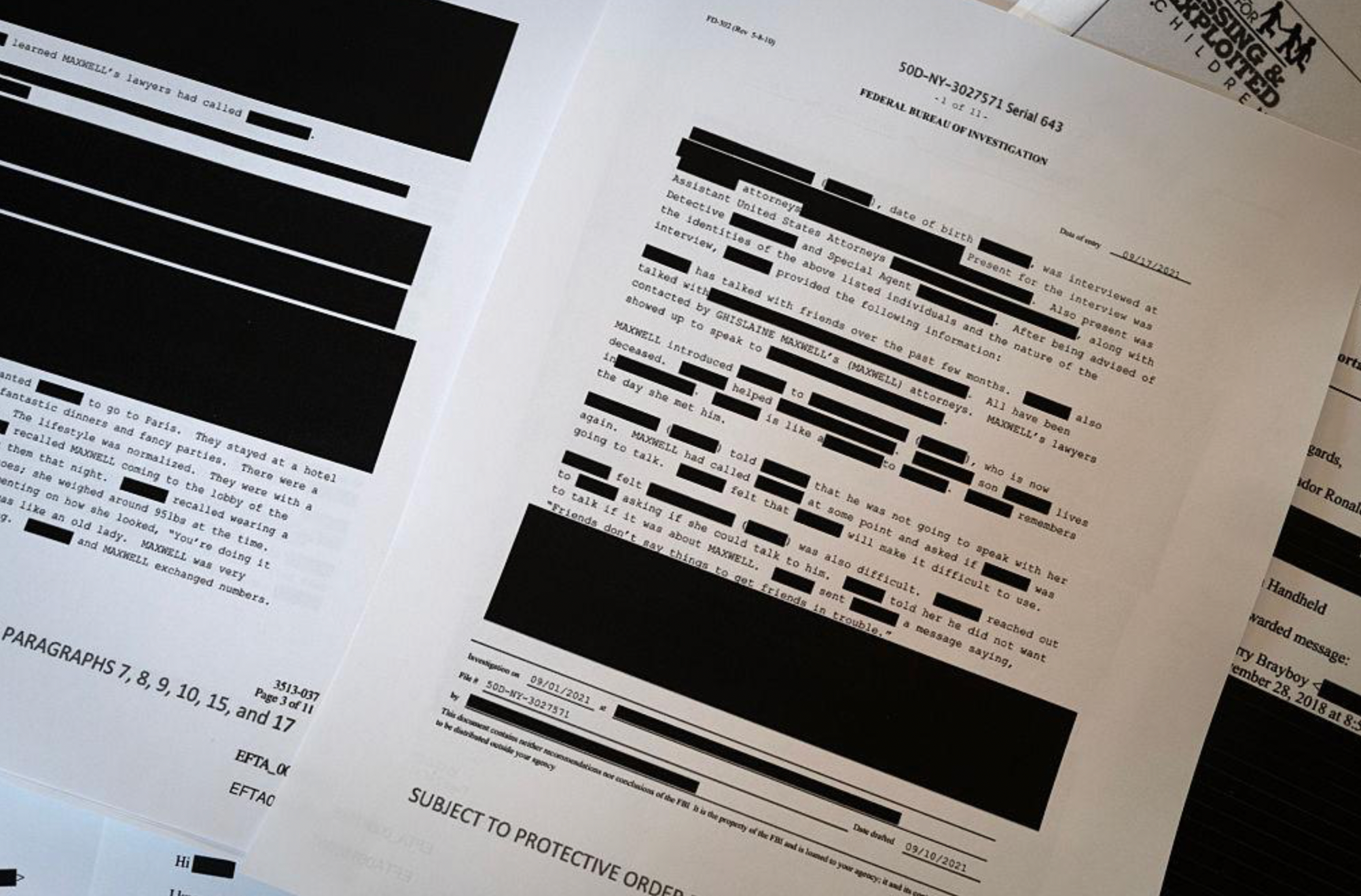
The CBS investigation examined pages bearing multiple numbering systems.
Some pages contained identifiers from earlier court proceedings alongside newer numbers assigned for the transparency release.
When the earlier sequence advanced by several numbers but the final release advanced by only one, it indicated that pages from the earlier collection were absent.
The analysis identified many such gaps.
The findings did not reveal the contents of every missing page.
They also did not establish why each page was excluded.
Some omissions could reflect duplicate records or other processing decisions.
Others might require further explanation.
The significance of the investigation was that the gaps could be documented through the archive's own organizational system.
One example involved financial documents associated with Epstein's accounts.
CBS News examined a collection containing approximately 4,500 images of checks.
Its analysis identified gaps corresponding to 66 check images.
In some cases, the missing image appeared to represent one side of a check.
In others, both sides were absent.
Financial records can help investigators reconstruct transactions, relationships and the movement of money.
But the absence of an image does not establish what transaction it contained.
Nor does it establish that someone removed the record for an improper purpose.
The gaps were identified through document numbering.
CBS also examined a large group of Epstein-related email records.
The review found gaps in an earlier numbering sequence covering approximately 995,000 released pages.
The publication reported that the difference between earlier and later numbering amounted to approximately 1.2 million pages within that section.
Those gaps raised questions about whether entire email exchanges had been excluded.
The Justice Department's processing instructions allowed reviewers to remove certain duplicate email chains.
For example, a complete later message might contain the text of earlier messages.
That could explain some omissions.
However, CBS noted that duplicate messages remained elsewhere in the archive, complicating efforts to determine how consistently the process was applied.
Determining whether a document was deliberately withheld requires evidence about the review process.
Investigators would need to examine the original collection, processing instructions and records of decisions made by reviewers.
A missing page number may demonstrate that a page is absent from the published archive.
It does not necessarily reveal why.
A document might have been classified as duplicative.
It might have been withheld because of privilege or another legal restriction.
A processing error is another possibility.
Deliberate concealment would require additional evidence.
The October CBS investigation raised substantial questions about the archive's completeness.
The October 28 investigation also examined indications that classified information had been included in Epstein-related materials collected by the Justice Department.
CBS reported that at least three documents pointed to the presence of classified material in the underlying records.
The precise contents and reasons for classification were not publicly established.
Attorney General Todd Blanche had previously maintained that the department was not withholding Epstein records on national-security grounds.
That difference prompted questions about how the department handled potentially sensitive material.
But the presence of classified information in an investigative collection does not establish that it was stolen.
Nor does it show that the NCIC database contained those documents.
The questions concern the government's disclosure and record-review processes.
A cybersecurity breach and a missing public document are different kinds of evidence.
A breach involves unauthorized access to a system.
A missing document means a record expected in a collection cannot be located or was not published.
Those circumstances can sometimes overlap.
An attacker might delete information after obtaining access.
But that possibility must be demonstrated through system records or other evidence.
The Epstein archive gaps were documented before the NCIC incident became public.
No reporting establishes that the missing material was stored in NCIC.
No forensic evidence has connected the gaps to the suspected NCIC intruder.
The chronology and technical separation make it essential to investigate the two issues independently.
The Justice Department published a report in the Federal Register on August 27, 2026.
The report was submitted to Congress under the Epstein Files Transparency Act.
It included an appendix addressing categories of released and withheld records.
It also provided a list of government officials and politically exposed individuals named or referenced in reviewed materials.
That appendix is part of a publicly documented government report.
It is not an authenticated product of the November NCIC intrusion.
The existence of an official appendix also does not establish that a separate secret appendix was stolen.
A claim about another missing document would require its title, identification number or other evidence demonstrating that it existed.
Epstein's records contain references to individuals from politics, business, entertainment and other fields.
Those references can have very different meanings.
Some may concern direct communications.
Others may appear in address books, news articles or unrelated materials collected during investigations.
A name appearing in an investigative document is not proof of criminal conduct.
The Justice Department's published report acknowledged that some references to prominent individuals appeared in documents unrelated to the underlying Epstein and Maxwell matters.
That qualification is important when discussing lists of recognizable names.
A list without its supporting documents can create misleading impressions.
The evidence concerning each individual must be assessed separately.
The Government Accountability Office has announced a review of redactions in the released Epstein materials, according to CBS News.
The review followed requests from members of Congress.
Oversight may help determine whether the Justice Department complied with its disclosure obligations.
It may also clarify why certain records were withheld or omitted.
Those findings could affect public understanding of the archive.
They would not automatically establish a connection to the NCIC intrusion.
The FBI investigation concerns unauthorized access to a criminal-justice system.
The oversight process concerns the completeness and handling of Epstein-related disclosures.
Both may produce important findings, but they address different questions.
A credible connection would require evidence showing that the suspected NCIC intruder accessed Epstein-related material.
Investigators would first need to establish that such material was stored in an affected system.
They would then need records showing unauthorized access to the relevant files.
Evidence of copying, deletion or alteration would be needed to establish what happened to those records.
A named suspect alone would not prove that Epstein documents were involved.
Likewise, a missing Epstein document would not identify the NCIC attacker.
The public reporting currently supplies neither connection.
Without those elements, the claim that the two incidents were coordinated remains unsupported.
The FBI investigation faces several immediate questions.
Authorities must determine how the NCIC system was accessed and which accounts or components were affected.
They must establish whether information was viewed, copied, changed or deleted.
They also need to determine whether the intruder maintained access after the initial compromise.
Identifying the responsible individual or group is another task.
Those findings may require examination of technical records and cooperation with other agencies.
The public has not received a confirmed record count or a list of affected individuals.
An official assessment could narrow the scope of the incident or identify more extensive consequences.
Until that assessment is available, claims about particular stolen files cannot be established.
A verified identification would be a major development.
It could help investigators determine the motive behind the intrusion.
Different attackers may seek different outcomes, including information theft, extortion or disruption.
But identifying a person is only one part of a cybersecurity investigation.
Authorities would still need to establish what the suspect actually did.
A person associated with an intrusion might not have accessed every system available to the FBI.
Nor would the person's identity establish that Epstein records were targeted.
The evidence must connect the individual to particular actions and information.
As of November 22, no such identification has been publicly confirmed in the NCIC case.
The two controversies raise broader questions about the security and accountability of government information.
NCIC must remain reliable because police use it during investigations and encounters with the public.
The Epstein archive must be accurately documented because its release is governed by federal transparency requirements.
One system depends on restricting access to authorized users.
The other involves making legally required records available while protecting information that must remain confidential.
Those responsibilities are different, but both require clear procedures and accurate recordkeeping.
The FBI's cybersecurity investigation and the Justice Department's disclosure process will be judged by the evidence each produces.
Public confidence depends on establishing what occurred rather than assuming a connection.
The sequence of events is important.
In June 2026, CBS News published an examination of missing and incomplete Epstein records.
On August 27, the Justice Department's report and appendix appeared in the Federal Register.
On October 28, CBS published additional findings concerning missing financial records, email sequences and indications of classified material.
Then, on November 21, news organizations reported the apparent NCIC intrusion.
The timeline shows that concerns about missing Epstein documents predated the public reporting of the FBI database incident.
It does not rule out every possible future finding about the intrusion.
But it provides no basis for attributing the earlier document gaps to the newly reported breach.
The two developments involve federal information systems, but their documented histories differ.
The NCIC incident concerns suspected unauthorized access to a database used by law enforcement.
The Epstein controversy concerns the completeness of records released under a transparency law.
The FBI has not publicly named the NCIC attacker.
The Justice Department's missing-document questions were being examined before the breach became public.
No authenticated evidence links the suspected intruder to the absent Epstein records.
The appropriate conclusion depends on the findings of the separate investigations.
For now, the chronology establishes overlapping public concern, not a demonstrated coordinated operation.
The next important development in the NCIC case would be an official finding identifying the intruder, the method of access or the information affected.
Further examination of the Epstein archive may clarify why particular documents were excluded from the public release.
Congressional oversight could provide additional information about redaction and disclosure decisions.
Neither process has established that the missing Epstein material was stolen in a cyberattack.
The central question is therefore not whether a named hacker has already been connected to the Epstein files.
It is whether investigators can produce evidence demonstrating such a connection.
Comments (0)
Loading comments...
May You Like

PENTAGON'S DECLASSIFIED UFO FILES — THE MYSTERY OF AN UNDERGROUND STORAGE PROJECT!

TRUMP'S NVIDIA STOCK DEALINGS — IS THERE ANY TRUTH TO THE $14 MILLION PROFIT CLAIM?

FIVE-STAR LUXURY RESORT FOR SENIORS — UPSCALE RETIREMENT LIVING WITHOUT THE PRICE TAG?












