
Federal Judge Blocks Trump Administration’s Bid to Set Aside 20,000 California Ballots
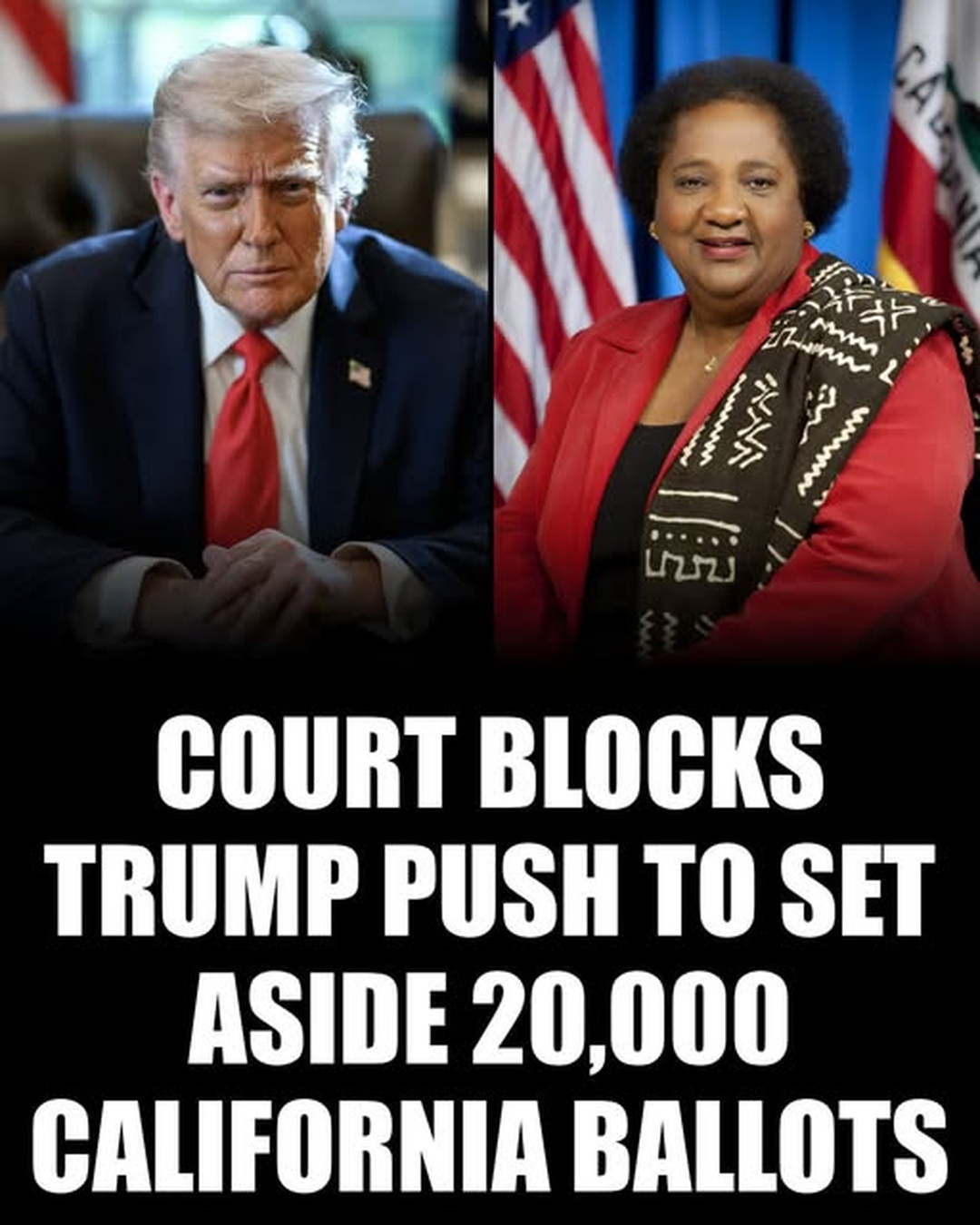
LOS ANGELES — A federal judge has rejected the Trump administration’s emergency request to require California election officials to set aside approximately 20,000 mail-in ballots from voters whose citizenship the federal government has questioned. The decision comes just days before the November 3, 2026, midterm elections.
U.S. District Judge David O. Carter ruled on October 28 that the administration had not justified the extraordinary intervention it sought in California’s ongoing election. The case has become a significant legal dispute over voting rights, election administration and the balance of power between federal and state governments.
The Justice Department argued that California should separate ballots associated with people on a federal list of individuals considered likely to be noncitizens and verify their eligibility before counting those votes. State officials opposed the request, questioning the list’s reliability and arguing that the proposed process could interfere with the election.
The ruling does not establish that every person on the federal list is eligible to vote. Instead, it rejects the administration’s request to segregate the ballots under the circumstances presented to the court, where voting and ballot processing were already underway.
Why the Court Rejected the Request

The dispute began earlier in October, when the Justice Department sent California officials a list of more than 20,000 people it believed were potentially ineligible to vote because they were not U.S. citizens. Federal officials demanded that the state review the list quickly and hold affected ballots until citizenship could be verified.
California officials refused to comply with the demand, arguing that the federal government had not provided sufficient information to establish the accuracy of the list. The state also maintained that its election laws required officials to follow established procedures for issuing and processing ballots.
The federal government subsequently sued California and Los Angeles County. It asked the court to intervene before the election, arguing that election officials had a responsibility to prevent votes from being cast or counted by people who were not eligible to participate.
Judge Carter found the requested intervention legally problematic. His written decision warned that forcing a state to change its election procedures shortly before an election could disrupt the process and potentially prevent eligible citizens from having their votes counted.
The judge also raised concerns about the consequences of segregating thousands of ballots based on allegations that had not been adequately established. His ruling emphasized that once voters’ ballots are singled out or excluded, the harm to their voting rights may be difficult to reverse.
The Dispute Over the 20,000 Voters
At the heart of the case is a fundamental distinction: identifying a person as potentially ineligible is not the same as proving that the person is legally prohibited from voting.
The Trump administration maintained that its list identified people whose citizenship status warranted further scrutiny. Federal officials argued that election authorities should not count ballots from individuals whose eligibility had not been confirmed.
California officials countered that the list could contain errors and that the federal government had not adequately demonstrated that everyone identified was ineligible. In court filings, Los Angeles County officials described problems with some of the records and questioned the reliability of the information used to flag voters.
Both federal and California law generally prohibit noncitizens from voting in federal elections. The legal dispute, however, concerns how authorities establish ineligibility, which government body has the power to require specific verification procedures and what can lawfully happen to ballots during an ongoing election.
The case therefore extends beyond the individual voters named on the list. It raises broader questions about whether federal officials can compel states to alter their election procedures on an emergency basis, especially when ballots have already been distributed and returned.
A Broader Battle Over Election Authority
California Secretary of State Shirley Weber and other state election officials have defended the state’s authority to administer its elections under established legal procedures. They argue that sudden federal demands should not override state rules without a clear legal basis and reliable supporting evidence.
The dispute also follows a separate setback for the administration at the U.S. Court of Appeals for the Ninth Circuit. On October 26, the appeals court declined to intervene immediately in the case, allowing the dispute to proceed before the federal district judge.
Together, the two court decisions have complicated the administration’s attempt to obtain an emergency order before Election Day. The district court’s October 28 ruling was particularly important because it directly rejected the requested temporary relief.
The Justice Department has indicated that it intends to appeal the district court decision. That means the legal fight may continue even as election officials prepare for November 3, although the precise consequences will depend on any subsequent court orders.
The case is also part of a wider national debate about election security. The Trump administration has sought greater federal involvement in aspects of election administration, while state officials and voting-rights advocates have challenged measures they say could undermine established protections for eligible voters.
What Happens Next?
With the midterm elections approaching, California election officials must continue processing ballots under the rules currently in force, unless a higher court issues a new order. The latest ruling does not itself resolve every underlying dispute about the federal government’s list or the citizenship status of each person identified.
The administration’s appeal could bring further legal scrutiny to the scope of federal authority over state-run elections. It could also clarify how courts should evaluate emergency requests to change election procedures after voting has already begun.
For voters, the immediate concern is whether legal challenges will disrupt ballot processing or create uncertainty about whether their votes will count. Election officials face the difficult task of maintaining public confidence while complying with court orders and existing election law.
The controversy is likely to remain politically charged. Republicans who support the administration’s position emphasize the importance of ensuring that only eligible citizens vote. Critics argue that unreliable allegations and rushed procedures risk placing eligible voters’ ballots in jeopardy.
Ultimately, the court’s decision reflects a central principle of American elections: concerns about eligibility must be addressed through lawful procedures and credible evidence. A government allegation alone does not establish that a particular voter is ineligible, and any effort to restrict ballots must meet the applicable legal standards.
As the November 3 election approaches, the case will remain a closely watched test of the relationship between federal election oversight, state authority and the protection of voting rights.
Comments (0)
Loading comments...
May You Like

WWE BRONSON REED DEAD AT 38, STIMULANTS DETECTED, $10M INSURANCE PAYOUT FROZEN!

FLORIDA AIRBNB NIGHTMARE — 50 TEENS, 7 SHOOTING VICTIMS LINKED TO “SHOTS AT THE DOOR”!










Popular Posts




