FIGHT OVER OBAMA’S IRAN POLICY
RUBIO REIGNITES FIGHT OVER OBAMA’S IRAN POLICY…


Secretary of State Marco Rubio has sharply criticized Iran's regime as Washington continues its confrontation with Tehran, renewing a broader Republican argument over how previous administrations handled Iran.
In recent remarks, Rubio described Iran as a major state sponsor of terrorism and accused its government of supporting armed groups targeting civilians, infrastructure and U.S. interests.
Rubio's comments come amid an ongoing U.S.-Iran conflict that has placed Tehran's nuclear program, regional proxies and longstanding sanctions policy back at the center of American politics.
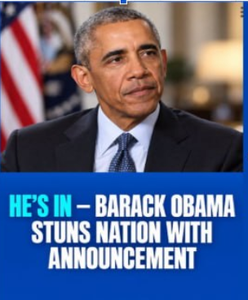
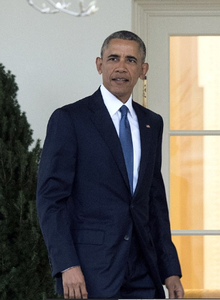
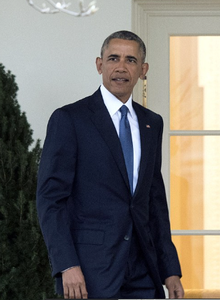
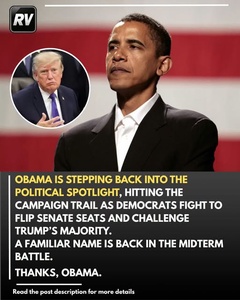
The debate has also revived criticism of former President Barack Obama's Iran policy, particularly the 2015 nuclear agreement known as the Joint Comprehensive Plan of Action.
President Donald Trump has repeatedly argued that the Obama administration provided Iran with substantial financial benefits while negotiating the nuclear agreement.
Trump has specifically cited a $1.7 billion payment made to Iran in 2016, portraying the transaction as evidence of Obama's willingness to provide Tehran with large amounts of cash.
However, independent fact-checking reports describe the $1.7 billion transaction differently. The payment settled a decades-old dispute involving Iranian funds paid for military equipment that the United States never delivered.
The settlement consisted of $400 million in principal and approximately $1.3 billion in interest, according to congressional and Treasury documentation cited by FactCheck.org.
Because international sanctions had severely restricted Iran's access to the financial system, the settlement was transferred using foreign currencies and involved cash.
That transaction is sometimes confused with the separate sanctions relief Iran received under the 2015 nuclear agreement, although the two financial issues were not the same.
Under the nuclear agreement, the United States and other participating powers agreed to lift certain sanctions on Iranian assets that had been frozen overseas.
Treasury officials estimated that Iran would have access to approximately $50 billion in usable liquid assets, substantially below the much larger figures sometimes cited in political arguments about the agreement.
Republicans have nevertheless argued that sanctions relief strengthened Iran economically and potentially gave Tehran greater resources to support its regional partners and proxy organizations.
The U.S. State Department has documented Iran's longstanding financial, military and logistical support for organizations including Hezbollah, Hamas, the Houthis and Iran-aligned militias.
The State Department has also described Iran's Islamic Revolutionary Guard Corps-Quds Force as the country's principal mechanism for supporting terrorist organizations and proxy groups abroad.
That documented Iranian support, however, does not by itself establish that Obama personally "funded Iran's terror regime" or that money from the 2016 settlement directly financed particular terrorist attacks.
The distinction is important because Iran's support for militant organizations predates Obama's presidency and has continued under successive U.S. administrations.
Rubio has argued that the current administration must prevent Iran from obtaining a nuclear weapon while confronting its support for regional armed groups and imposing economic pressure on Tehran.
In September, Rubio said the administration remained open to an agreement preventing Iran from obtaining a nuclear weapon but warned that continued support for terrorism could bring additional U.S. pressure.
The political dispute has therefore become larger than the 2016 payment itself, encompassing competing interpretations of sanctions relief, nuclear diplomacy and Iran's regional activities.
Supporters of Obama's approach argue that the nuclear agreement imposed restrictions and international monitoring on Iran's nuclear activities, while critics contend that its limitations were temporary and insufficient.
Trump ultimately withdrew the United States from the nuclear agreement during his first presidency, arguing that the deal failed to permanently prevent Iran from developing nuclear weapons.
The current conflict has brought those earlier disagreements back into public view, with Rubio and the Trump administration presenting Iran as a continuing strategic threat.
As Washington debates how to end the conflict, the Obama-era policies remain a major political target, but claims that Obama directly financed Iran's terrorist activities require considerably more evidence than the existence of the $1.7 billion settlement itself.
Comments (0)
Loading comments...
May You Like
gfnhgmnghnmfgnbvvvvvvvvv
TRUMP HIT WITH 26 ARTICLES OF IMPEACHMENT